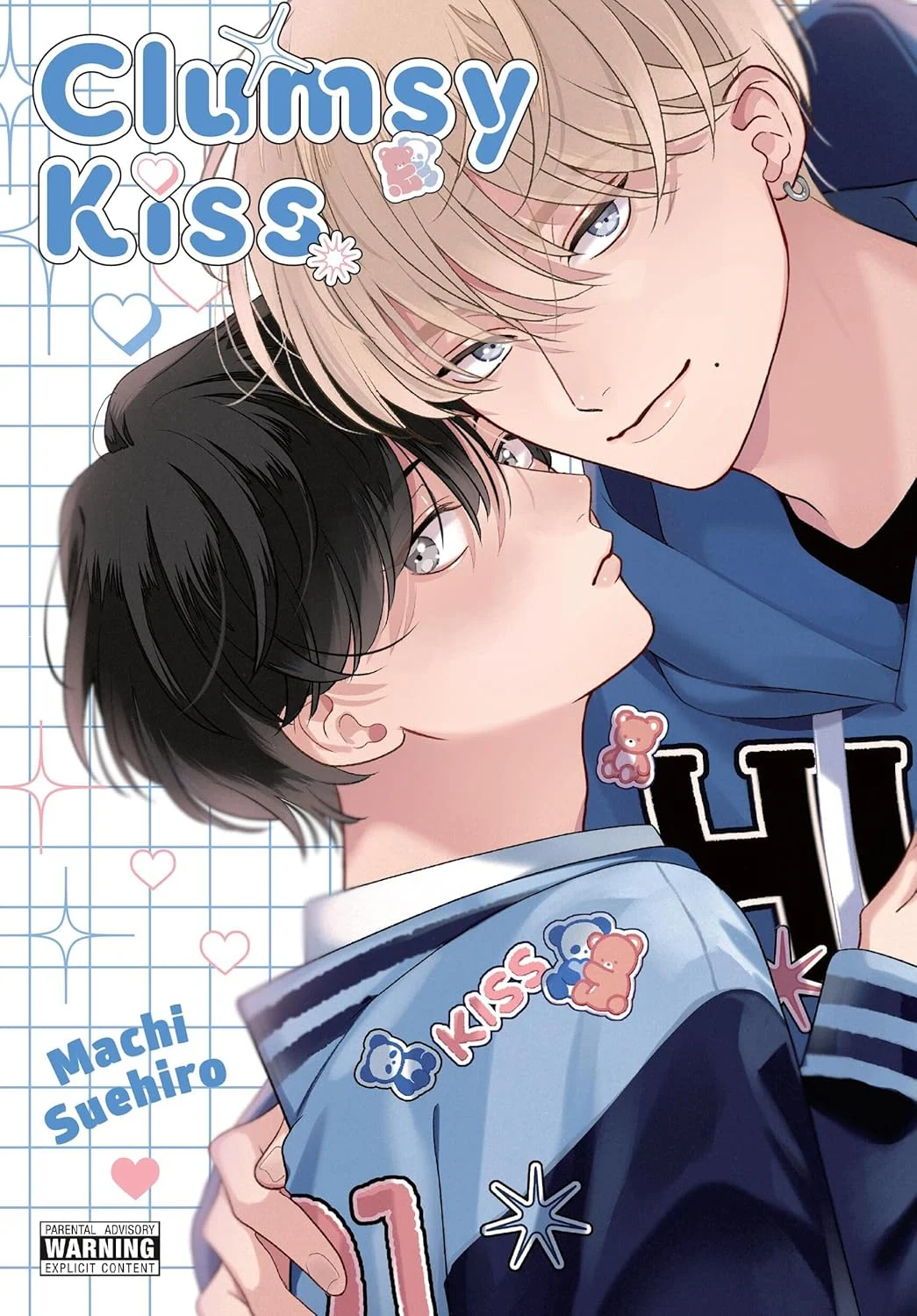
Machi Suehiro’s captivating Boys’ Love (BL) manga, "Clumsy Kiss," known in Japan as "Chiguhagu na Kiss," has emerged as a significant success story within the genre, demonstrating both critical appeal and commercial prowess. Centered on the intricate romantic entanglement of two third-year high school students on the cusp of graduation, the series masterfully blends the universal themes of first love and self-discovery with the specific nuances of an LGBTQ+ relationship. Its journey from digital serialization to a highly anticipated English release underscores the evolving landscape of manga publishing and the growing global appetite for diverse narratives.
Genesis and Japanese Publication Journey
The narrative of "Clumsy Kiss" first captivated readers digitally in January 2023, marking its debut as a compelling new voice in the Boys’ Love genre. The inaugural chapter was subsequently featured in the February 2023 issue of the respected manga anthology ".Bloom," a publication often recognized for showcasing promising new talent and established creators in the BL space. This initial digital-first strategy allowed the story to build a foundational readership before its physical release, a common and increasingly effective approach in contemporary manga publishing.
Following its successful digital run, the complete story of "Clumsy Kiss" was compiled into a single, definitive volume. This collected edition was published by Home-sha, an imprint under the renowned Shueisha publishing conglomerate, on April 24, 2024. The release was met with considerable anticipation, offering fans two distinct options: a standard edition and a special edition designed to appeal to collectors and dedicated enthusiasts. The special edition elevated the offering with a striking holographic cover and an exclusive 28-page booklet. This booklet contained newly drawn material, providing additional insights into the characters and their world, a popular incentive that often drives sales and rewards loyal readers. The strategic timing of the collected volume’s release, just over a year after its digital debut, capitalized on the momentum generated by its online serialization, solidifying its place in the market.
Critical Acclaim and Commercial Success
The commercial performance of "Clumsy Kiss" rapidly ascended to impressive heights, signaling its strong resonance with the target audience. By April 2025, a mere year after its physical release, the manga had surpassed an extraordinary milestone of 130,000 copies in circulation. This figure, particularly for a single-volume Boys’ Love title, is indicative of robust sales and sustained reader interest. The demand necessitated multiple printings, with the series reaching its third printing by this time, a clear testament to its popularity and continued market presence.
Beyond sales figures, "Clumsy Kiss" also garnered significant industry recognition. It secured the second position in the highly competitive Romantic Comedy category of the BL Awards 2025. The BL Awards are a prestigious annual event within the Japanese manga industry, celebrating excellence and innovation in the Boys’ Love genre. Achieving such a high ranking among its peers speaks volumes about the manga’s quality, its impactful storytelling, and its ability to connect deeply with both critics and fans. This accolade not only validated Machi Suehiro’s creative vision but also amplified the manga’s profile, drawing further attention to its unique charm and narrative depth.
Expanding Horizons: The Audio Drama Adaptation
The success of "Clumsy Kiss" extended beyond the printed page, culminating in an audio drama adaptation released on March 12, 2025. Audio dramas, a popular form of entertainment in Japan, provide an immersive experience for fans, bringing beloved characters and stories to life through voice acting and sound design. The "Clumsy Kiss" audio drama included the complete main story, allowing listeners to experience Haruto and Aoi’s evolving relationship in a new sensory format. Furthermore, it incorporated additional material originally created for the collected volume and the special edition booklet. This inclusion ensured that fans who had already purchased the manga would find fresh content in the audio adaptation, thereby enhancing its appeal and offering a comprehensive experience that enriched the existing narrative. The production of an audio drama is often a strong indicator of a manga’s popularity and its potential for cross-media adaptations, signifying its status as a significant property within its genre.
International Reach: Yen Press and English Publication
The global appeal of "Clumsy Kiss" became official with its licensing for English publication by Yen Press. A prominent publisher of manga, light novels, and graphic novels in North America, Yen Press is known for bringing a diverse range of Japanese titles to English-speaking audiences. This acquisition highlights the increasing international demand for Boys’ Love content and Yen Press’s commitment to curating a rich catalog that caters to varied reader interests. The English edition of "Clumsy Kiss" is scheduled for release on July 28, 2026, and will be available in both a 296-page paperback format and a digital edition. This dual release strategy ensures broad accessibility for readers, catering to preferences for both physical copies and digital convenience. The long lead time between the Japanese and English releases is typical for the industry, allowing for meticulous translation, localization, and marketing efforts to ensure a high-quality product for the international market. The translation and distribution by Yen Press not only expand Machi Suehiro’s reach but also contribute to the ongoing globalization of Japanese popular culture, bringing nuanced BL narratives to a wider, diverse readership.
Narrative Depth: A Realistic Portrayal of First Love
At its core, "Clumsy Kiss" is a meticulously crafted romantic story that delves into the complexities of nascent love and self-discovery. The plot revolves around Haruto Kumai, a kind yet reserved third-year high school student grappling with the lingering pain of a past heartbreak. As graduation looms, Haruto is eager to seize the remaining days of his high school life, hoping to finally find a girlfriend. In a moment of hopeful initiative, he decides to contact a female friend who recently ended her relationship. Their conversation appears to progress promisingly, leading Haruto to believe they have agreed to embark on a romantic journey together.
However, the narrative takes an unexpected turn, a central comedic and romantic engine for the story. When Haruto arrives for their anticipated first date, he is greeted not by his female friend, but by Aoi Sasahara, the most popular and undeniably handsome boy in their graduating class. Sasahara, characterized by his calm demeanor, mature presence, and seemingly flawless persona, behaves as if he and Haruto have already commenced a relationship. It is through this jarring encounter that Haruto gradually comprehends the extent of his misunderstanding: he had inadvertently contacted the wrong person. Overwhelmed by embarrassment and a reluctance to immediately rectify the situation, Haruto finds himself entangled in an unforeseen romance with Sasahara. This premise expertly sets the stage for two inexperienced students to navigate the intricate and often awkward dance of an unexpected relationship, exploring themes of miscommunication, mistaken identity, and the surprising turns of affection. The initial "clumsiness" of their connection serves as a poignant metaphor for the tentative and often fumbling steps taken in any new relationship, particularly one that challenges societal expectations.
Thematic Nuances: Beyond Gender Stereotypes
Machi Suehiro’s genius lies in her ability to craft a romance that, while specifically Boys’ Love, transcends the gender of its protagonists to explore universal aspects of love and connection. The fundamental arc—two young individuals meeting by chance, growing closer, facing a misunderstanding, and ultimately reuniting—is a timeless romantic trope that could form the bedrock of almost any love story. This universality allows "Clumsy Kiss" to appeal to a broad audience, even those who may not typically engage with the BL genre, by focusing on the emotional authenticity of the characters’ journey.
Yet, the manga simultaneously embraces and enriches its identity as an LGBTQ+ narrative. The necessity for Haruto and Aoi to potentially conceal their relationship, Haruto’s internal struggle to acknowledge his sexual preferences, and the distinct ways both characters have grappled with past romantic problems—though for entirely different reasons—are elements deeply rooted in the queer experience. These specific challenges and introspections are not merely plot devices but add significant depth and realism to the narrative, making it distinctly LGBTQ+ without exoticizing or tokenizing the characters’ identities. The exploration of Haruto’s relationships with his sisters and classmates, particularly after he begins dating Sasahara, further enriches the story by showcasing the societal context and personal impact of their burgeoning romance. The narrative’s perspective, primarily from Haruto’s viewpoint but evolving to thoroughly analyze both protagonists, fosters a profound sense of empathy for the young men and their evolving relationship. While some might argue that events progress with a degree of idealistic smoothness, the manga maintains a strong grounding in emotional realism, making any such criticisms minor in the face of its genuine character development.
Artistic Style and Visual Storytelling
The visual presentation of "Clumsy Kiss" aligns with many conventions of the Boys’ Love genre while prioritizing realism in its execution. The character designs depict everyone as tall, lean, and aesthetically pleasing, a common stylistic choice in BL manga that often emphasizes aspirational beauty. However, the artwork moves beyond mere idealized visuals, focusing on a grounded approach rather than an impressionistic one. This commitment to realism extends to the backgrounds and the depiction of movement, which are rendered with clarity and precision, serving the story without overshadowing it.
A notable aspect of the artwork is the inclusion of two rather explicit erotic scenes. Crucially, these scenes are not presented for shock value or gratuitous display. Instead, they are depicted with a firm grounding in realism, specifically addressing the intricacies of sexual intimacy between men without resorting to exoticism or fetishization. As such, these moments contribute meaningfully to the comprehensive portrait of the two young men and their deepening relationship, adding another layer of authenticity to the overall narrative quality. While the primary focus of "Clumsy Kiss" is undeniably its compelling story and character development, the artwork is more than serviceable; it is effective and memorable, particularly in how it handles intimate moments, enhancing the emotional and physical dimensions of Haruto and Aoi’s bond.
The Broader Impact of "Clumsy Kiss"
"Clumsy Kiss" stands as a testament to the evolving sophistication of the Boys’ Love genre. Machi Suehiro has crafted an exceptionally appealing romantic story that successfully navigates the delicate balance between universal themes of love and the specific, realistic aspects of an LGBTQ+ relationship. Its commercial success, critical accolades, and international licensing by Yen Press underscore its significance not just as an entertaining read, but as a notable contribution to contemporary manga. The manga’s ability to transcend gender while maintaining its unique queer identity exemplifies a growing trend in BL narratives towards more nuanced, character-driven storytelling that resonates with a broad and diverse readership worldwide. As it prepares for its English debut, "Clumsy Kiss" is poised to enchant a new wave of readers, further cementing its legacy as a compelling exploration of unexpected love and self-acceptance.