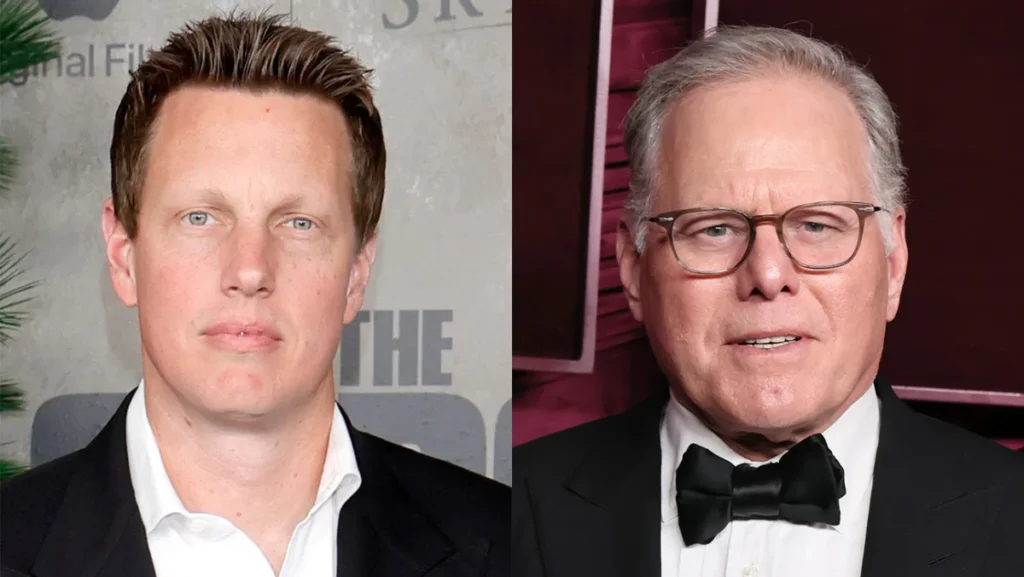
Comcast co-CEOs Brian Roberts and Mike Cavanagh informed Wall Street analysts on Monday that the proposed spinoff of NBCUniversal’s media assets is "absolutely not" a precursor to a sale of the company’s constituent parts. The executive leadership maintained that the primary objective of the separation is to provide each entity with a more focused balance sheet and the strategic flexibility to pursue independent growth, acquisition, or partnership opportunities. By dividing the massive conglomerate into two distinct publicly traded companies, Comcast aims to optimize its capital structure and allow the market to value its high-growth connectivity business separately from its content and "experiences" divisions.
Despite these firm denials from the C-suite, the financial sector remains skeptical of the long-term independence of the new entities. Market analysts suggest that while immediate divestitures are unlikely due to federal tax regulations—specifically those governing tax-free spinoffs—the move effectively "primes the pump" for a transformative wave of Mergers and Acquisitions (M&A) across the media and telecommunications landscapes. The separation is viewed by many as a pragmatic response to the shifting economics of the "streaming wars" and the continued decline of traditional linear television.
Strategic Rationale and Market Context
The decision to split Comcast follows a decade of aggressive consolidation in the media industry, most notably characterized by Disney’s acquisition of 21st Century Fox and the merger of WarnerMedia and Discovery. However, the current economic climate is defined by a "flight to quality" and a focus on profitability over raw subscriber growth. For Comcast, a company with a market capitalization exceeding $160 billion, the synergy between a "pipes" business (broadband and wireless) and a "content" business (studios and theme parks) has faced increasing scrutiny from investors who prefer "pure-play" investment vehicles.
Wolfe Research analyst Peter Supino noted that the breakup plan serves as a strategic maneuver to strengthen Comcast’s negotiating position. By creating a cleaner corporate structure, Comcast allows its partners to engage with specific business units without the complications of a multi-industrial parent company. Furthermore, the two-year "seasoning" period required for tax efficiency provides a natural window for potential suitors to arrange financing and regulatory strategies.
The New NBCUniversal: A Content and Experience Powerhouse
Under the leadership of CEO Mike Cavanagh, the newly formed NBCUniversal (NBCU) will emerge as one of the world’s premier media and entertainment enterprises. This entity will house an expansive portfolio of assets, including the NBC broadcast network, the Peacock streaming service, Bravo, Telemundo, and the prestigious Universal film and television studios. Crucially, the company will retain the Universal Destinations & Experiences division, which operates highly profitable theme parks in Orlando, Hollywood, Osaka, and Beijing.
The inclusion of Sky, the European telecommunications and media giant acquired for $40 billion in 2018, adds significant international scale. However, the "New NBCU" will also inherit the challenges of the linear television era. Assets like NBC and Bravo continue to generate significant cash flow but face secular headwinds as audiences migrate to digital platforms.
Potential Acquisition Targets and Suitors for NBCU
The separation makes NBCU a more digestible target for technology giants or rival media firms. Industry observers have identified several key players who could potentially pursue a deal:
- Netflix: Following its decision not to pursue Paramount Global, rumors have circulated that Netflix could view NBCU as the ultimate "IP play." While Netflix has traditionally focused on organic growth, acquiring Universal’s library—which includes franchises like Jurassic Park, Fast & Furious, and Despicable Me—would provide a massive competitive advantage. Furthermore, the theme park business would allow Netflix to monetize its own intellectual property in the physical world, a strategy it has begun exploring with "Netflix House" locations.
- Amazon: Through its $8.5 billion acquisition of MGM, Amazon demonstrated a clear appetite for premium media assets. NBCU’s sports portfolio is perhaps its most attractive feature for the tech giant. With long-term rights to the NFL’s Sunday Night Football, the Olympic Games through 2032, and the newly secured NBA rights, NBCU would transform Amazon Prime Video into a dominant force in live sports broadcasting.
- Private Equity Consortia: Firms like Apollo Global Management or Blackstone have shown a renewed interest in media assets with predictable cash flows. A private equity-led buyout could involve spinning off the linear networks to a separate "harvesting" entity while aggressively investing in the theme parks and streaming infrastructure.
The Connectivity Giant: The Post-Spin Comcast
The remaining Comcast entity, led by Michael Angelakis, will focus on its core strengths: broadband, wireless, and business services. This "Connectivity Co" will include the Xfinity brand, which serves more than 32 million high-speed internet customers in the United States. It will also manage the company’s growing wireless business, which operates via a mobile virtual network operator (MVNO) agreement with Verizon, and the Comcast Spectacor division, owners of the Philadelphia Flyers and the Wells Fargo Center.
Significantly, the "New Comcast" will retain a 19.9% stake in the new NBCUniversal. This equity position is intended to be monetized over time to help pay down the parent company’s debt, which stood at approximately $94 billion at the end of the last fiscal quarter.
The Connectivity M&A Landscape
As a pure-play connectivity provider, the New Comcast becomes a central figure in the consolidation of the American telecommunications infrastructure.
- SpaceX and Starlink: Elon Musk’s SpaceX has expressed ambitions to dominate the global connectivity market. While Starlink provides satellite-based internet, a merger or partnership with a ground-based fiber and cable giant like Comcast would create an unbeatable hybrid network. Comcast’s wireless spectrum and existing "last-mile" infrastructure could provide the terrestrial backbone SpaceX currently lacks.
- Charter Communications: A merger between Comcast and Charter has long been discussed by industry veterans as the "logical endgame" for the cable industry. Such a deal would create a national cable powerhouse with unparalleled scale. However, regulatory hurdles remain the primary obstacle, as the Department of Justice and the FCC have historically been wary of creating a near-monopoly in the residential broadband market.
- The Telecom Trio (Verizon, AT&T, T-Mobile): Each of the major wireless carriers is currently seeking to expand its home broadband footprint through 5G fixed wireless or fiber expansions. Acquiring Comcast’s existing cable plant would allow a carrier like Verizon to instantly offer a premium bundled service to a third of the U.S. population.
Financial Implications and the "Roberts Angle"
A critical component of this restructuring is the preservation of the dual-class share structure. Brian Roberts, whose family founded the company, currently holds 33% of the voting power despite owning a relatively small percentage of the economic equity. This structure will be replicated in both new companies, ensuring that the Roberts family maintains ultimate control over any potential sale or merger.
This "controlled company" status means that any suitor will need to offer a significant "control premium" to convince the Roberts family to relinquish their legacy assets. This was recently seen in the Paramount Global sale, where David Ellison had to navigate the complex demands of the Redstone family.
From a financial perspective, the spinoff allows for more surgical capital allocation. The connectivity business requires heavy capital expenditure for fiber upgrades and 5G deployment, while the media business requires massive investment in content production and theme park expansions. By decoupling these needs, Comcast can ensure that the volatile earnings of the movie business do not depress the valuation of the stable, recurring revenue generated by broadband subscriptions.
Chronology of Recent Events
- October 2024: Comcast leadership hints during an earnings call that they are evaluating a "new strategy" for the cable networks.
- November 18, 2024: Brian Roberts and Mike Cavanagh officially announce the intent to spin off the cable networks and restructure NBCUniversal.
- November 2024: Market reactions see a slight uptick in Comcast stock as investors applaud the move toward a cleaner corporate structure.
- Projected 2025-2026: The spinoff is expected to take approximately one year to complete, followed by the two-year "seasoning" period required for tax-free status.
Broader Impact on the Media Industry
The Comcast spinoff marks the end of the "Conglomerate Era," where companies believed that owning both the distribution (pipes) and the content (water) was the only way to survive. This philosophy, which drove the $100 billion AT&T-Time Warner merger, has largely been discredited as distribution has become commoditized and content costs have skyrocketed.
If successful, the Comcast split will likely pressure other diversified firms to consider similar moves. The industry is watching closely to see if the "New NBCU" can thrive as a standalone entity or if it will be forced into the arms of a larger technology partner within the next 36 to 48 months. For now, the message from Comcast is one of independence and strategic optionality, but the reality of the market suggests that this is the first move in a much larger game of global media chess.