The recent SXSW premiere of Damian McCarthy’s latest feature, Hokum, ignited the festival circuit, drawing visceral reactions of screams and nervous laughter from an engaged audience. Attendees reportedly jumped in their seats and covered their eyes, testament to McCarthy’s unique ability to craft tightly wound, suspenseful narratives that spring forth with unsettling precision. Described by the Irish writer-director himself as "classic ghost stories" and "campfire tales," his films are meticulously constructed to evoke primal fears, leaving viewers to scan shadows for lurking figures long after the credits roll. This latest offering, Hokum, continues his distinctive cinematic journey, cementing his reputation as a master of elemental, impeccably crafted, and profoundly entertaining horror.
From Electrician to Auteur: McCarthy’s Ascendant Career
Damian McCarthy’s path to filmmaking prominence is a testament to perseverance and an unwavering dedication to his craft. His early career was far from the glitz of Hollywood; he supported himself as an electrician, a practical trade that instilled a meticulousness and problem-solving approach evident in his later work. During this period, he honed his skills by creating microbudget short films, often leveraging borrowed locations and tight schedules. These formative experiences, characterized by extreme resourcefulness, laid the groundwork for his disciplined filmmaking methodology.
His feature film debut arrived in 2020 with Caveat, a microbudget horror film that quickly garnered critical attention for its eerie atmosphere and innovative use of practical effects and confined spaces. Caveat introduced audiences to McCarthy’s signature style: a blend of folk horror, psychological tension, and intricate "trap-door mechanics" that keep viewers perpetually on edge. The film, made with a technically lean crew of four or five people, demonstrated how meticulous planning could overcome financial limitations, delivering a powerful and unsettling experience that felt handcrafted.
Building on the success of Caveat, McCarthy released his second feature, Oddity, in 2024. This film further refined his eerie aesthetic and complex narrative structures, earning widespread praise and solidifying its place among the year’s best horror offerings. The consistent critical acclaim for his first two features established McCarthy as a significant voice in contemporary horror, capable of delivering deeply unsettling narratives with limited resources.
Hokum represents a pivotal moment in McCarthy’s career, marking his first collaboration with a major actor, Adam Scott. Scott, known for his versatile performances in both comedy and drama, takes on the lead role of Ohm Bauman, an acerbic novelist. This collaboration, coupled with the film’s acquisition by NEON—a distributor renowned for its discerning taste in independent and international cinema—signals McCarthy’s transition from the independent fringe to a wider mainstream audience. NEON, which acquired Hokum last August, is now preparing the film for a wide release in the United States, poised to introduce McCarthy’s unique brand of horror to a broader demographic.
The Architecture of Fear: McCarthy’s Meticulous Process
McCarthy’s filmmaking approach is characterized by an almost architectural precision, a stark contrast to more improvisational styles often seen in cinema. He describes himself as a "disciplined filmmaker," a trait rooted in his early, resource-constrained productions. This discipline manifests in several key areas:
Rigorous Pre-Production and Storyboarding: McCarthy’s process begins with extensive storyboarding. Every shot, every camera movement, every beat of suspense is meticulously planned before filming commences. This thorough preparation ensures that even moments of apparent chaos feel intentionally orchestrated. He explains that this detailed planning, born out of necessity on his short films and Caveat where time and resources were severely limited, has become an indispensable part of his workflow. "You don’t have time to figure out where to put the camera," he recounts of his early days, "Then you really have to show up storyboarded." This practice remains central even on larger productions like Hokum, where increased support still operates under the relentless pressure of the clock. While McCarthy engages in extensive discussions with actors during pre-production to iron out script issues and incorporate their insights, on-set improvisation is minimal, ensuring the narrative’s tightly controlled execution.
The Art and Science of Editing: The impact of horror is intrinsically linked to its pacing, and McCarthy views editing as a critical, artistic endeavor. He collaborates closely with editor Brian Phillip Davis, who also cut Oddity and Hokum. Both share a deep passion for horror, fostering a productive creative synergy. Having edited his own short films and Caveat—often over weekends and after his day job—McCarthy possesses an intimate understanding of the editing process, enabling him to offer informed suggestions and solve complex narrative challenges.
For McCarthy, editing horror is less a science and more an art, driven by an intuitive "feel." He recounts instances where subtle adjustments—removing "a frame or two"—can dramatically alter the effectiveness of a scare. This micro-level precision highlights the psychological impact of timing in horror, where a blink, a slight shift in an actor’s posture, or a nuanced change in lighting, imperceptible to the conscious eye, can disrupt the delicate balance of fear. The strategic decision to "hold on certain shots" is another potent tool, signaling impending dread and engaging the audience in a psychological cat-and-mouse game, challenging them to anticipate the unknown.
Mastering Suspense and the "Earned" Jump Scare: McCarthy embraces jump scares, but with a crucial caveat: they must be "earned." He believes that the effectiveness of a jump scare lies not in its suddenness alone, but in the meticulous buildup of tension that precedes it. He cites his four-and-a-half-minute short film, He Dies at the End, as an early lesson in this principle. Despite featuring a "ridiculous-looking" monster, the film’s prolonged suspense and a well-placed fake-out before the creature’s appearance reliably elicited both screams and subsequent laughter from audiences. This experience solidified his belief that the "buildup" is paramount, transforming a potentially cheap scare into a cathartic release of accumulated dread. While he acknowledges the occasional use of "out-of-nowhere" jump scares to keep audiences on edge, his preference remains for those meticulously woven into the narrative fabric.

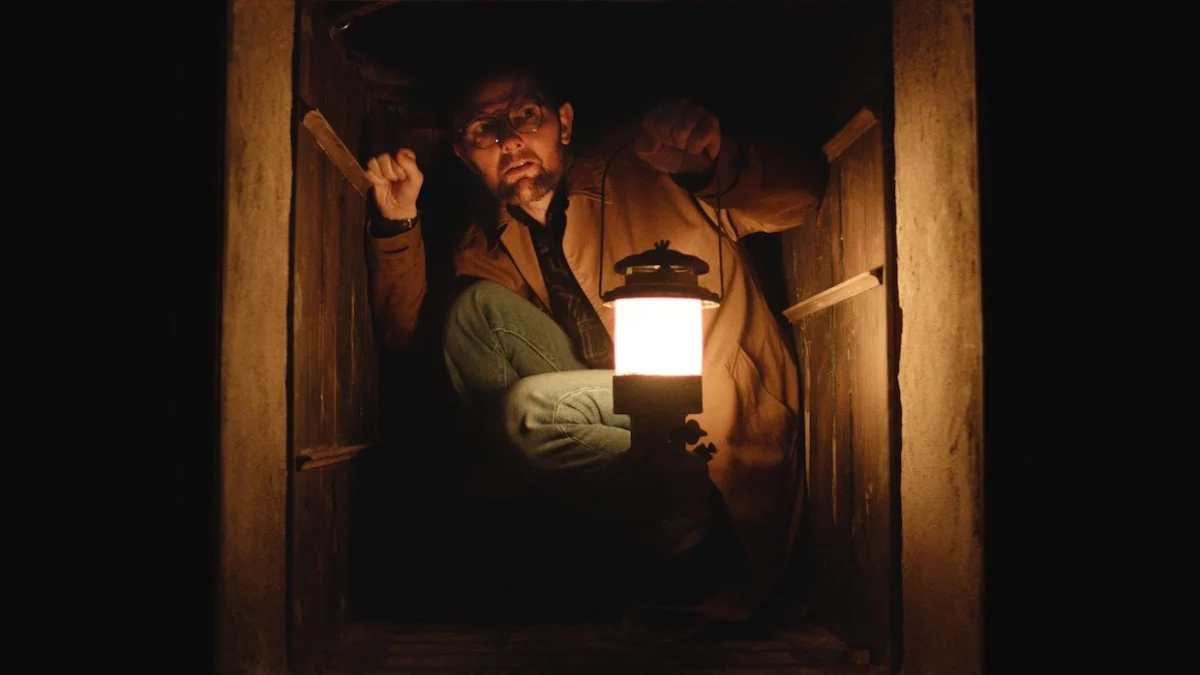
The Primal Fear of Darkness and Claustrophobia: Darkness is a fundamental tool in McCarthy’s horror arsenal, tapping into a basic primal fear: the unknown lurking beyond the visible. His films are deliberately composed with "as much darkness in the frame as possible," inviting the audience’s eyes to wander and search for hidden threats. This aesthetic harks back to "classic ghost stories," evoking the intimate, precarious safety of lamplit spaces against an expansive, ominous void. In Hokum, this visual philosophy is underscored by the narrative journey itself, which begins under a "wide, beautiful blue sky in a vast desert" before progressively plunging Adam Scott’s character into the claustrophobic depths of a hotel basement. This visual progression is a deliberate mechanism to heighten anxiety and immerse the viewer in the unfolding horror.
The Undervalued Power of Sound Design: McCarthy unequivocally states that sound is the cornerstone of horror. "If a film is scaring you, turn off the sound and it’s no longer scary," he argues, emphasizing its profound, often underestimated, impact. For Hokum, he collaborated with composer Joseph Bishara, known for his work on The Conjuring universe, and sound designer Steve Fanagan, to create a richly layered sonic landscape.
McCarthy’s direction for sound design began with an evocative concept: "Think of somebody pretending they’re a ghost, doing this silly, cartoonish kind of noise. We’ll work backwards from that." This unconventional starting point allowed for the creation of intricate, unsettling auditory textures. The final soundscape is a complex tapestry of wind effects manipulated at varying speeds, layered whispered voices (making Ohm Bauman, and the audience, question what they truly heard), the creaking of an old building, and the unsettling cries of animals like foxes. For McCarthy, Hokum provided the ideal canvas to fully explore his passion for sound design, an element he considers crucial for its ability to immerse, disturb, and amplify fear.
Folklore and the Mystical Irish Tapestry
The pervasive presence of folklore in McCarthy’s films is a direct consequence of his upbringing in rural Ireland. Growing up in places like Bantry and Glengarriff, where "roads to nowhere stretch on for miles and miles," he was immersed in a cultural landscape rich with ancient myths and local legends. Stories of banshees, the puca, and other supernatural entities were not just historical anecdotes but part of the fabric of daily life, even taught in school as part of learning the Irish language.
This deep connection to Ireland’s mystical heritage naturally permeates his narratives. Hokum, set on Halloween in the very birthplace of the holiday, capitalizes on this ancestral backdrop. The haunted hotel in the Irish countryside, with its handsome wood carvings and flickering autumnal light, becomes a conduit for these ancient fears. Adam Scott’s character is drawn into a mystery that descends into the hotel’s long-abandoned honeymoon suite and a dumbwaiter leading to a claustrophobic basement, rumored lair of a soul-snatching witch. This setting is not merely a backdrop but an active participant in the horror, drawing directly from the wellspring of Irish folklore and its inherent sense of the uncanny.
Thematic Undercurrents: Justice for the Wicked
A recurring thematic thread in McCarthy’s filmography is the supernatural punishment of morally corrupt individuals. Across his three features, the antagonists are consistently depicted as "cowardly, pathetic men" who ultimately face supernatural retribution. This consistent narrative choice, where external, otherworldly forces mete out justice, is something McCarthy attributes to his upbringing in Catholic Ireland. The concept of divine or supernatural consequence for sin and wickedness, a cornerstone of Catholic teachings, evidently resonates within his storytelling. The casual observation by an interviewer about the "Catholic" feel of his films, which McCarthy readily confirms with a reference to a character being "dragged off to hell, literally," underscores this profound influence. It imbues his horror with a moral dimension, where transgressions are not only terrifyingly confronted but also symbolically atoned for through supernatural intervention.
Broader Implications and Industry Impact
Damian McCarthy’s journey and the success of Hokum carry significant implications for the independent horror landscape and the broader film industry. His ability to transition from microbudget, DIY filmmaking to working with established actors and major distributors like NEON showcases a viable pathway for emerging talent. His disciplined approach, honed by necessity, demonstrates that meticulous planning and a deep understanding of craft can be more valuable than expansive budgets, a lesson that can benefit productions of all scales.
NEON’s acquisition of Hokum further reinforces its reputation as a champion of distinctive and challenging cinematic voices. By backing McCarthy’s unique brand of horror, NEON not only provides a wider platform for a director with a clear artistic vision but also signals a continued appetite in the market for sophisticated, character-driven horror that prioritizes atmosphere and psychological tension over cheap thrills.
In an era where horror often relies on established franchises or increasingly extreme gore, McCarthy’s dedication to "classic ghost stories" and elemental fears offers a refreshing alternative. His work reaffirms the enduring power of narrative suspense, sound design, and the psychological manipulation of an audience to create profound and lasting scares. As Hokum prepares for its wide release, Damian McCarthy stands as a compelling figure in contemporary cinema, a testament to the power of craft, cultural roots, and an unyielding commitment to the art of fear. His films invite audiences not just to be scared, but to engage with the very architecture of fear itself.