Sho Miyake’s Evolving Vision: From Hokkaido to International Acclaim
Sho Miyake, while not yet a household name in the Western world, has steadily built an impressive and critically lauded filmography since his graduation from the Film School of Tokyo. Born in Hokkaido, Miyake’s early works often explored the nuances of group dynamics and the intimate landscapes of youth, hinting at the introspective style that would come to define his cinema. His debut in 2012 saw the release of two low-budget features: Playback, an exploration of memory and identity reminiscent of Alain Resnais’s fragmented narratives, and Good for Nothing, a character-driven piece following a group of high-school boys working at a security company in his native Hokkaido. These initial forays established Miyake’s keen eye for human interaction and his ability to craft compelling narratives from seemingly ordinary circumstances.
His 2018 summer romance, And Your Bird Can Sing, further showcased his talent for capturing the ephemeral beauty of shared experiences among young adults, earning him wider recognition. However, it was his 2022 feature, Small, Slow But Steady, that truly propelled Miyake onto the international stage. This rhythmic and gentle film, centered on a deaf female boxer navigating the challenges of her sport and life, was lauded for its sensitive portrayal of perseverance and internal strength, earning accolades and expanding his global audience. Following this, All the Long Nights (2024) continued his exploration of human connection, focusing on the quiet lives of lonely workers at a science toy company. Through each successive work, Miyake has demonstrated a remarkable refinement of his craft, evolving from a promising talent into a director whose unique voice resonates deeply with audiences and critics alike. His films are characterized by a delicate mise-en-scène, a meticulous attention to character development, and an ability to uncover profound emotional truths within everyday scenarios, often with a subtle, observational lens.
The Genesis of "Two Seasons, Two Strangers": Adapting a Cult Icon
The latest addition to Miyake’s distinguished filmography, Two Seasons, Two Strangers, represents a bold artistic endeavor: adapting the works of Yoshiharu Tsuge. Tsuge, a legendary figure in Japanese manga, is celebrated for his groundbreaking contributions to the gekiga (dramatic pictures) movement, which pushed manga beyond its traditional comedic or adventure formats into more mature, psychologically complex narratives. Active primarily from the 1960s to the 1980s, Tsuge’s work, often published in the avant-garde Garo magazine, defied mainstream conventions with its surrealism, autobiographical elements, and poignant depictions of mundane life, travel, and existential angst. His stories are known for their distinctive blend of the ordinary and the absurd, frequently featuring protagonists who are struggling artists or wanderers, grappling with their inner worlds. Despite his immense influence in Japan, much of Tsuge’s oeuvre remains untranslated into English, making his cult status in the West largely confined to niche circles of manga enthusiasts and scholars.
Miyake first encountered Tsuge’s work as a university student, receiving a book from an older classmate with the caveat, "You’re not gonna be able to understand it." This initial challenge sparked a lifelong fascination. Miyake recounts being "struck by how different he was from any manga artist I had ever read," recognizing Tsuge’s ambition to forge a unique form of expression. This ambition directly inspired Miyake to seek a new cinematic language for his adaptation.
The decision to adapt Tsuge’s stories, specifically "A View of the Seaside" and "Mister Ben of the Igloo," through the framing device of a screenwriter, Li (played by the acclaimed Shim Eun-kyung), was a deliberate artistic choice. Miyake explains that Tsuge’s protagonists were often mangaka (manga artists) like himself, allowing him to project his own experiences and perspectives onto his characters. Emulating this technique, Miyake felt that making his protagonist a screenwriter—a figure close to his own creative process—would facilitate a "core-level adaptation" rather than a mere surface-level translation of the manga. This meta-narrative approach allows Miyake to explore the very act of creation, interpretation, and the blurred lines between art and life.
Narrative Layers and Thematic Depths
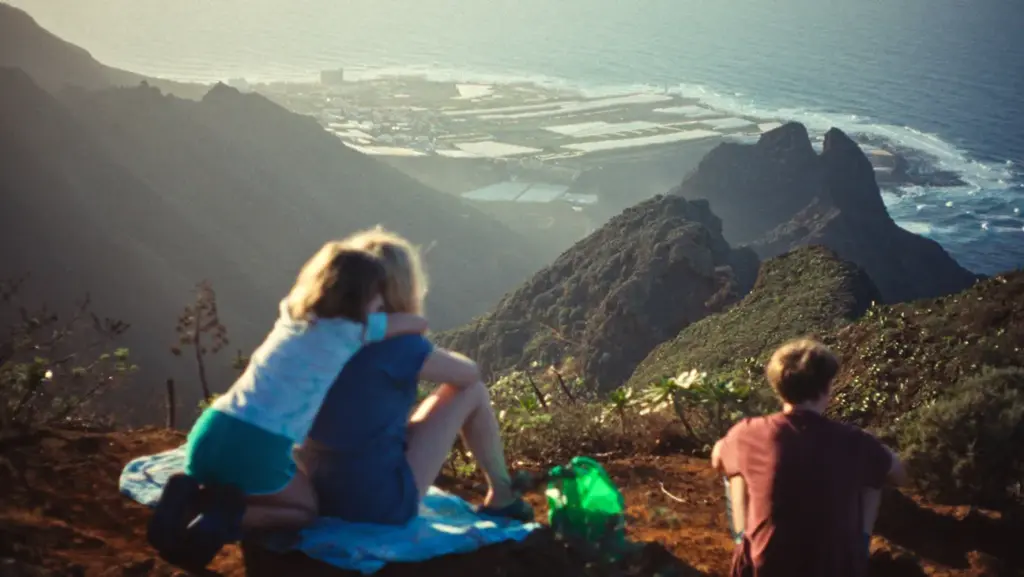
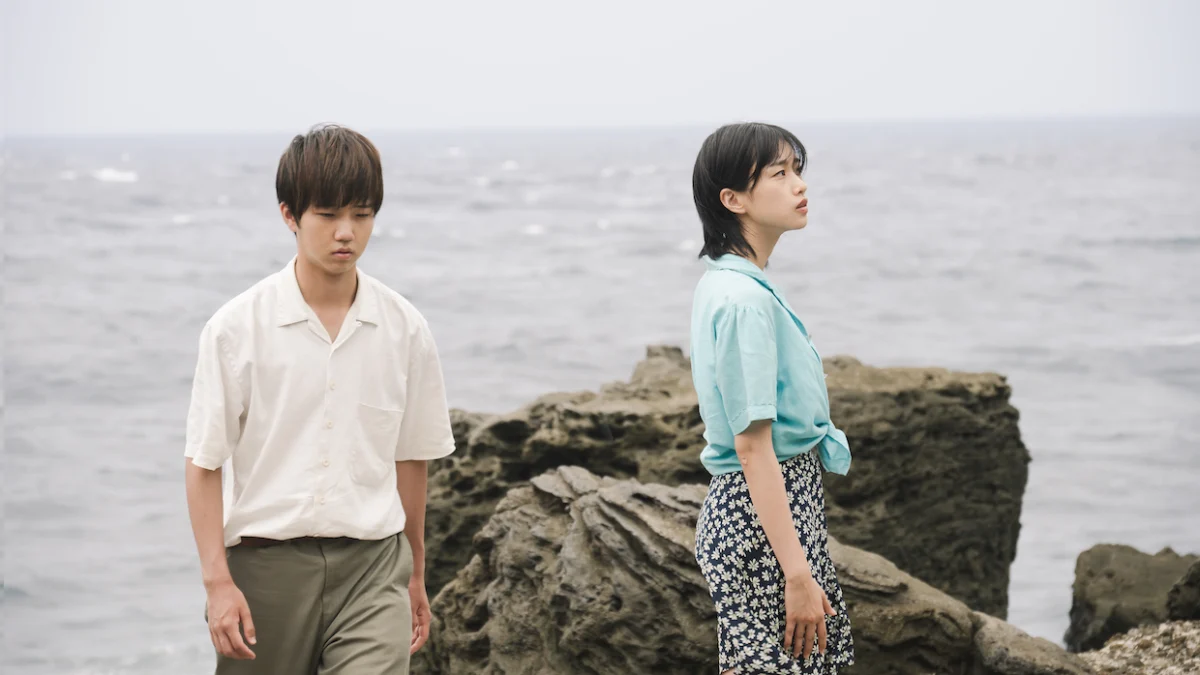
Two Seasons, Two Strangers unfolds as a sophisticated, layered narrative. The film begins with Li attempting to write, her struggle to put pen to paper serving as the gateway into the "film-within-a-film." This embedded narrative follows two young strangers whose lives intertwine at an idyllic island resort, characterized by vibrant colors and a distinctly romantic sensibility. Just as this story reaches its climax, Miyake masterfully cuts away to a Q&A session in a classroom, where Li and the director of the film-within-a-film discuss their work. This abrupt shift serves not only as a structural device but also as a thematic commentary on the nature of storytelling and perception.
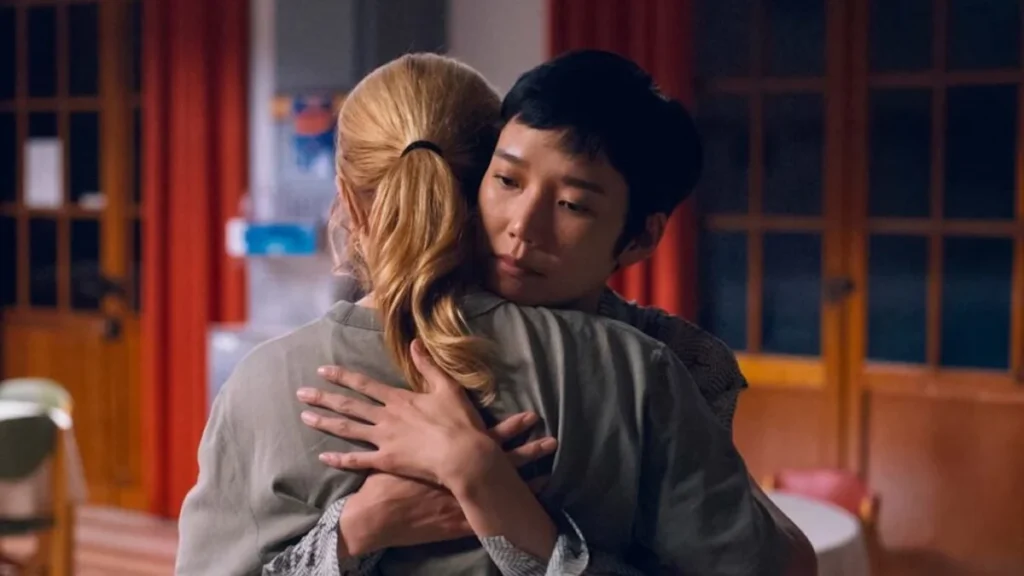
Struggling with her own creative block, Li embarks on a solo journey for inspiration, heading to a snowy, remote town. Her expectations of finding solace or clarity clash with the reality of her destination: a dilapidated inn run by the brusque, enigmatic Benzo (portrayed by Shinichi Tsutsumi). This second half of the film, grounded in a more earthy and realistic aesthetic, contrasts sharply with the earlier romanticized segment. The inn, far from picturesque, feels authentically lived-in, almost a relic of a bygone era, reflecting Li’s own search for something more tangible and less idealized.
Miyake’s delicate mise-en-scène in this section subtly evokes both Tsuge’s distinctive visual style and the singular staging of Japanese cinema master Yasujirō Ozu. The careful framing, the understated performances, and the precise use of environmental details contribute to a film that is "breezy to watch" yet "endlessly complex to reminisce on." This duality, inherent in the film’s structure and aesthetic, invites viewers to ponder the various meanings embedded within its narrative, celebrating the richness of cinematic expression.
Miyake’s Influences and Craft: A Dialogue with Masters
Miyake’s artistic philosophy is deeply rooted in a dialogue with cinematic and literary masters. His admiration for Ozu, evident in the film’s precise staging and observational quality, speaks to a lineage of Japanese filmmaking that values stillness, everyday life, and nuanced emotional undercurrents. Beyond Ozu, Miyake openly acknowledges the profound influence of Shigehiko Hasumi, a renowned film critic and former president of the University of Tokyo, with whom Miyake collaborated on the essay film John Ford and Throwing.

Miyake describes Hasumi as a foundational figure in his understanding of film. "Everything I know about film history I really learned from him," Miyake states, recalling how Hasumi’s writings, which he had read since his teens, consistently revealed overlooked details in films he thought he knew well. Hasumi’s criticism, Miyake notes, is never abstract but always grounded in what is demonstrably visible on screen, focusing on the concrete evidence of the cinematic image. This rigorous approach taught Miyake "how to love films and to watch and see them truly for what they are," rather than merely how to make them. This philosophy of deep observation and respect for the filmic image is palpable in Two Seasons, Two Strangers, where seemingly minor details or gestures hold significant thematic weight.
While Miyake’s personal experience growing up in Hokkaido doesn’t directly inform the locations in Two Seasons, Two Strangers, he reveals that the director character’s line about growing up on a small island was borrowed from the actor’s own background. This illustrates Miyake’s adaptive and collaborative working style, where the unique experiences of his cast and the characteristics of his locations often shape the narrative. He believes that "if my actors are different, the film is going to be different. If the location is different, then I am going to adapt to the location," leading to a "growing sense of freedom" in his creative process.
Contrasts and Dualities: A Stylistic Signature
The subtle contrasts between the film-within-a-film and Li’s subsequent journey are central to Two Seasons, Two Strangers. Beyond the obvious seasonal shift from warm summer to snowy winter, Miyake imbues each segment with distinct aesthetic and thematic qualities. The film-within-a-film is "ever so slightly more romantic," with more vibrant colors and a cast exclusively of young people. This idealized vision of connection contrasts sharply with Li’s own travels, which plunge her into a more "down-to-earth and realistic" setting. The dilapidated inn, with its worn textures and absence of conventional charm, becomes a metaphor for the raw, unvarnished reality of human interaction that Li seeks.
Miyake deliberately weaves in dual meanings and contrasting imagery throughout the film. He points to the example of a dead fish: in the summer sequence, it might appear as an "ominous foreshadowing," while in the winter sequence, a fish being grilled in a fire pit is presented humorously. "It’s interesting how it’s the same dead fish, but in certain situations we can see it as something that’s eerie or something that’s funny," Miyake reflects. This intentional ambiguity underscores his belief in the "richness of film expression," where varied interpretations enhance the viewing experience. This nuanced approach to contrasting elements allows Miyake to explore complex themes without resorting to simplistic binaries, mirroring the complexities of real-life experiences.
The Shifting Landscape of Connection
A recurring theme in Miyake’s earlier works has been the exploration of group dynamics and how individuals find happiness within cooperative settings, such as the bookstore employees in And Your Bird Can Sing or the colleagues in All the Long Nights. However, Two Seasons, Two Strangers marks a thematic evolution, presenting a more challenging scenario: the search for meaningful connection amidst happenstance and individual travel.
Miyake acknowledges this shift: "With this film, it’s a bit of a more challenging situation because of the story revolving around travel and tourism. You can go on a trip and meet no one. Or, you can also meet people, but have only very shallow interactions your entire time." The central challenge Miyake posed to himself was: "Is it possible for people who meet each other in this kind of happenstance way while they’re traveling to share very special and deep moments together?" This question drives Li’s journey and the interactions she has, particularly with Benzo.
The awkward, often humorous conversations Li shares with Benzo at the inn—where she inquisitively probes into his life, asking about family and the origins of a mural, only to be met with his brusque retort about asking "a lot of questions about a stranger’s life"—are directly influenced by Tsuge’s work. Miyake delights in these "difficult to parse" interactions, finding humor in the earnestness with which his actors perform these lines. These moments highlight the inherent friction and vulnerability in trying to forge connections with strangers, a departure from the more familiar group dynamics of his previous films.
For Miyake himself, the impulse for "travel" or changing environments as a source of inspiration resonates deeply. While he doesn’t embark on spontaneous, unplanned trips like Li, he emphasizes the importance of walking and a significant life change: moving from Tokyo to a more rural area a few years ago. This environmental shift, he considers, was "a very pivotal, great life choice for myself," serving as a personal form of "changing my environment" that feeds his creative process. This personal insight underscores the film’s broader message about the transformative power of seeking new perspectives, whether through physical journeys or shifts in one’s immediate surroundings.
Critical Acclaim and Future Trajectory
The critical reception of Two Seasons, Two Strangers has been overwhelmingly positive, with its Golden Leopard win at the Locarno Film Festival serving as a testament to its artistic merit and international appeal. The festival, known for championing auteur cinema and discovering new voices, recognized Miyake’s unique blend of narrative sophistication and emotional depth. Its subsequent screenings at prestigious platforms like New Directors/New Films, co-presented by Lincoln Center and MoMA, further cemented its status as a significant work in contemporary world cinema. These platforms are crucial for independent films, providing visibility and critical discourse that can propel a director’s career onto a global stage.
As Two Seasons, Two Strangers continues its theatrical run, including upcoming screenings at Metrograph, it is clear that Sho Miyake is no longer merely an emerging talent but a director refining himself into a master. His ability to seamlessly weave intricate narrative structures, pay homage to diverse influences, and explore universal themes of connection and introspection with profound subtlety positions him as a vital voice in Japanese cinema. The film’s success not only elevates Miyake’s profile but also contributes to the "surge of interest in contemporary Japanese cinema in the West," showcasing the rich and diverse storytelling emerging from the region. Miyake’s journey, much like the travels depicted in his latest film, is one of continuous exploration, challenging himself to find new forms of expression and deepen his understanding of the human condition.