Set for release in 2026, the Japanese horror film Ice Blood, known domestically as Hyoketsu and internationally as Blood on Snow, is poised to deliver a chilling reinterpretation of one of Japan’s most enduring supernatural legends. Directed and co-written by Eisuke Naito, the production features an acclaimed technical crew and a compelling cast, promising a deeply atmospheric and psychologically unsettling experience. At its core, the film delves into the terrifying myth of the Yuki Onna, or Snow Woman, weaving a narrative that blurs the lines between folklore, mental deterioration, and stark reality within a modern family drama.
A Deep Dive into the Yuki Onna Legend
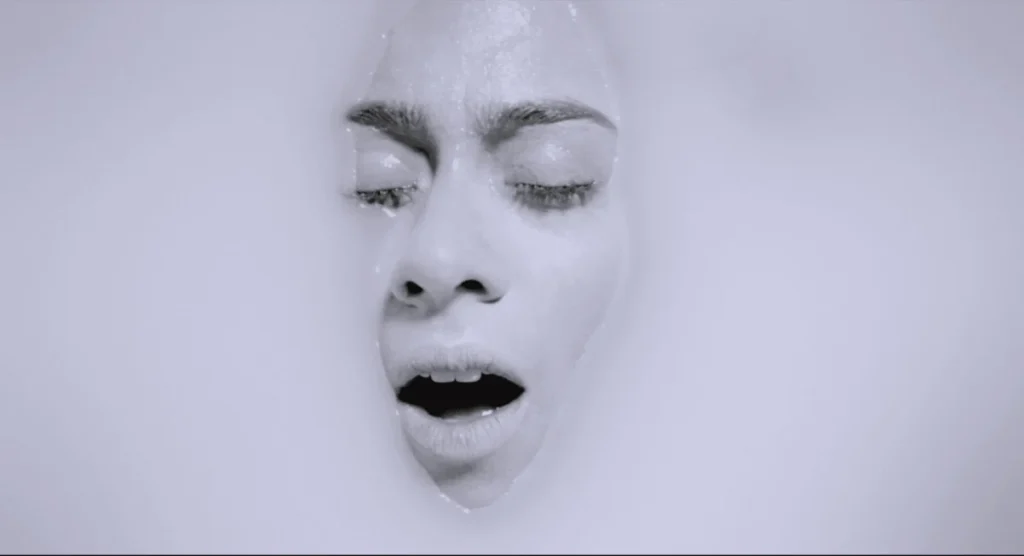
The spectral presence at the heart of Ice Blood is directly inspired by the Yuki Onna, a pervasive figure in Japanese folklore. Often translated as "Snow Woman," she is a prominent yokai, or supernatural entity, whose tales have been passed down through generations, particularly in Japan’s northern and mountainous regions where heavy snowfall is a dominant force of nature. While regional variations in her narrative are considerable, common descriptions portray her as a strikingly beautiful yet terrifying pale female spirit, frequently depicted wearing white attire that allows her to blend seamlessly into a snow-covered landscape.
Historically, the Yuki Onna embodies both the beauty and the inherent dangers of winter. Early legends often cast her as a malevolent force, responsible for freezing travelers with her icy breath, leading them astray from safe paths into blizzards, or even stealing children. In some harrowing accounts, she is said to enter isolated homes during severe winter storms, bringing death to those she encounters. These narratives frequently serve as cautionary tales, reflecting the harsh realities and mortal perils posed by Japan’s unforgiving winters. The fear she instills is deeply rooted in the primal human struggle against the elements.
However, the Yuki Onna’s character is not monolithic. Certain narratives introduce a more complex, almost tragic dimension to her existence. In these versions, she is capable of living among humans, sometimes even marrying and raising a family, provided her true identity as a snow spirit remains concealed. The discovery of her supernatural nature invariably leads to her vanishing back into the snow, often leaving behind a heartbroken human family. This duality – her capacity for both deadly malevolence and poignant, albeit temporary, humanity – has made her a compelling figure for artists and storytellers, allowing for nuanced explorations of themes such as identity, deception, and the ephemeral nature of love and life. Her image as a beautiful yet dangerous woman emerging from an otherwise empty white landscape has cemented her place as one of Japan’s most iconic and adaptable folkloric figures, inspiring countless adaptations across literature, manga, anime, and cinema. Ice Blood aims to tap into this rich tradition, offering a contemporary interpretation of her chilling power.
Key Creative Talents Behind the Production
The film benefits from the expertise of a distinguished creative team. Eisuke Naito, known for his ability to craft intense and often unsettling narratives, takes the helm as director and co-writer. While specific details of his previous filmography are not provided, his involvement suggests a film committed to exploring psychological depth within the horror genre. His past works often touch upon themes of isolation, fractured realities, and the dark undercurrents of human nature, making him a fitting choice to navigate the complex mythology of the Yuki Onna.
Serving as Director of Photography is Hidetoshi Shinomiya, an award-winning cinematographer celebrated for his work on Ryusuke Hamaguchi’s critically acclaimed Drive My Car. Shinomiya’s involvement signals a commitment to visual excellence, promising a meticulously crafted aesthetic that will likely enhance the film’s eerie atmosphere. His reputation for subtle yet impactful visual storytelling, characterized by nuanced lighting, evocative framing, and a keen eye for human emotion, is expected to bring a sophisticated visual language to Ice Blood, transforming the snow-covered landscapes and claustrophobic interiors into characters in their own right.
The cast features a blend of established talent and rising stars. Hiromitsu Kitayama takes on his first leading role in a horror production, marking a significant step in his acting career. His transition into a demanding genre lead will be keenly observed, as he is tasked with portraying a character grappling with profound psychological distress. Alongside him is Chihiro Kato, formerly known as Cent Chihiro Chittiii, a prominent figure from the popular idol group BiSH. Her casting in a horror film, particularly in a role central to the unfolding mystery, underscores her evolving artistic trajectory beyond music. Veteran actor Shiro Sano, known for his extensive and diverse filmography, rounds out the main adult cast, bringing gravitas and experience to his role. Aoto Yamatani portrays the young son, Akira, completing the troubled family unit.
The Descent into White Terror: A Chronology of Fear
The narrative of Ice Blood begins with Minoru, a former Tokyo designer, seeking a drastic change of pace. He relocates with his wife, Yuki, and their young son, Akira, to his ancestral home in a remote region renowned for its heavy snowfall. The couple’s aspiration for a quieter, more peaceful existence quickly unravels. Their new life is immediately complicated by Minoru’s father, Shigeru, who suffers from dementia. Shigeru’s inexplicable terror whenever he sees Yuki, coupled with his agitated calls for his late wife, casts an ominous shadow over the household. These strange behaviors are soon accompanied by increasingly disturbing incidents within the house, sowing seeds of doubt and fear about what Shigeru perceives or what malevolent presence might be at play.
The family’s fragile peace shatters irrevocably one morning with the discovery of Shigeru’s death, under horrifying and abnormal circumstances. This event ignites a palpable atmosphere of suspicion and dread that consumes the entire household. Concurrently, mysterious "white women" begin to appear, subtly at first, then increasingly intrusively, permeating the domestic space and gradually encroaching upon the family’s daily lives.
Minoru, once a designer, descends into an obsession with snow crystals, compulsively drawing images of a white woman, his grip on reason visibly deteriorating. Simultaneously, young Akira begins to perceive his mother, Yuki, as something other than the woman he knows, her familiar presence warped by an unseen influence. Yuki herself senses an unknown entity taking control of her, her own identity fragmenting under the pressure. As each member of the family undergoes a profound and disturbing transformation, the distinction between a supernatural curse, psychological hallucination, and tangible physical reality becomes increasingly tenuous. This terrifying descent culminates in the full emergence of an unidentified white terror amidst the relentless snow, leaving the audience to question the true nature of the horror unfolding.
Narrative Ambiguity and Thematic Depth
Eisuke Naito’s direction skillfully orchestrates a narrative steeped in ambiguity, prompting audiences to question the source of evil and the true identities of the characters. As the legend of the Snow Woman becomes increasingly central, the uncertainty intensifies, particularly given Yuki’s striking resemblance to the mythical figure and to the haunting paintings of her found within the house. This deliberate ambiguity is not confined to the plot but extends to the film’s very narrative style. Ice Blood fluidly shifts between a poignant family drama, a taut psychological thriller, and outright supernatural horror, constantly challenging viewers to discern whether the characters’ experiences are rooted in reality or are mere figments of their deteriorating imaginations.
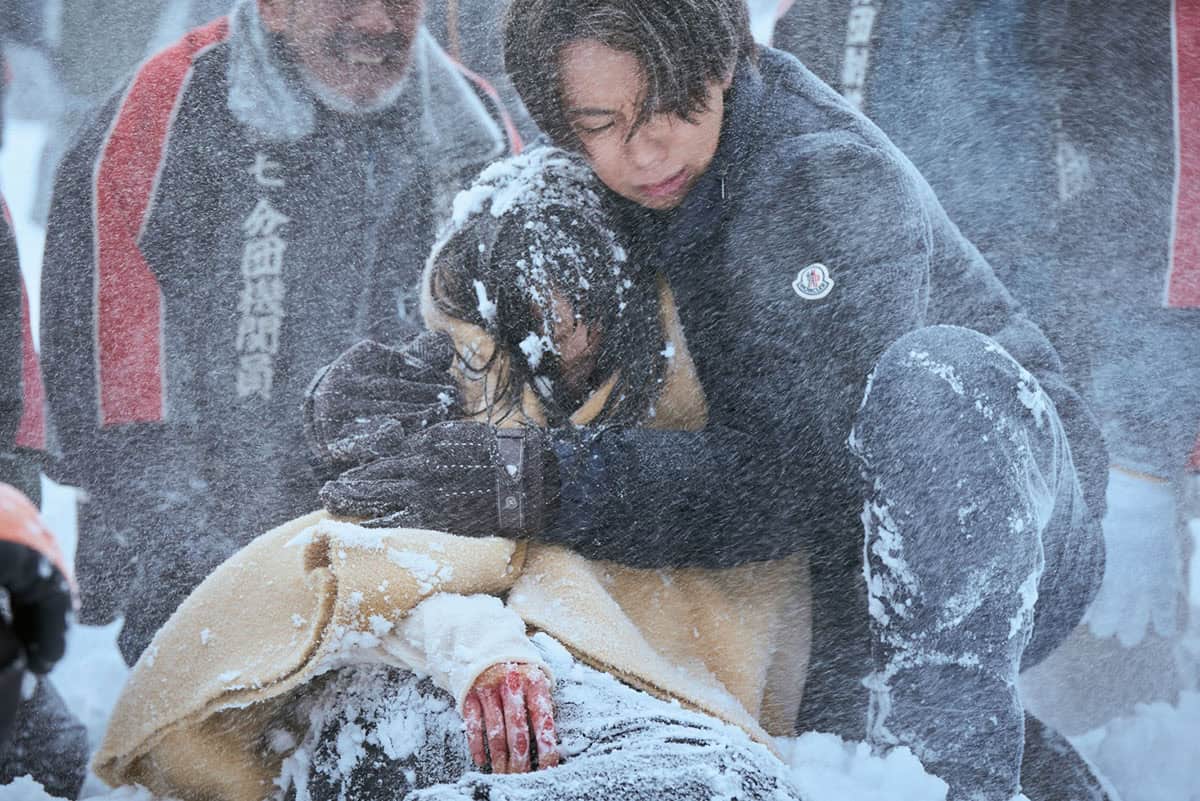
A significant strength of the film lies in its portrayal of mental instability within the family. After a certain point, none of the three core family members — Minoru, Yuki, and Akira — can be considered entirely stable, adding layers of psychological complexity to the supernatural events. The escalating intensity of these events, even within the pervasive ambiguity, keeps the audience on edge. However, the film’s review notes that Naito occasionally struggles with pacing and resolution. The answers to the central questions seem to shift multiple times, and the film includes a succession of scenes, each of which could have served as a fitting conclusion, leading to a perceived lack of decisive ending. This tendency, described as a common "ailment" in some Japanese productions, emerges as a notable structural flaw.
Despite these narrative challenges, the overall balance leans heavily towards the film’s strengths. The enigma surrounding Minoru’s past and its profound impact on his family creates a compelling mystery that drives much of the narrative. His increasingly erratic behavior, such as locking the entire family inside the house every night, anchors a significant portion of the film’s duration. The lingering questions — Is Yuki truly the Snow Woman, or is she becoming her? Did Minoru’s late mother play a role in this unfolding horror? — further enrich the mystery, creating an engaging and entertaining experience. Beyond the supernatural, Ice Blood subtly highlights the insidious blight of patriarchy and its often devastating impact on women, adding a layer of social commentary that enriches the film’s thematic context.
Performances that Elevate the Horror
The acting in Ice Blood is lauded as being of a high caliber, with each principal performer delivering compelling portrayals. Hiromitsu Kitayama, in his leading horror role as Minoru, competently embodies his character’s downward spiral and the gradual revelation of his darker self. His performance captures the escalating obsession and mental fragmentation with convincing depth.
Chihiro Kato, as Yuki, presents a similarly unstable character whose cold beauty not only adds to the ambiguity surrounding her but also enhances the unsettling nature of her transformation. Her portrayal balances vulnerability with an eerie detachment, making her a central figure in the film’s mysterious unraveling.
Young Aoto Yamatani, as Akira, skillfully conveys his character’s initial frustration at not comprehending the terrifying events unfolding around him, transitioning into a portrayal of eventual resolve and a chilling acceptance of his new reality. His performance is crucial in depicting the child’s perspective within the unfolding horror.
Veteran actor Shiro Sano, as Shigeru, delivers an impressive performance as a man consumed by dementia, whose fragmented memories and inexplicable terror serve as the initial catalyst for the film’s supernatural events. His portrayal of mental decline is both poignant and deeply unsettling.
Visual Storytelling and Atmospheric Design
Hidetoshi Shinomiya’s cinematography is a standout element, effectively capturing the dual nature of the snow-covered setting. Initially presented as breathtakingly beautiful, the landscape gradually transforms under his lens, becoming increasingly mysterious, dangerous, and isolating as the narrative progresses. The exterior shots of the vast, white expanse evoke both awe and a creeping sense of dread.
Internally, the family home quickly transitions from a potential sanctuary to a suffocating and claustrophobic space. Shinomiya’s framing and lighting choices contribute significantly to this oppressive atmosphere, making the house feel like a character itself, trapping the family within its walls. The visual depiction of violence and terror, once these elements take hold, is equally impressive, utilizing evocative imagery rather than relying solely on explicit gore to convey the horror. This artistic approach underscores the film’s commitment to psychological terror and atmospheric dread.
Broader Implications and the Future of Japanese Horror
Ice Blood arrives at a time when Japanese horror continues to evolve, moving beyond the "J-horror" boom of the late 1990s and early 2000s that introduced iconic franchises like Ring and Ju-on to a global audience. While these films often relied on ghostly apparitions and psychological dread, contemporary Japanese horror frequently explores a broader spectrum of themes, including societal anxieties, technological alienation, and reinterpretations of classic folklore. Ice Blood, with its focus on the Yuki Onna and its blend of family drama, psychological thriller, and supernatural horror, positions itself within this evolving landscape.
The film’s exploration of mental health alongside supernatural elements aligns with a growing trend in horror cinema globally, where the internal struggles of characters are as terrifying as external monsters. By grounding the mythological Yuki Onna in the deteriorating minds of its protagonists, Ice Blood offers a fresh take on an ancient legend, making it resonant for modern audiences who grapple with issues of perception, reality, and the fragility of the human psyche.
The film’s potential festival circuit, hinted at by promotional materials (such as the NIFFF logo in the original article’s image), suggests a push for international recognition and critical acclaim. Success in such festivals could establish Ice Blood as a significant entry in the contemporary Japanese horror canon, potentially influencing future productions and demonstrating the enduring power of Japanese folklore when presented through a compelling cinematic lens.
Conclusion: An Entertaining, Ambiguous Thriller
Despite its identified issues concerning narrative resolution and occasional pacing, Ice Blood ultimately emerges as a highly entertaining thriller and horror movie. Its greatest strengths lie in the pervasive ambiguity that characterizes its storytelling, the compelling performances from its cast, and the sophisticated cinematography that crafts an unforgettable visual experience. By masterfully weaving an ancient legend into a modern psychological drama, Eisuke Naito’s Ice Blood promises to be a memorable addition to the horror genre, leaving audiences to ponder the true nature of the white terror long after the credits roll.