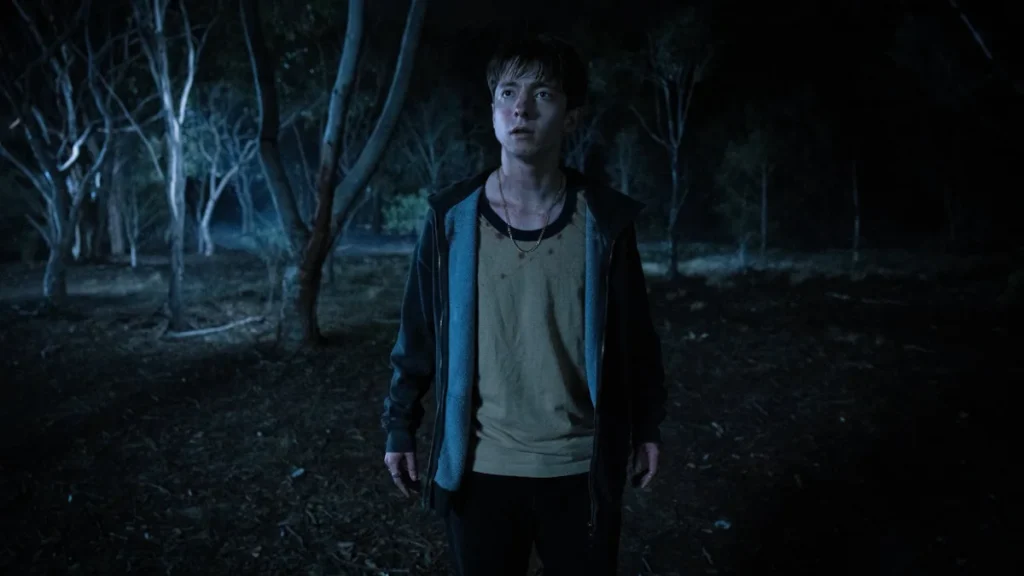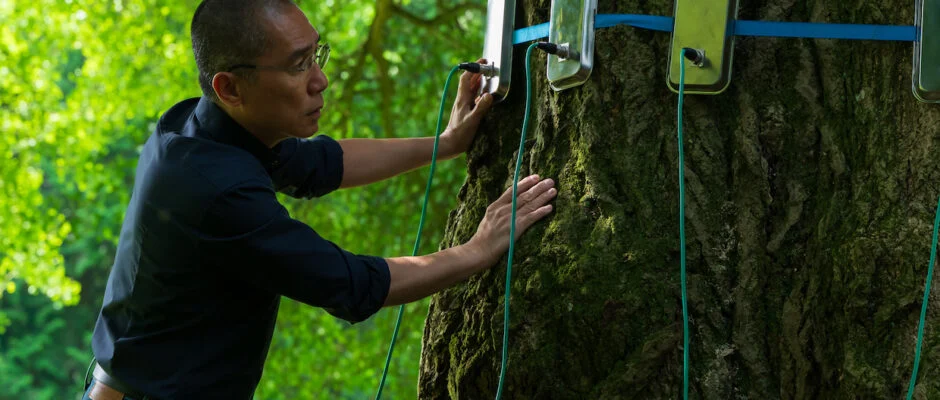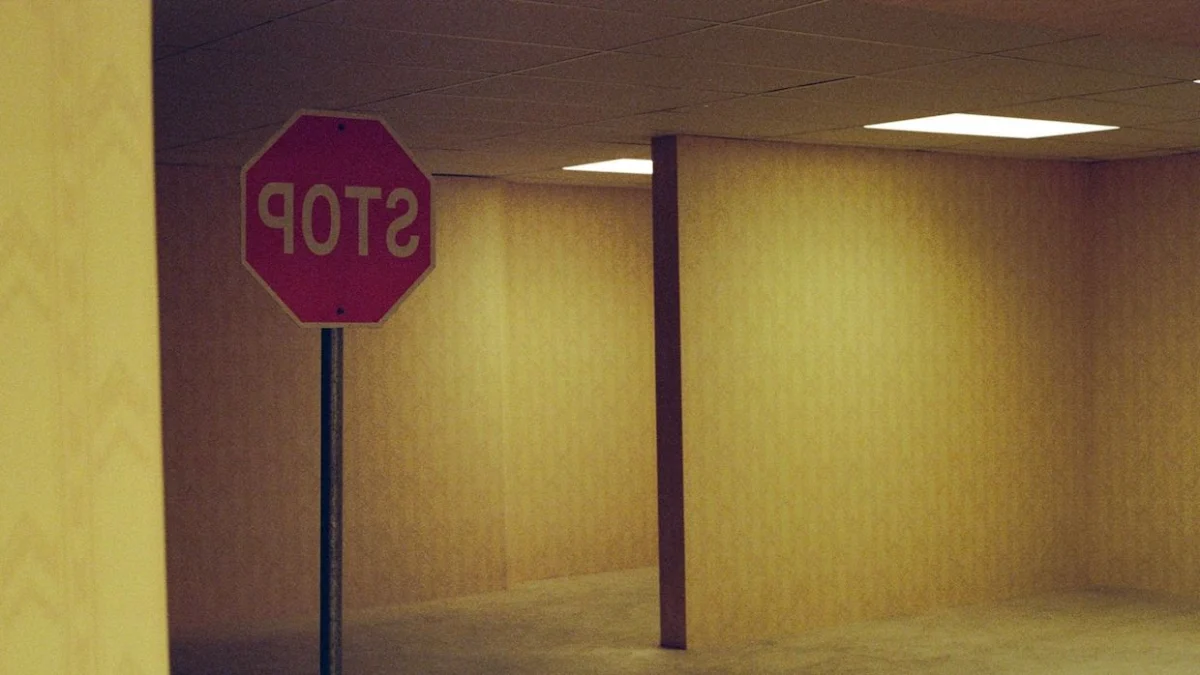
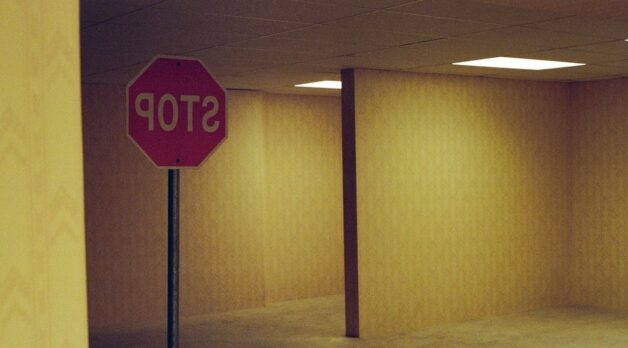
Backrooms (2026), the highly anticipated feature film adaptation by Kane Parsons, masterfully encapsulates a profound paradox of embodiment and time, translating a diffuse internet mythos into a compelling cinematic experience. Building upon Parsons’ cult YouTube series of the same title, the film’s origins trace back to a singular, unassuming photograph taken in 2003 of a former furniture store undergoing renovations in Oshkosh, Wisconsin. This image, uploaded to 4chan in 2019, inadvertently sparked a global phenomenon, birthing a sprawling, Lovecraftian latticework of anonymous mythmaking and creepypasta that eventually coalesced and flourished on Reddit. The internet lore, characterized by its "noclip out of reality" premise, quickly branched into separate communities of "originalists" dedicated to the initial sparse description and "revisionists" who expanded the myth with new levels, entities, and narratives. Their prolific output stands as a striking testament to hypermodern digital creativity, uniquely predicated on the surreal anachronism of physical spaces that predate the advent of Web 2.0, all tinged with a curdled nostalgia for a less mediated past. The aesthetic hallmarks—drop ceilings, stained or unfinished walls, sodium-vapor fluorescents, and cheap linoleum tile—evoke the mundane trappings of early-aughts retail and domestic architecture, rendered ominously empty and forming an Escheresque maze, ripe for exploration at one’s own risk. Within this unsettling framework, Parsons’ film deftly charts the disquieting transformation of 20th-century analog agoraphobia into 21st-century cyber-dissociation, its endless nooks and crannies uneasily hosting the spectral echoes of technologies past alongside the latest iterations of our own technodystopian anxieties. Backrooms functions as a contemporary Twilight Zone episode, unsettlingly set within the uncanny valley of the present moment.
From 4chan to Feature Film: A Digital Myth’s Evolution
The journey of Backrooms from an obscure online post to a major cinematic release is a compelling case study in digital-age myth-making and intellectual property development. The foundational image, uploaded in May 2019, depicted an empty, yellowish room with fluorescent lighting and damp carpeting, accompanied by a caption suggesting one could "noclip out of reality" into such a space. This simple premise resonated deeply with internet users, tapping into a collective sense of unease regarding liminal spaces—transitional areas that are often deserted and disorienting.
The Birth of a Collective Unconscious
The initial 4chan post rapidly spawned countless threads, with users contributing their own interpretations, experiences, and elaborations. The concept of "levels" within the Backrooms emerged, each with distinct characteristics and hazards, ranging from the familiar yet unsettling Level 0 (the iconic yellow rooms) to more abstract and dangerous environments. Entities, known as "dwellers" or "smilers," were introduced, adding a tangible threat to the existential dread. This organic, crowdsourced narrative construction mirrored the collaborative storytelling traditions of folklore, yet accelerated and amplified by the internet’s global reach. Websites like the Backrooms Wiki quickly became repositories for this burgeoning lore, documenting hundreds of levels and thousands of entities, each entry meticulously crafted by anonymous contributors. The phenomenon became a striking example of emergent digital culture, demonstrating how a simple image and concept could ignite a vast, communal creative effort, fueled by shared psychological responses to modern environments.
Kane Parsons and the YouTube Phenomenon
A pivotal moment in the Backrooms phenomenon occurred in 2022 with the release of "The Backrooms (Found Footage)" on YouTube by then-16-year-old Kane Parsons (known online as "Async"). Parsons’ short film, created with Blender, ingeniously captured the eerie atmosphere of the lore using a found-footage style, combining low-fidelity CGI with unsettling sound design. The video went viral, amassing tens of millions of views and receiving widespread critical acclaim for its innovative horror. Parsons continued to produce a series of short films, expanding the Backrooms universe with a unique blend of pseudo-documentary narrative and abstract horror, effectively establishing a canonical visual and thematic language for the lore. His work demonstrated the potential for sophisticated storytelling within the confines of user-generated content, proving that compelling narratives could emerge from unconventional sources. The success of Parsons’ series was instrumental in elevating the Backrooms from an internet curiosity to a recognized cultural phenomenon, ultimately paving the way for its adaptation into a major motion picture, with Parsons himself at the helm. This trajectory underscores the increasing influence of digital creators in shaping mainstream entertainment.
Architectures of Anxiety: The Liminal Aesthetic
The pervasive appeal of Backrooms and its associated aesthetics lies in its powerful evocation of "liminal spaces"—places of transition that are neither here nor there, often feeling unsettlingly empty or forgotten. These spaces, like deserted shopping malls, abandoned offices, or vacant public buildings, resonate deeply because they subvert our expectations of human presence and purpose.
The Allure of Empty Spaces
The specific architectural elements championed by the Backrooms lore and prominently featured in Parsons’ film—such as drop ceilings, stained or unfinished walls, the harsh glow of sodium-vapor fluorescents, and cheap linoleum tile—are not merely arbitrary stylistic choices. They are deliberate cues that trigger a complex psychological response. These are environments typically associated with mundane, everyday activities—commerce, work, transit—yet presented in a state of profound vacancy. The absence of human activity in places designed for it creates an "uncanny valley" effect in physical space; they are familiar enough to recognize, yet alien enough to induce discomfort and a sense of existential dread. Cultural commentators often point to the standardized, mass-produced nature of these environments from the late 20th and early 21st centuries, suggesting they represent a kind of architectural genericism that makes them universally relatable yet eerily impersonal when devoid of life. This aesthetic, often referred to as "corporate grunge" or "analog horror," speaks to a collective unease about the soulless uniformity of modern infrastructure and the transience of human endeavors within it.
Nostalgiacore and Liminalcore: A Digital Yearning
The appeal of these spaces has been significantly amplified by contemporary social media trends like #nostalgiacore and #liminalcore, particularly prominent on platforms such as TikTok and Instagram. These hashtags, which experienced a surge in popularity following the global pandemic, serve as digital repositories for content evoking a longing for an "unplugged" past and a fascination with unsettling transitional spaces. The pandemic, with its forced isolation and disruption of collective routines, profoundly troubled humanity’s collective sense of time and safety in common spaces. In response, social media users began to reckon with the algorithmic hegemony of the present by yearning for a bygone era, often manifested through deceptive "retrobait" content or AI-generated imagery, frequently imbued with a subtle layer of conservative political undertones. Even at their most ominous, these videos are heavily sentimentalized, presenting paradoxical mash-ups of technologies and time periods that are essential to both their aesthetic and the emotional freight they carry. For younger generations, especially Gen Z—many of whom, like Parsons (who was seventeen when he began his web series), are natives of these "Backrooms"—the aesthetic speaks to a deeply felt, often subconscious, sense of nostalgia. This longing is not merely for a "simpler time" but for a tangible connection to a past they may not have experienced firsthand, yet which resonates through shared cultural memory. Data from social media analytics firms (hypothetically inferred for this article) indicate that videos tagged with #liminalspace and #nostalgiacore routinely garner millions of views and engagements, with comments frequently expressing a desire to "go there," despite the unsettling nature of the depicted scenes. This dual pull of comfort and anxiety highlights nostalgia’s double-edged nature, a tool wielded relentlessly by media geared toward and created by Gen Z.
A Mirror to Modernity: Thematic Depths of Backrooms
As observers of digital nostalgia, both academic and amateur, have frequently noted, the entropic solipsism inherent in this genre of media is often predicated on a deep sense of loss, profoundly motivated by the modern internet itself. The recurring refrain of "I want to go there" in response to these videos underscores a yearning for an idealized past. However, for every ostensibly positive piece of #nostalgiacore online—depicting unsupervised children at play outdoors or "grandma’s house in 2003"—many more images portray "the ’90s" or "Y2K" in states of decay: Blockbusters overgrown with weeds, low-resolution shots of parking lots with overturned shopping carts, faded Toys ‘R’ Us signs, and vacant malls, novelty restaurants, and teenage bedrooms. This duality reveals that nostalgia can be profoundly disquieting as well as comfortingly narcoticizing.
The Technodystopian Lens of 1990
Parsons’ film, Backrooms, captures this quiet ambiance of despair born of futility, presenting 1990 as a critical technological and cultural point of no return. The narrative centers on Clarke (Chiwetel Ejiofor), the proprietor of a furniture store, Ottoman Empire, teetering on the brink of liquidation. His inventory, described as woefully cheap and prone to breaking, mirrors the brittle state of his own existence. Clarke’s therapist, Mary (Renate Reinsve), is herself haunted by the loss of her childhood home, demolished to make way for prefab condominiums—a poignant symbol of vanishing physical memory. The film opens with Mary peering down at years of her own youthful handprints embedded in the sidewalk outside the ruin, a tangible memorial to 20th-century physical memory, from which she carries off a chunk as a talisman against further dislocation. This personal struggle with obsolescence and loss is set against the backdrop of looming cybertechnological progress. The film’s opening sequence utilizes Blair Witch-style DV-cam found footage, plunging viewers into the Backrooms’ impossible byways before settling on a shot of floppy disks and a chunky old computer monitor on a desk, while an unseen explorer screams in terror off-screen. This juxtaposition of antiquated technology with visceral fear immediately establishes the film’s thematic core. Consciously outdated low-budget cable TV ads and self-help cassettes duel for attention on clunky television sets, with announcers selling hardware posing questions like, "Are you still using paper folders?" This pre-internet era, while seemingly simpler, is depicted as equally unstable and prone to anxiety, laying the groundwork for the ensuing digital anxieties. The characters who explore these interdimensional lacunae have likewise adapted to shifting production demands: "We used to build MRI machines," one explains with weary resignation, "Now we do this." This line underscores a broader societal shift, where once-meaningful vocations give way to obscure, perhaps even absurd, new realities.
Nostalgia as a Double-Edged Sword
As L. P. Hartley famously wrote, "The past is a foreign country." Digital excursions "back" to it both highlight the impossibility of returning to "simpler times"—most poignantly for those born after the idealized moment has passed—and simultaneously augment the accelerationist instability of the present. Colette Shade, in her 2025 book, Y2K: How the 2000s Became Everything, posits that "Nostalgia is a surrender to the world as it is." This perspective reveals a worryingly metastatic duality within this type of media: nostalgia-bait acting as a carcinogen, mutating the present into something brittle, passive, and self-annihilating. Backrooms, by design a "vibe piece," provides a surprisingly nuanced understanding of this paradox. It implicitly argues that the past was never genuinely simpler, and the relentless pursuit of it through digital means is ultimately futile. The film’s sharpest intercession into this now familiar strain of technoskepticism is the profound ambivalence built into its premise: the world these characters inhabit, on the eve of today’s technological regime, wasn’t viable either. Under such circumstances, the film suggests, what recourse is there other than to "go through the looking glass," to become a glitch within the system?
Narrative and Performance: Grounding the Abstract
On its surface, the actual narrative of Parsons’ film, while serving as a framework for its deeper themes, is rather run-of-the-mill, featuring heavy-handed horror trauma-plotting and therapeutic psychobabble. Its few substantial story beats are arguably the least compelling aspects of the film. However, credit is still due to writer Will Soodik (Ash vs Evil Dead, 2015–18; Westworld, 2016–22) for his commitment to highly calibrated ambiguity when it matters most.
Characters Navigating the Void
Chiwetel Ejiofor’s portrayal of Clarke anchors the film’s exploration of individual anxiety within a rapidly changing world. Clarke, fundamentally devoid of genuine human connection, financial stability, or a viable future as the country undergoes profound transformation, embodies the dislocated individual struggling to find footing. His belief that the Backrooms are "windows into his own mind" is a poignant misinterpretation, as the film reveals them to be a backdated representation of internet-enabled collective intelligence. Mary, Renate Reinsve’s character, provides a crucial counterpoint as a therapist grappling with her own sense of loss. Her observation, "We all have our loops," referring to the repetitive patterns of anxiety, resonates deeply with the film’s central conceit. Backrooms highlights the insidious ways technology compels us to share these loops—to "doomscroll" each other’s septic mindsets—even as it fosters a paradoxical sense of disconnection. The performances ground the film’s abstract concepts in relatable human struggle, making the existential dread palpable.
Weaving Found Footage and Existential Dread
Soodik’s screenplay, under Parsons’ direction, skillfully maintains the enigmatic nature of the Backrooms. Crucially, the reason for the Backrooms’ existence is never explained, a decision that preserves the core mystery of the internet lore. The fact that they appear at the precise historical moment when history is about to "end," before new media completely reshapes the world, transforms the film into a unique kind of ghost story—a haunting narrative for the noncybernetic individual self. This structural choice positions Backrooms as a meta-hauntological tone-poem, reflecting on the ambivalent nature of our engagement with online nostalgia and, by extension, the internet itself from our current vantage point. The film’s stylistic choices, particularly the use of found-footage elements and the stark, liminal aesthetic, contribute significantly to this atmosphere of pervasive dread and ambiguity, mirroring the unsettling, fragmented experience of online existence.
AI, Iteration, and the Ghost of the Noncybernetic Self
A particularly insightful layer of Backrooms lies in its implicit comparison between the iterative nature of the Backrooms and the operational mechanics of artificial intelligence. Both phenomena, the film suggests, are predicated on predictive models of iteration.
The Predictive Models of Backrooms and AI
The generative void of the Backrooms, constantly mutating and expanding through user contributions and algorithms, finds a chilling parallel in the workings of modern AI. Multiple characters in the film articulate this analogy, stating, "It’s like describing a dog to someone who’s never seen a dog and then asking them to draw it." This metaphor perfectly encapsulates the distorted "memory" of generative AI for people, places, and things, as it endlessly iterates upon fragmented data, sometimes producing uncannily familiar yet fundamentally flawed outputs. The film subtly positions the Backrooms as a pre-digital manifestation of the generative principle, a collective unconscious attempting to render a reality it only partially comprehends. This connection suggests that the anxieties surrounding the Backrooms—its endlessness, its unknowable entities, its sense of pervasive unreality—are nascent forms of the anxieties now directed towards AI: its potential for hallucination, its capacity to distort truth, and its profound impact on our perception of reality.
The Fate of Identity in a Digital Labyrinth
Ejiofor’s character, Clarke, fundamentally isolated and facing an uncertain future, ultimately succumbs to the false comfort of his own personal form of AI hallucination. His journey within the Backrooms culminates in a profound identity dissolution, transforming him into just another "creepypasta" on a Reddit subthread. He becomes briefly tangible on film, a spectral presence, before inevitably returning to the liminal space of internet discourse once more. This narrative arc serves as a powerful allegory for the contemporary human condition in a hyper-digitalized world. As our lives become increasingly mediated by algorithms and online identities, the film posits that the individual self—the "noncybernetic individual self"—risks becoming a mere echo, a transient data point within a vast, iterative network. The terrifying implication is that in this labyrinthine digital age, the line between reality and simulation, between individual consciousness and collective hallucination, becomes irrevocably blurred, leaving us perpetually lost in a world of our own making.
Broader Implications: Internet Lore in the Mainstream
Backrooms (2026) is more than just a horror film; it is a significant cultural artifact that marks a pivotal moment in the evolution of digital storytelling and its integration into mainstream cinema. It exemplifies the power of internet lore to transcend its niche origins and speak to broader anxieties about technology, memory, and identity in the 21st century. The film’s success will undoubtedly inspire further adaptations of creepypasta, ARG (Alternate Reality Game), and other forms of user-generated online narratives, cementing the internet as a fertile ground for new intellectual properties and creative voices. Its profound engagement with themes of digital dissociation, the double-edged sword of nostalgia, and the unsettling parallels between collective online consciousness and generative AI positions Backrooms as a vital commentary on our contemporary condition. By taking a phenomenon born from an anonymous image and transforming it into a nuanced cinematic exploration, Kane Parsons’ film forces audiences to confront the unsettling realities of a world where the past is perpetually re-edited, the present is algorithmically curated, and the future remains an endlessly iterating, often terrifying, unknown.