The timeless Hanna-Barbera franchise created by William Hanna and Joseph Barbera in 1969 is expanding into television once again, with Netflix slated to debut an eight-episode live-action origin series titled Scooby-Doo: Origins in 2027. Unlike previous adaptations that featured the mystery-solving gang as young adults, this modern reimagining transports audiences back to the teenage years of Mystery Incorporated. Developed as a collaborative effort between Warner Bros. Television, Berlanti Productions, and Midnight Radio, the project represents a significant investment in serialized nostalgic intellectual property for the streaming giant.
Production Background and Development Timeline
The genesis of Scooby-Doo: Origins dates back to early 2024, when industry trades first indicated that Warner Bros. Television was actively shopping a live-action series concept based on the classic cartoon. Following a competitive development phase, Netflix officially issued an eight-episode series order in March 2025.
Pre-production logistics moved swiftly throughout the latter half of 2025, culminating in principal photography kicking off on April 24, 2026. The production utilized the state of Georgia as its primary hub, filming under the working title Talbot Pines across Atlanta, Rutledge, Porterdale, and Monticello. Studio work was distributed between Cinespace Film Studios in Atlanta and Cinelease Studios in Conyers, with Hard Labor Creek State Park serving as the primary backdrop for the fictional Camp Ruby-Spears. After nearly five months of shooting, principal photography officially wrapped on September 13, 2026, transitioning the high-profile project into an extensive post-production phase focused heavily on visual effects and creature design.
Narrative Framework and Tone
Scooby-Doo: Origins steps away from the comedic, episodic monster-of-the-week formula of the traditional Saturday morning cartoon, opting instead for a serialized, atmospheric narrative structure. The storyline is set during the main characters’ final summer at Camp Ruby-Spears—a deliberate nod to co-creators Joe Ruby and Ken Spears.
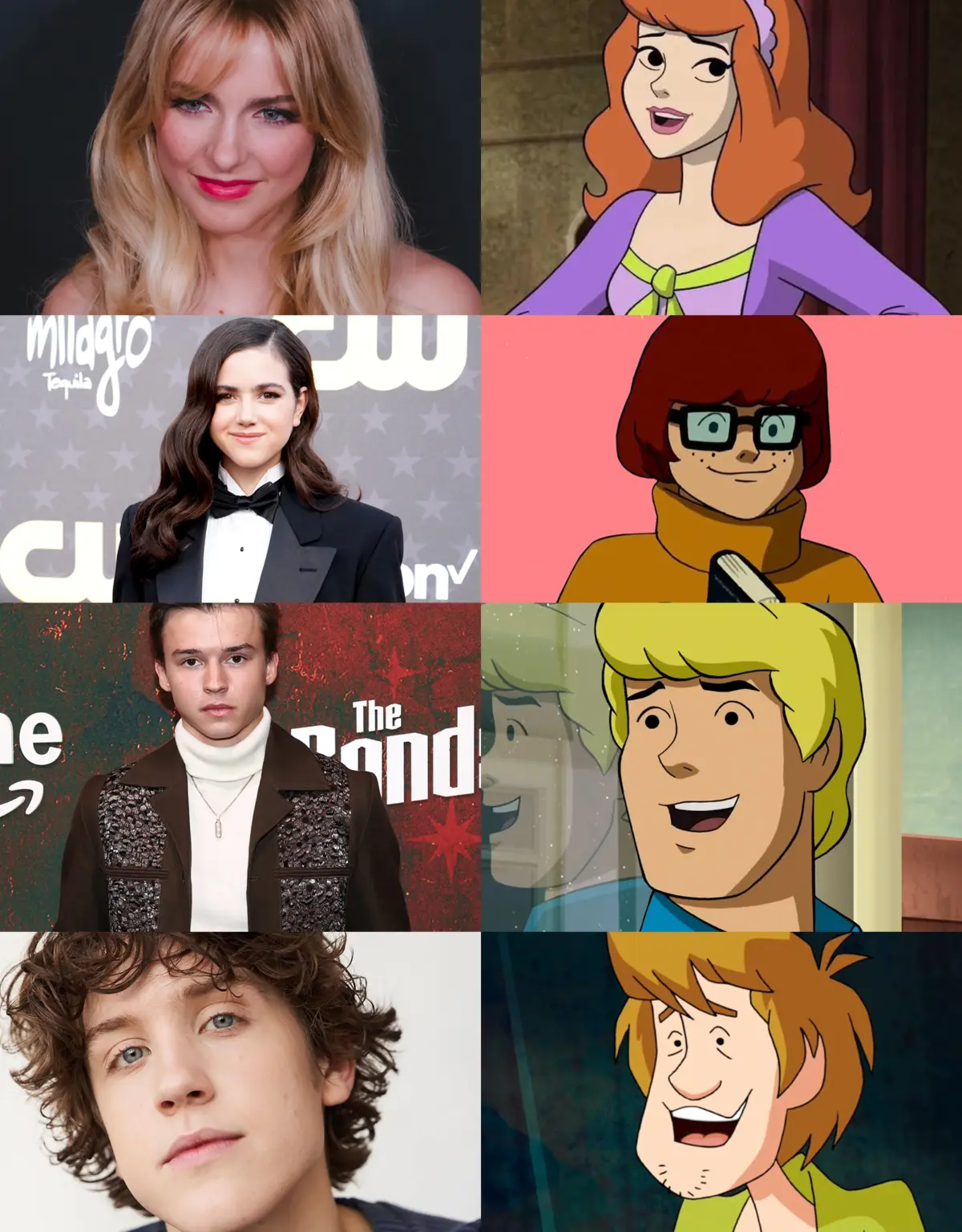
The plot centers on lifelong acquaintances Shaggy and Daphne as they become entangled in a haunting mystery involving a lonely, orphaned Great Dane puppy who may have witnessed a supernatural crime. They are subsequently joined by scientific townie Velma and the enigmatic newcomer Freddy, forming the foundational bond that precedes their future as Mystery Incorporated. According to early promotional materials and production insights, the creative team is targeting a tone more aligned with supernatural adolescent dramas like Stranger Things rather than traditional slapstick comedy, forcing the teenage protagonists to confront genuine horrors and personal secrets.
Behind the Camera: Production and Creative Leadership
The series is helmed by co-showrunners and writers Josh Appelbaum and Scott Rosenberg through their production banner, Midnight Radio, alongside producing partners André Nemec, Jeff Pinkner, and Adrienne Erickson. The team brings substantial franchise experience, though their previous collaborations include Netflix’s short-lived live-action adaptation of Cowboy Bebop as well as blockbuster feature films like Jumanji: Welcome to the Jungle and Mission: Impossible – Ghost Protocol.
Adding further weight to the production’s genre credentials, Greg Berlanti, Sarah Schechter, and Leigh London Redman serve as executive producers for Berlanti Productions, alongside Jonathan Gabay. Berlanti Productions previously established a successful track record with Netflix through darker adolescent adaptations such as Chilling Adventures of Sabrina and Riverdale.
Directorial duties for the series premiere fall to Hugo Award-winner Toby Haynes, whose extensive resume includes acclaimed episodes of Doctor Who, Andor, and Black Mirror, as well as the sci-fi sequel USS Callister: Into Infinity. The behind-the-camera crew also features prominent veterans from Netflix’s flagship series Stranger Things, including second unit director and supervising stunt coordinator Hiro Koda, production sound mixer Michael P. Clark, and several members of the camera department. Furthermore, production designer Scott Chambliss and costume designer Erinn Knight provide the aesthetic foundation, while creature concept artist Matthew Millard ensures that the series features tangible, non-human threats beyond traditional masked culprits.
Cast and Character Dynamics
The live-action adaptation introduces a fresh generation of actors to portray the iconic members of Mystery Incorporated. While Netflix has assembled a robust ensemble of rising talent for the core roles, the production has also secured notable supporting and recurring players.
Veteran voice actor Frank Welker, who has voiced Scooby-Doo since 2002 and Fred Jones since the franchise’s inception in 1969, continues his historic association with the property by reprising his role as the voice of the titular canine. Meanwhile, the physical portrayal of Scooby marks a historic franchise milestone: for the first time in live-action history, the character is played by a real chocolate-brown Great Dane puppy rather than a CGI creation.
Paul Walter Hauser, recognized for his work in Black Bird and Cobra Kai, joins the cast as a series regular in an undisclosed role reportedly tied to Scooby’s original ownership prior to Shaggy. Additional recurring talent includes OutKast co-founder André “3000” Benjamin and Academy Award nominee Cathy Moriarty, further broadening the generational appeal of the supporting ensemble. A large group of additional cast members, including Pierce Polomsky, Kinsey Kunkel, and James Lee Thomas, rounds out the fictional community of Camp Ruby-Spears and the surrounding town.
Strategic Implications and Streaming Landscape
The greenlighting of Scooby-Doo: Origins underscores a broader industry trend wherein major streaming platforms leverage established, multi-generational intellectual property to secure reliable viewership demographics. Scooby-Doo has consistently proven to be a durable asset for Netflix; historical engagement data indicates that previous iterations, such as Scooby-Doo! Mystery Incorporated, accumulated tens of millions of views on the platform, establishing a pre-existing audience base that justifies the high budget of a live-action series.
The project also highlights evolving distribution and licensing dynamics between Netflix and Warner Bros. Television. Although Warner Bros. retains ultimate ownership of the underlying intellectual property, the production bypassed the studio’s primary domestic streaming outlet, Max, in favor of a global Netflix release. This strategy aligns with Warner Bros. Television’s broader pivot toward licensing high-profile library and original content across multiple third-party platforms to maximize profitability and global reach.
Audience Expectations and Outlook
With principal photography concluded and the series firmly entrenched in post-production, anticipation among subscribers remains high. The combination of a gritty narrative approach, a practical animal actor for the central role, and an experienced genre-television crew positions Scooby-Doo: Origins as one of Netflix’s most scrutinized upcoming tentpole releases. While an exact premiere date within 2027 has yet to be finalized by studio executives, industry analysts project a mid-to-late summer debut, giving the post-production team ample time to finalize the visual effects and sound design required to bring the supernatural mystery to life.