The publishing landscape for middle grade speculative fiction is undergoing a notable shift in 2026, driven by a diverse array of upcoming releases spanning fantasy, science fiction, horror, and magical realism. Industry analysts and literary critics have observed that while securing dedicated review space in major mainstream publications remains a persistent hurdle for children’s and young adult literature, the demand for imaginative, genre-bending storytelling among readers aged eight to twelve continues to expand. Publishers are responding to this sustained market interest by curating catalogs that balance traditional heroic tropes with contemporary themes, including identity exploration, environmental anxiety, historical introspection, and technological ethics. As educators, librarians, and parents increasingly look for literature that bridges entertainment with emotional development, the 2026 publishing calendar offers a robust selection of titles designed to resonate with younger demographics while maintaining sophisticated narrative structures.

The Evolution and Challenges of Middle Grade Publishing in 2026
The market for middle grade fiction—traditionally targeted at readers aged eight through twelve—occupies a critical juncture in youth publishing. Sandwiched between early chapter books and young adult (YA) literature, this category requires a delicate balance of accessible reading levels and complex thematic resonance. According to recent publishing trade data, middle grade titles account for a vital segment of children’s book sales, yet they frequently struggle for visibility in traditional literary review sections compared to adult fiction and YA crossovers.

Industry stakeholders note that this visibility gap has forced authors, independent bookstores, and educators to rely more heavily on grassroots curation, community reading programs, and library initiatives to champion new releases. Despite these promotional challenges, the genre is experiencing a creative renaissance. Authors are increasingly utilizing speculative fiction frameworks—such as alternate histories, dystopian futures, and magical realism—as safe intellectual spaces for young readers to process real-world complexities, from social identity to systemic institutional challenges.

Chronological Overview of Major 2026 Releases
The 2026 publishing schedule features a steady rollout of speculative titles distributed across major publishing houses, including Scholastic, Feiwel & Friends, Disney Hyperion, and Delacorte Press. The timeline of releases reflects a diversified approach to seasonal marketing, ensuring a continuous supply of speculative literature throughout the spring, summer, and autumn months.

Spring 2026: Foundations of Magic and Identity
The spring publishing window establishes several high-profile series launches and standalone novels that set the thematic tone for the year.

- March 2026: The season opens with Noah Corey’s Clementine H. Hopeful Is Not a Hero (Labyrinth Road, March 17), which introduces readers to a protagonist navigating name validation, neurodivergent-coded interests in arachnids, and reality-bending pretend games. Concurrently, Ciera Burch’s Olivia Gray Will Not Fade Away (Margaret K. McElderry Books, March 17) breaks new ground for middle grade literature by centering an aromantic and asexual (arospec/acespec) protagonist who literally begins to fade when confronted with adolescent romantic pressures. Later in the month, Shakirah Bourne’s Here Lies a Ghost (Scholastic Press, March 3) explores institutional hazing, historical guilt, and supernatural consequences in an elite boarding school setting in Barbados.
- April 2026: April brings high-stakes quests and dystopian frameworks. Emily B. Martin’s Nell O’Dell Hates Quests (Candlewick Press, April 7) subverts traditional fantasy tropes as a retired quester’s daughter is forced into an unexpected adventure. Deva Fagan’s The Delta Codex (Atheneum Books for Young Readers, April 14) shifts into science fiction, following an isolated planetary codex who discovers systemic deception. Jordan Ifueko’s The Genie Game (Harry N. Abrams, April 21) introduces a corporate-dystopian United States run by the Trio Trust, where a girl must grant non-magical wishes in a high-stakes competition to locate her missing sister. Closing the month, Julia Riew’s Shim Jung Takes the Dive (Quill Tree Books, April 28) draws inspiration from South Korean Haenyeo divers and regional folktales to strand a young girl in an underwater dragon queendom.
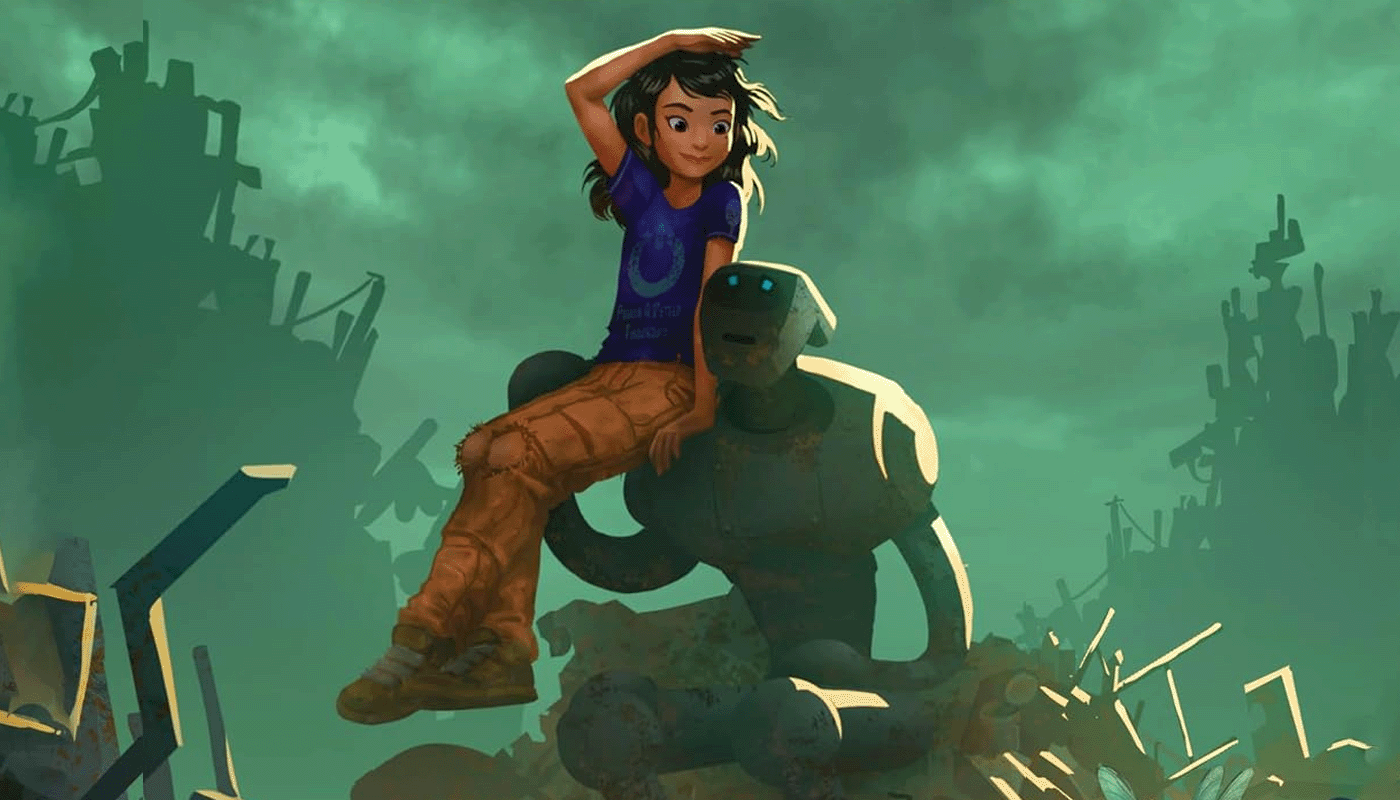
- May 2026: Malia Maunakea’s The Shark Prince (Penguin Workshop, May 5) explores Native Hawaiian mythology through the lens of a half-shark descendant attempting to save his home from corporate developers. Concurrently, Erin Entrada Kelly’s The Second Life of Snap (Greenwillow Books, May 12) examines resource rationing and corporate dominance in a dystopian Texas through a young girl’s efforts to rehabilitate a discarded, dysfunctional robot.
Summer 2026: Cosmic Journeys and Historical Echoes
As the publishing year transitions into summer, narratives frequently expand outward into planetary exploration and inward toward historical reckoning.

- June 2026: Donna Barba Higuera continues her acclaimed narrative arc with Firesnake (Levine Querido, June 2), the third installment in The Last Cuentista universe, exploring planetary colonization and generational memory on Sagan. Olivia Abtahi’s Rostam Wrecks THE REALM (Simon & Schuster Books for Young Readers, June 9) follows a displaced teenager on a mining planet who inadvertently unleashes a demon while seeking a shortcut to social acceptance.
- July 2026: Graci Kim’s Royalslinger (Disney Hyperion, July 21) continues the Dreamslinger fantasy series, pairing genetic mutation-based magic with a royal mandate to track down a stolen relic. Concurrently, Christine Hartman Derr’s Raven, Rising (Heartdrum, July 7) centers on a Native protagonist rediscovering her family’s culinary magic to push back against systemic school policies. India Hill Brown’s Girl from the Ashes (Scholastic Press, July 7) uses ghost story mechanics to address historical tragedies and the dangers of ignoring past trauma within a school library setting.
- August 2026: Kaela Rivera’s The Hungry Forest (Bloomsbury Children’s Books, August 18) tests fraternal bonds as two brothers violate their late father’s safety rules by entering a monstrous woodland. Andrea Beatriz Arango’s No Place on Earth (Random House Books for Young Readers, August 25) blends realistic fiction with speculative elements, utilizing lucid dreaming as a therapeutic mechanism for grief and anxiety after a family relocation to Yellowstone National Park. E.K. Johnston’s Third Period Comeback (Dutton Books for Young Readers, August 11) investigates a generational sports curse tied to a plane crash, requiring the resurrection of an ancestor’s ghost to achieve resolution.
Autumn 2026: Covenants, Curses, and Closures
The final quarter of 2026 features high-profile sequels and atmospheric horror designed to capture the autumn reading market.

- September 2026: Marissa Macy’s Spells to Mend Broken Hearts (Scholastic Press, September 15) offers a cautionary magical tale regarding friendship spells and monkey’s paw complications. Ally Russell’s Mystery James Returns from the Grave (Delacorte Press, September 15) expands its supernatural funeral home setting, requiring its protagonist to negotiate with ghosts and vampires to salvage her family’s reputation.
- October 2026: The year culminates with major franchise continuations and dark fantasy releases. H.E. Edgmon’s Realmsweep (Feiwel & Friends, October 13) introduces a royal transgender protagonist in a magical version of Texas who utilizes a dangerous scavenger hunt to access transformation magic. Tehlor Mejia’s The Creeps (Delacorte Press, October 6) delivers grounded motel horror as two children investigate residential disappearances. Claribel A. Ortega’s The Sea Witch Prophecy (Scholastic Press, October 6) returns to the Witchlings universe, requiring a united coven to combat the villainous Ambert. Finally, Marie Arnold’s They Will Not Save Us (Scholastic Press, October 6) explores Haitian Vodou heritage, grief, and community defense against a zombifying plague brought by a mysterious newcomer.
Thematic Analysis and Implications for Young Readers
The diverse array of speculative fiction slated for publication in 2026 highlights several key shifts in how publishers approach the middle grade demographic. Rather than insulating young readers from systemic realities, contemporary middle grade authors increasingly employ speculative elements to contextualize socio-emotional challenges.

- Identity and Representation: A significant portion of the 2026 catalog integrates explicit explorations of gender identity (H.E. Edgmon), asexuality and aromanticism (Ciera Burch), and neurodiversity or cognitive differences (Noah Corey, Andrea Beatriz Arango). By embedding these identity markers within fantastical or science-fictional frameworks, authors provide mirrors for marginalized youth while fostering empathy among general readers.
- Environmental and Corporate Critiques: Dystopian and science fiction titles, such as those by Erin Entrada Kelly, Deva Fagan, and Jordan Ifueko, engage directly with themes of corporate overreach, resource scarcity, and systemic institutional control. These narratives reflect a growing awareness among creators that middle grade audiences are highly perceptive of environmental and socio-economic pressures.
- Folklore and Cultural Heritage: The prominent inclusion of Native American, Native Hawaiian, Haitian, and South Korean cultural frameworks—exemplified by works from Malia Maunakea, Marie Arnold, Julia Riew, and Christine Hartman Derr—demonstrates an industry-wide push toward authentic cultural representation in speculative spaces. This trend moves beyond surface-level aesthetics, integrating traditional mythologies directly into the core mechanics of magic systems and character development.
As these titles move from manuscript to publication throughout 2026, their reception will depend heavily on the continued advocacy of librarians, educators, and independent booksellers who serve as the primary conduits between publishers and young readers. The breadth and depth of the 2026 speculative fiction lineup suggest a resilient and evolving literary category capable of addressing modern complexities through timeless imagination.