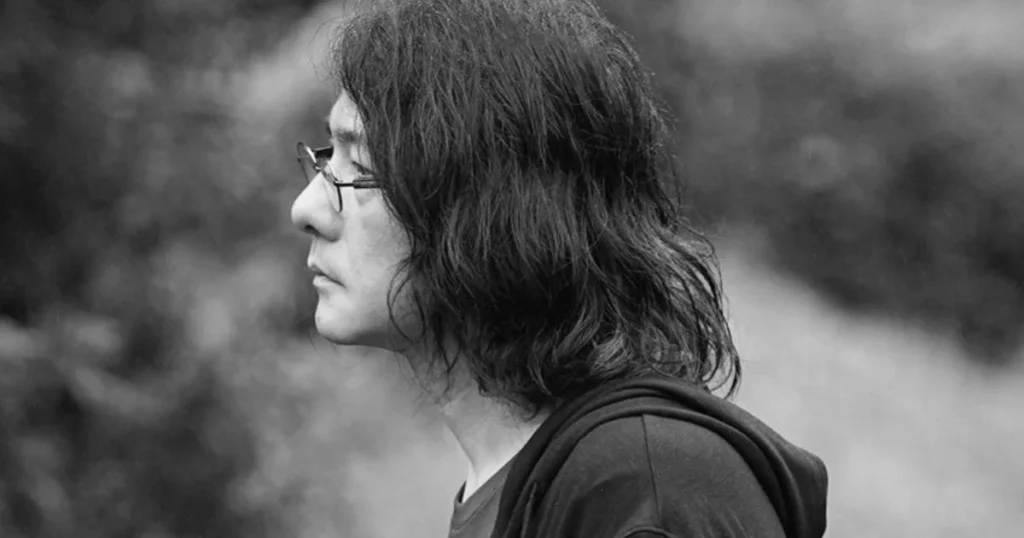
Apolinariya Degtyareva, a visionary Sakha director, screenwriter, and producer hailing from Yakutsk, has marked a significant milestone in her burgeoning career with the premiere of her debut feature film, "Fear" (known in Russian as "Presence"), at the prestigious Mayak Film Festival in 2025. This highly anticipated work, selected for the main competition from a pool of over six hundred submissions, represents a culmination of more than a decade of involvement in cinema and an eight-year journey of script development. The film’s inclusion among the festival’s ten competing titles underscores its critical relevance and the growing international recognition of Sakha cinema.
Degtyareva’s Cinematic Journey: From Linguistics to Film Auteur
Born in Yakutsk, the capital of the Sakha Republic (Yakutia), Apolinariya Degtyareva’s path to filmmaking is a testament to passion overriding conventional training. Her academic background is rooted in linguistics and Japanese language, a discipline that, while seemingly disparate, has subtly influenced her artistic sensibility, particularly evident in the visual echoes of Japanese horror within "Fear." Degtyareva first ventured into the cinematic world in 2012, quickly demonstrating an innate talent for storytelling that transcends formal education.
Her initial breakthrough came with the short film "Inner Voice," a groundbreaking work that cast deaf actors exclusively and explored themes pertinent to the deaf community. This innovative approach earned "Inner Voice" the Grand Prix at the republican festival "Cinema Without Barriers," a local accolade that propelled it to the main competition of the international festival of the same name in Moscow. This early success not only garnered Degtyareva significant attention but also solidified her commitment to filmmaking, particularly in using cinema as a platform for diverse voices and narratives. The experience with "Inner Voice" showcased her ability to craft compelling stories with deep empathy and technical ingenuity, setting the stage for her ambitious feature debut.
The Genesis of "Fear": An Eight-Year Artistic Endeavor
The concept for "Fear" has been a deeply personal and long-gestating project for Degtyareva, an idea she first conceived in 2014. What followed was an arduous but dedicated eight-year process of rewriting and refining the script, a commitment that speaks volumes about her meticulous approach to narrative development. This extensive period allowed her to meticulously craft the psychological layers and thematic nuances that define the film. The production eventually commenced in August 2023, a collaborative effort that saw Dmitry Davydov, another prominent figure in the Sakha film movement, joining as co-producer. Davydov’s involvement not only brought valuable industry expertise but also symbolized the supportive and collaborative spirit often found within the close-knit Sakha film community, known for its resourceful and high-quality independent productions.
The Mayak Film Festival premiere in 2025 marked the formal introduction of "Fear" to a global audience, initiating its festival run which included a notable screening in Bishkek, Kyrgyzstan, where it was caught by critics. The film’s journey through such festivals is crucial for independent productions, offering platforms for visibility, critical review, and potential distribution deals.
A Chamber Horror Drama: Production Details and Thematic Setting
"Fear" is characterized as a chamber horror drama, a genre choice that inherently lends itself to intense psychological exploration. The film’s narrative is largely confined to a single location—a three-room apartment—and centers primarily around one actress, Anastasia Alekseeva, making her feature film debut in a leading role. Alekseeva, a respected performer from the Olonkho Theatre, a renowned institution preserving the Sakha epic tradition, brings a profound depth of cultural understanding and theatrical experience to her character.
The production environment within the modest apartment was, by necessity, demanding. Up to twenty crew members, along with an array of cameras, lighting equipment, and other cinematic tools, had to operate daily within the confined space. This tight, focused production setting, while challenging, likely contributed to the film’s intimate and claustrophobic atmosphere, enhancing the sense of entrapment central to the narrative. Such resourceful filmmaking, often necessitated by independent budgets, has become a hallmark of Sakha cinema, demonstrating how creative limitations can foster innovative artistic solutions.
The Narrative Core: Isolation, Anxiety, and Unveiling Truth
The story of "Fear" delves into the psyche of a young woman living with her husband in a small city apartment. Her life has become increasingly circumscribed by a severe anxiety disorder, leading to an almost month-long self-imposed confinement. This isolation is initially attributed to the relentless stream of distressing COVID-19 news, which amplifies a deeper, undefined fear lurking beneath the surface. Her primary connection to the outside world is digital, as she spends her days engrossed in online activities, ordering food, and exchanging voice messages with her husband, who is purportedly away on a business trip.
As the narrative unfolds, the apartment itself begins to manifest strange occurrences. Windows open inexplicably, a child’s voice seems to emanate from the ventilation system, and an unsettling sense of an unseen presence grows stronger. These unsettling events blur the lines between reality and delusion, creating a palpable sense of dread.
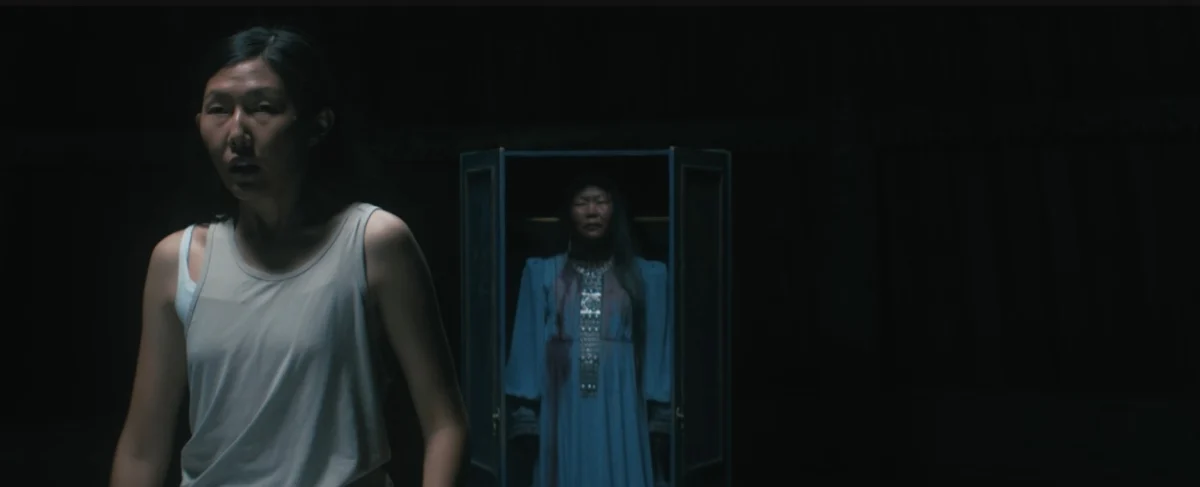
The heroine’s nights are plagued by vivid nightmares featuring her recently deceased mother, clad in traditional Sakha attire. These dream sequences transport the viewer to an ethereal, almost ritualistic space resembling a colossal yurt, where a solitary, mysterious old wardrobe stands as a symbolic sentinel. The central question posed by the film is whether these phenomena are supernatural, purely psychological manifestations of the protagonist’s anxiety, or the ominous harbingers of a truth she has desperately tried to suppress. The ultimate revelation, which arrives in the final act, pivots the narrative from a conventional ghost story into something entirely different, challenging audience expectations and offering a profound commentary on trauma and denial.
Pandemic as a Narrative Device: External Confinement, Internal Prison
One of the most compelling aspects of "Fear" is its nuanced integration of the COVID-19 pandemic. Rather than merely serving as a backdrop, the pandemic functions as a potent emotional and narrative catalyst. The omnipresent atmosphere of COVID news intensifies the heroine’s feelings of isolation, suspicion, and helplessness, mirroring the global psychological impact of the crisis. Degtyareva masterfully employs this context to illustrate how fear can evolve into a self-perpetuating, closed system.
Initially, the protagonist’s confinement appears to be externally imposed, a response to public health warnings and the fear of contamination. However, as the film progresses, it becomes increasingly clear that the true prison is internal—a psychological construct of her own making, or rather, a consequence of an unaddressed inner turmoil. In this regard, the horror in "Fear" transcends the typical supernatural haunting; it becomes a visceral exploration of the unbearable pressure of denial and the destructive power of unresolved psychological trauma. While many films produced during and immediately after the pandemic utilized single-setting narratives and minimal casts, Degtyareva’s approach elevates this trend by weaving the pandemic’s psychological toll directly into the fabric of the horror, making it an integral part of the character’s internal landscape.
The film’s perspective is intentionally skewed, told not from the vantage point of a spectral entity, but through the subjective experience of the woman who believes she is being haunted. The apartment transforms into a tangible representation of her deteriorating mental state. Every repetitive action, every unanswered message to her absent husband, every anxious glance into a darkened corner contributes to the harrowing portrayal of a woman slowly succumbing to her own illusions and inner demons.
Critical Reception and Artistic Balance: Genre, Symbolism, and Performance
While "Fear" has been lauded for its bold conceptualization, critical reception has also noted certain areas where its execution could be further refined. Degtyareva’s evident interest in the profound meaning behind fear, rather than fear as a purely visceral experience, imbues the film with significant thematic weight. However, this intellectual approach occasionally detracts from the raw, horrific impact that the genre typically delivers. The film’s eventual twist, while impactful, has been described by some as simultaneously far-fetched and somewhat predictable, a challenge in balancing narrative surprise with thematic coherence.
The tension, though present, is not always consistently maintained, and the reliance on musical cues to sustain it sometimes falls short. Similarly, a number of repeated shots and gestures, while intended to underscore the monotony and psychological toll of confinement, can inadvertently make the film’s already concise running time feel longer than necessary.
Despite these observations, "Fear" boasts moments of genuine visual power. The surveillance camera sequences, particularly those captured at night, are cited as some of the film’s most effective and chilling elements. Anastasia Alekseeva’s distinctive presence, characterized by her long black hair and deliberate physical movements, evokes clear parallels with classic Japanese horror, most notably "Ring." This stylistic influence is hardly surprising given Degtyareva’s academic background in Japanese studies, indicating a deliberate and informed artistic choice. The nocturnal imagery of the heroine navigating her apartment is consistently among the film’s strongest visual achievements, even when the surrounding horror mechanisms may not be entirely seamless.
Sakha Cultural Elements: Identity in the Horror Landscape
Crucially, the Sakha cultural elements woven into "Fear" are deemed essential to its unique identity, though their integration is not always uniformly convincing. Recurring motifs such as the image of a Sakha wedding, the mother appearing in traditional clothing, and the enigmatic old wardrobe within the dream sequences all point towards a narrative deeply rooted in Sakha heritage and identity. While the execution of these cultural aspects may not always achieve full resonance, the deliberate attempt to connect the domestic horror genre with distinct Sakha identity is a significant strength. This fusion effectively differentiates "Fear" from more generic apartment haunting stories, imbuing it with a specific cultural resonance and contributing to the rich tapestry of indigenous storytelling within global cinema.
The Olonkho Theatre background of Anastasia Alekseeva further enriches this cultural dimension. The Olonkho, a UNESCO-recognized masterpiece of the Oral and Intangible Heritage of Humanity, is a heroic epic poetry tradition of the Sakha people. Alekseeva’s training in this tradition likely provides her with a unique understanding of storytelling, myth, and the profound emotional depth required for such a demanding role, allowing her to embody the Sakha cultural context within her performance.
Anastasia Alekseeva’s Performance: The Linchpin of "Fear"
The most pivotal element contributing to the film’s success is undoubtedly Anastasia Alekseeva’s performance. Given that "Fear" is structurally built around her singular presence, any weakness in the central acting would risk the entire narrative collapsing. Fortunately, Alekseeva delivers a performance of remarkable commitment and emotional intensity. Her face, nuanced body language, and subtle micro-expressions become the primary conduits through which the complex story is conveyed, particularly as the heroine spends a significant portion of the running time in isolation. Alekseeva’s ability to externalize profound internal turmoil, fear, and psychological disintegration without extensive dialogue is a testament to her skill and the depth of her immersion in the role. Her portrayal anchors the film, making the psychological journey of the protagonist both believable and deeply affecting.
Broader Implications: A Bold Debut for Sakha Cinema
"Fear" stands as a flawed but undeniably bold debut for Apolinariya Degtyareva. While its pacing can be deliberate, and some of its genre mechanisms and symbolic gestures might feel heavy-handed, the film’s core strengths are undeniable. It possesses a compelling central idea, a powerhouse lead performance from Anastasia Alekseeva, and a courageous willingness to leverage the horror genre to address something far more terrifying and psychologically complex than mere paranormal activity.
Degtyareva’s debut signals her emergence as a distinctive voice within Sakha cinema, a movement that has steadily gained international acclaim for its unique storytelling, cultural specificity, and resourceful filmmaking. "Fear" contributes to this burgeoning cinematic landscape by demonstrating how local narratives, rooted in indigenous cultures, can transcend geographical boundaries and resonate with universal themes of fear, isolation, and the human psyche. While Degtyareva may not yet exert complete control over every facet of her material, "Fear" unequivocally demonstrates her profound understanding of how genre conventions can be elevated to explore deeper artistic and philosophical dimensions. Her future contributions to cinema are eagerly anticipated, promising further exploration of the rich cultural heritage and compelling psychological landscapes of the Sakha Republic.