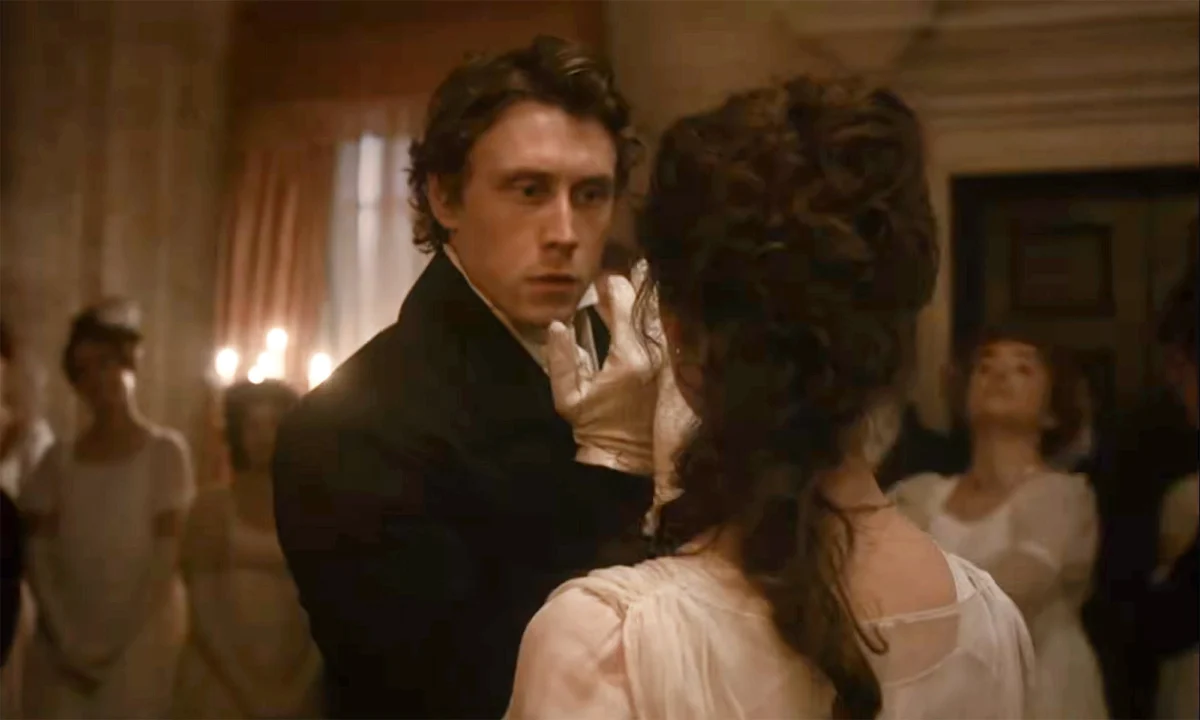
Focus Features has released the second and final official trailer for its upcoming cinematic adaptation of Jane Austen’s foundational 1811 novel, Sense and Sensibility. Directed by British filmmaker Georgia Oakley, known for her critically acclaimed work on the 2022 feature Blue Jean, the film is poised to introduce a fresh, contemporary vitality to one of English literature’s most enduring explorations of class, financial precarity, and sisterly devotion. The newly debuted promotional footage arrives just weeks ahead of the film’s scheduled theatrical rollout, accompanied by a wave of enthusiastic early industry buzz that positions the project as a standout feel-good release of the autumn cinematic calendar.
The feature boasts a prominent principal cast, anchored by Daisy Edgar-Jones and Esmé Creed-Miles as the contrasting Dashwood sisters, Elinor and Marianne. They are joined by an ensemble cast that includes Bodhi Rae Breathnach, Caitríona Balfe, George MacKay, Frank Dillane, Herbert Nordrum, and Fiona Shaw. Adapted for the screen by screenwriter Diana Reid, the production is backed by Working Title Films, with Tim Bevan, Eric Fellner, India Flint, and Jo Wallett serving as producers.
Background Context and Literary Legacy
Jane Austen’s Sense and Sensibility, her first published novel, has occupied a central place in the English literary canon for over two centuries. Chronicling the fortunes and romantic entanglements of the Dashwood family following the sudden death of the patriarch, the narrative explores the stark economic vulnerabilities faced by women in Georgian-era England. Deprived of their estate due to strict primogeniture laws, Mrs. Dashwood and her three daughters are forced to relocate to Barton Cottage in Devonshire, where the pragmatic Elinor and the emotionally tempestuous Marianne navigate the rigid social expectations of the era alongside the realities of courtship and financial limitation.
The novel has previously inspired numerous adaptations across television, stage, and film. Most notably, Ang Lee’s 1995 feature film adaptation, featuring a screenplay by and starring Emma Thompson alongside Kate Winslet, Hugh Grant, and Alan Rickman, achieved both critical acclaim and commercial success. That adaptation earned seven Academy Award nominations, with Thompson securing the Oscar for Best Adapted Screenplay.

Against this rich backdrop, Georgia Oakley’s 2026 adaptation enters a crowded lineage. However, industry analysts and early reviewers note that Oakley and screenwriter Diana Reid have sought to recalibrate the narrative focus, emphasizing the psychological nuances of modern sisterhood while preserving the historical specificity of Austen’s Georgian setting.
Production Timeline and Promotional Rollout
The path to the film’s release has been marked by a carefully orchestrated marketing campaign by Focus Features, designed to build momentum following the completion of principal photography and post-production phases.
The promotional timeline accelerated significantly in late September 2026:
- September 25, 2026: Focus Features launched the film’s theatrical run in the United Kingdom, capitalizing on local market interest and regional distribution channels.
- September 29, 2026: The studio released an exclusive behind-the-scenes featurette offering viewers an inside look at the production design, character development, and interviews with lead actress Daisy Edgar-Jones regarding her interpretation of Elinor Dashwood.
- September 30, 2026: Focus Features debuted the final official theatrical trailer and companion poster art, providing a comprehensive overview of the narrative stakes, comedic elements, and sweeping cinematography characteristic of the production.
- October 16, 2026: The film is scheduled to expand its footprint to theaters across the United States, positioning it directly within the competitive autumn box office landscape.
Cast and Creative Vision
The cinematic interpretation relies heavily on the chemistry between its two lead performers. Daisy Edgar-Jones, whose previous credits include Normal People and Where the Crawdads Sing, embodies the restrained, logical elder sister Elinor. Conversely, Esmé Creed-Miles takes on the role of Marianne, whose uninhibited romantic idealism drives much of the narrative’s emotional turbulence.

Director Georgia Oakley brings a distinct authorial perspective to the project. Her debut feature film, Blue Jean—a drama set against the backdrop of the 1980s UK miners’ strike and Section 28 legislation—premiered to widespread acclaim at the Venice International Film Festival and earned multiple British Independent Film Awards. Transitioning from gritty, contemporary social realism to period drama represents a significant thematic shift for the director, yet early promotional materials suggest a continuation of her focus on complex interpersonal dynamics and nuanced character motivations.
In interviews surrounding the release of the behind-the-scenes featurette, the creative team emphasized the importance of grounding the historical narrative in relatable human emotions. Screenwriter Diana Reid’s adaptation seeks to strip away the perceived stiffness often associated with period pieces, aiming instead for a lively, witty exploration of youth, heartbreak, and familial loyalty.
Box Office Projections and Market Implications
As Sense and Sensibility prepares for its North American debut, industry analysts are evaluating its prospects within a theatrical marketplace increasingly dominated by franchise blockbusters and high-concept genre films. Mid-budget period dramas have faced shifting commercial realities in recent years, with distributors frequently utilizing hybrid distribution models or relying heavily on international markets to secure profitability.
However, the involvement of Working Title Films—a production banner with a proven track record in period adaptations and romantic dramas, including Pride & Prejudice (2005) and Atonement (2007)—provides a strong institutional foundation. Furthermore, the inclusion of globally recognized talent such as Daisy Edgar-Jones and Caitríona Balfe is expected to draw demographic segments ranging from traditional Austen enthusiasts to younger audiences responsive to contemporary casting choices.
The strategic decision by Focus Features to stagger the release—initiating the rollout in the UK before transitioning to the US market—mirrors successful distribution blueprints for prestige literary adaptations. By allowing initial word-of-mouth reactions and critical reviews from the British release to circulate, the studio aims to build organic momentum ahead of the wider North American opening in mid-October.

Broader Cultural Resonance
The enduring appeal of Jane Austen adaptations points to a broader cultural appetite for narratives that interrogate social structures through the lens of romance and domesticity. While nineteenth-century manners and estate living belong to a vastly different historical epoch, the underlying themes of economic uncertainty, housing pressures, and the navigation of personal autonomy resonate strongly with contemporary audiences.
By reinterpreting these themes through a modern filmmaking lens, Oakley’s adaptation contributes to an ongoing dialogue about how classical texts can be meaningfully revitalized for current generations. As the final trailer demonstrates, the production leverages modern cinematic technology—such as enhanced natural lighting techniques and dynamic Steadicam choreography—to create an immersive sensory experience of Georgian England that diverges from the more static framing of past television and film iterations.
With the release window now days away, attention turns to how audiences will receive this latest iteration. Whether Sense and Sensibility will achieve the cultural resonance of its 1995 predecessor remains to be seen, but the concerted promotional push and robust early reception indicate that Focus Features has positioned the film as one of the major prestige offerings of the 2026 cinematic calendar.