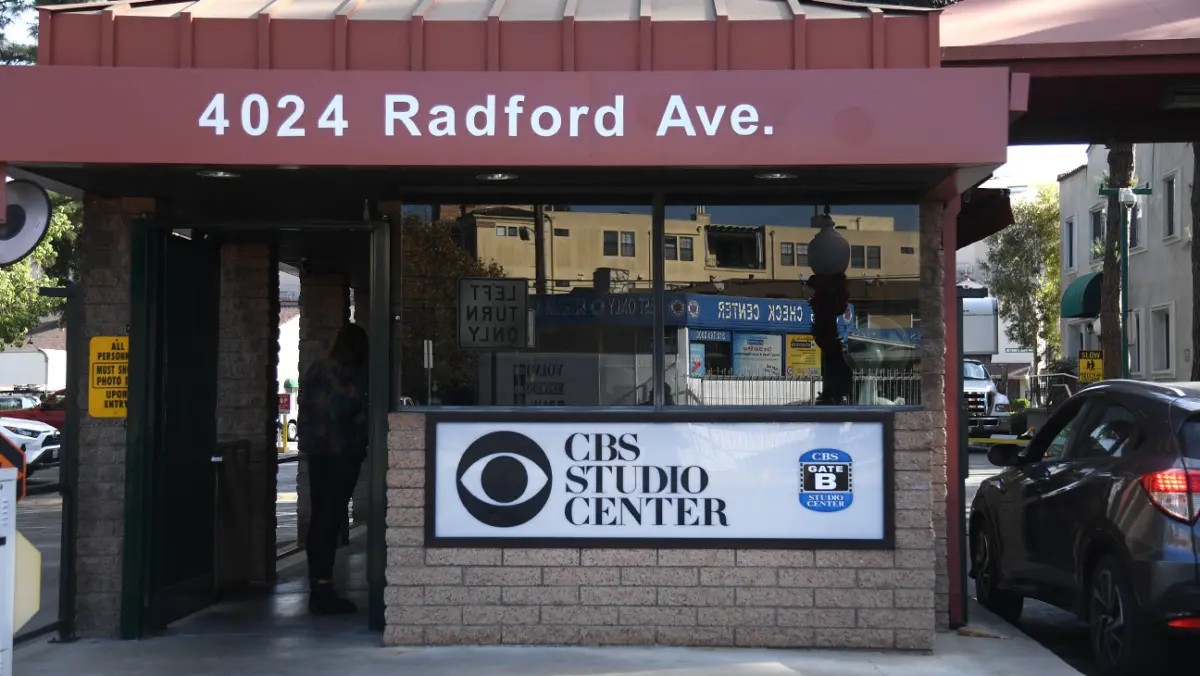
Nine months after lenders reclaimed the iconic Radford Studio Center from Hackman Capital Partners, the 55-acre Studio City landmark is set for a high-stakes foreclosure auction. The November 24 proceeding in Pomona, California, marks the end of a turbulent chapter for one of Hollywood’s most storied production facilities and signals a broader recalibration of the Los Angeles real estate market as entertainment giants move to consolidate their physical footprints amid cooling production activity.
The impending auction follows the collapse of a private sale to Netflix, which had been in exclusive negotiations with a Goldman Sachs-led lender group to acquire the lot for approximately $400 million. This figure represents a staggering 78 percent markdown from the $1.85 billion valuation Hackman Capital Partners attributed to the property during its 2021 acquisition. While lenders are formally seeking to recover an estimated $1.3 billion in outstanding debt tied to the asset, industry observers expect the final gavel price to hover closer to the Netflix-negotiated floor, reflecting the current distressed state of the commercial studio market in Southern California.
A Chronology of a High-Stakes Repossession
The decline of the Radford Studio Center—formerly known as CBS Studio Center—is a case study in the rapid shift of the post-pandemic studio landscape. In 2021, when Hackman Capital Partners secured the property, the industry was riding a wave of unprecedented demand for content, driven by the streaming wars and a seemingly bottomless appetite for new filming stages. At the time, the $1.85 billion price tag was viewed as a bullish bet on the longevity of Hollywood’s traditional production hubs.
However, the tide turned rapidly. As inflation, rising interest rates, and the 2023 labor strikes stalled production schedules, the economic viability of massive, debt-heavy studio campuses faced a harsh reality check. By early 2024, the financial pressure on the property became insurmountable. Lenders, led by Goldman Sachs, exercised their rights to repossess the lot, setting the stage for the current auction. Netflix, long an anchor tenant at various regional soundstages, emerged as the logical white knight, positioning itself to pivot from a long-term renter to a major property owner.
Financial Implications and the Tax Angle
The structure of this deal has invited significant scrutiny from real estate analysts and tax experts. Sources familiar with the negotiations suggest that Netflix’s decision to facilitate a foreclosure sale rather than a conventional purchase was motivated by a confluence of legal and fiscal considerations. Specifically, the transaction structure potentially allows the parties to circumvent Los Angeles’s "mansion tax" (Measure ULA), which imposes a 5.5 percent levy on commercial real estate transfers valued above $10.9 million. For a deal of this magnitude, such a levy could have amounted to an additional $22 million in costs.
While a representative for the negotiations stated that "there are a number of reasons a deal would be structured in this fashion that have nothing to do with taxation," the complexity of the foreclosure process cannot be ignored. By allowing the lenders to move through the auction process, Netflix avoids the liabilities associated with managing a foreclosure, though it accepts the inherent risk of a competitive bidding war. Should a private equity firm or an institutional investor decide to challenge Netflix at the auction, the purchase price could climb, though the current climate of low production volumes suggests few entities have the appetite or the capital to absorb such a sprawling, specialized asset.
Shifts in the Netflix Production Footprint
For Netflix, the acquisition of Radford is not merely a real estate transaction; it is a fundamental shift in its operational strategy. Since 2018, the streaming giant has produced more than 300 projects in the Los Angeles area. Historically, this activity has been dispersed across various facilities, including the ICON, EPIC, and CUE buildings at Sunset Studios, and Raleigh Studios.
By securing Radford, Netflix gains the ability to consolidate its fragmented production operations under a single, company-owned banner. This transition is expected to yield long-term operational efficiencies. Renting soundstages and office space in competitive markets like Hollywood and Studio City carries significant overhead; owning the land provides a hedge against future rent volatility and allows for the customization of stages to meet the evolving technical requirements of high-budget film and television production.
However, this move raises questions about the company’s long-term commitment to its current leased properties. Market analysts have pointed to the unusual marketing of debt secured by the Netflix-occupied animation campus on Vine Street. While there is no evidence that the company plans to vacate the property, the timing of the loan offering—coinciding with the 2031 expiration of several major leases—suggests that landlords are monitoring the streamer’s footprint with increased caution.
The Macro View: A Cooling Hollywood Market
The Radford auction occurs against the backdrop of historic lows in on-location filming within Los Angeles. Data from FilmLA indicates that production levels have struggled to rebound to pre-pandemic levels, leading to a glut of available studio space across the region. This "flight to quality"—or in this case, "flight to ownership"—suggests that major studios are prioritizing the control of core assets while shedding less essential real estate.
The massive repricing of the Radford lot serves as a bellwether for the broader commercial real estate sector in California. When an asset loses over 75 percent of its market value in three years, it forces a repricing of similar properties across the city. Investors are now recalibrating their expectations for studio valuations, moving away from the speculative growth models of 2021 toward a more conservative, utility-based assessment.
Official Stance and Future Outlook
Despite the volatility, Netflix maintains that its dedication to the Southern California creative community remains unwavering. A spokesperson for the company recently reiterated, "Los Angeles is an incredibly important place for film and television production, and we’re committed to keeping it one of our core production hubs in the US."
As the November 24 auction approaches, all eyes will be on the bidding floor. A Netflix spokesperson confirmed that the transition is "progressing on the agreed upon timetable and with the agreed upon sets of milestone dates," suggesting a high level of confidence that the company will successfully secure the site.
For the city of Los Angeles, the outcome is significant. A successful transition of the Radford lot into the hands of a stable, long-term operator like Netflix could provide much-needed certainty for the local crews, vendors, and service providers that rely on a functioning studio ecosystem. Conversely, if the property remains in limbo or passes to an investor focused on liquidating the asset, the future of one of the industry’s most historic lots could remain in question for years to come.
As the industry navigates this transition, the Radford auction will be studied as a primary example of how the streaming era is reshaping the very geography of Hollywood. The consolidation of production into company-owned campuses represents a maturing of the streaming business model, one that prioritizes efficiency and asset control over the rapid, decentralized expansion that defined the previous decade. Whether this shift will stabilize the broader Los Angeles production market remains to be seen, but the events of late November will undoubtedly serve as a critical turning point.