Narrative Overview and Thematic Core
The story begins with a sense of urgent, foreboding energy as Elsa returns to her childhood home in San José after a multi-year residence in Europe. The transition from her life abroad—where her partner, Sven, remains—to the chaotic reality of her family home serves as the primary catalyst for the film’s conflict. Upon her arrival, Elsa discovers that her younger sister, Amalia (Mariangel Villegas), has undergone a psychological shift, manifesting in both the neglect of their shared living space and a literal locking out of her sibling.
Finding the house in a state of advanced disarray, with unwashed dishes and neglected rooms, Elsa is forced to assume a role she did not seek: the "maternal animal" referenced in the film’s title. This role requires her to mediate between Amalia’s increasingly erratic behavior and their parents’ profound emotional disengagement. The narrative architecture of the film is built upon this "sandwich" dynamic, where the protagonist is squeezed between the needs of a sibling in crisis and the self-absorption of an older generation grappling with their own midlife transitions.
A Chronology of Artistic Development
Valentina Maurel’s trajectory as a filmmaker has been marked by a consistent interest in the visceral, often uncomfortable realities of Costa Rican middle-class life. To understand the context of Forever Your Maternal Animal, one must look at the timeline of Maurel’s recent contributions to Latin American cinema:
- 2022: Global Breakthrough – Maurel’s debut feature, I Have Electric Dreams, premiered to rave reviews, winning the Best Director, Best Actress, and Best Actor awards at the Locarno Film Festival. This established her as a leading voice in the "New Costa Rican Cinema."
- 2023-2024: Production and Casting – Leveraging her partnership with Daniela Marín Navarro, Maurel began development on a project that would further explore the complexities of sisterhood and parental abandonment. The casting of Academy Award nominee Marina de Tavira (Roma) signaled an expansion of the film’s scale and international appeal.
- 2024: Festival Circuit and Release – The film entered the international festival circuit, positioning itself as a character-driven study that prioritizes atmosphere and performance over traditional plot beats.
This chronology highlights a shift in Maurel’s work toward a more observational, "fly-on-the-wall" style, moving away from the more explosive violence of her debut toward a simmering, psychological tension.
Character Analysis and Performance Dynamics
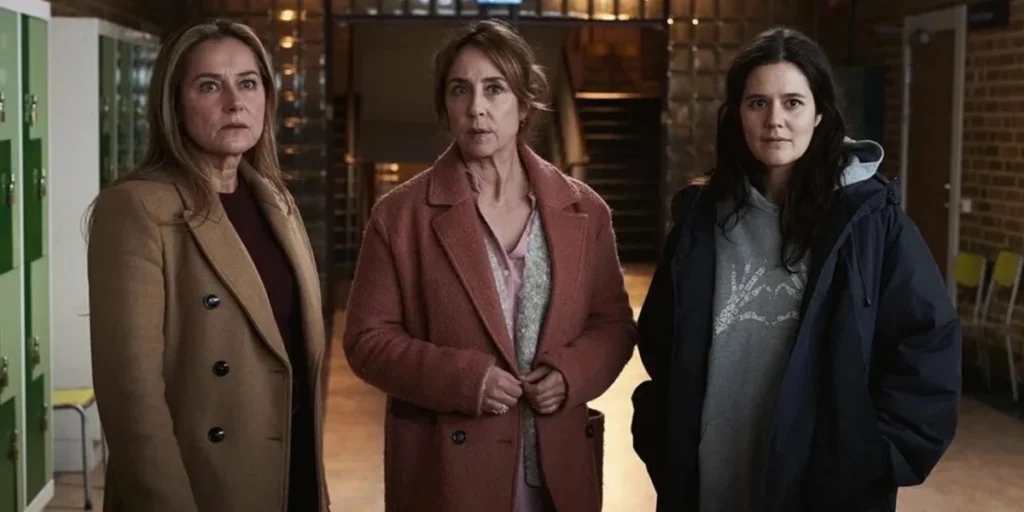
The strength of the film rests heavily on its ensemble cast, which balances established international talent with rising local stars. Daniela Marín Navarro’s Elsa serves as the film’s moral and emotional anchor. Her performance captures the exhaustion of a woman who has outgrown her environment but remains tethered to it by an unbreakable sense of duty.
Opposite her, Mariangel Villegas provides a haunting portrayal of Amalia. Unlike a standard depiction of mental illness, Amalia’s condition is imbued with a mystical, almost gothic quality. She claims to communicate with spirits and foresee the deaths of others, adding a layer of "tropical gothic" to the domestic drama. This supernatural element is most effectively realized in scenes where Amalia interacts with the grieving, offering to pass messages to the deceased in her dreams.
The parental figures, Isabel and Nahuel, represent a different kind of instability. Marina de Tavira’s Isabel is introduced in a state of physical and emotional concealment, recovering from cosmetic surgery and focused on the reissue of her first book of poetry. This sub-plot offers a glimpse into the vanity and intellectual preoccupations that have led to her estrangement from her daughters. Reinaldo Amién’s Nahuel complements this with a portrayal of a man seeking rejuvenation through a relationship with a much younger woman, further isolating Elsa as the only adult in the room capable of addressing the family’s immediate crises.
Technical Execution and Directorial Style
Maurel employs a directorial approach that emphasizes the "lived-in" quality of the San José setting. The camerawork is often hurried and handheld, mirroring the frantic pace of Elsa’s internal anxiety and the fragmented communication between family members. This visual language serves to:
- Heighten Intimacy: The tight framing ensures that the audience is never far from the characters’ emotional reactions, even when they are attempting to hide them.
- Reflect Psychological States: The chaotic state of the family home is treated not just as a setting, but as a visual representation of Amalia’s deteriorating mental health.
- Pace the Dialogue: The film utilizes a naturalistic rhythm, allowing conversations to overlap or end abruptly, which replicates the authentic friction of domestic disputes.
However, some critics have noted that this fluid, observational style occasionally leads to a lack of narrative momentum. While the atmosphere is expertly crafted, the screenplay at times struggles to sustain the tension required to drive the story toward a definitive resolution, leaving several subplots—such as Isabel’s literary career and Amalia’s spiritual connections—feeling under-explored.
Supporting Data: The Rise of Costa Rican Cinema
The production of Forever Your Maternal Animal occurs during a period of significant growth for the Costa Rican film industry. According to data from various regional film commissions, Costa Rica has seen a 40% increase in international co-productions over the last five years. Maurel’s work is a primary driver of this trend, attracting talent like Marina de Tavira and securing distribution in European and North American markets.
Furthermore, the film contributes to a growing body of Latin American cinema that addresses mental health and the "care economy"—the unpaid and often invisible labor performed by women within the family unit. Statistical trends in regional sociology suggest that women between the ages of 25 and 40 are increasingly burdened with the care of both younger siblings and aging parents, a reality that Maurel captures with surgical precision.
Analysis of Implications and Broader Impact
Forever Your Maternal Animal serves as a poignant critique of the modern family structure in an era of globalization. Elsa’s struggle to reconcile her life in Europe with her responsibilities in Costa Rica reflects a broader cultural phenomenon: the "brain drain" and subsequent "return migration" of young professionals who find themselves pulled back into traditional roles by family emergencies.
The film also challenges traditional cinematic representations of the "mother figure." By casting Elsa as the "maternal animal," Maurel suggests that motherhood is not merely a biological state but a functional role that can be thrust upon anyone, often at the cost of their own personal development and autonomy. The "animalistic" protectorate Elsa maintains over Amalia is both her greatest strength and her most significant burden.
From an industry perspective, the film reinforces the viability of "small" stories—intimate, localized dramas that resonate globally through universal themes of love, resentment, and duty. The collaboration between Maurel and Navarro suggests a burgeoning director-muse relationship that could define Costa Rican cinema for the coming decade.
Conclusion
While Forever Your Maternal Animal may suffer from a meandering narrative that leaves certain questions unanswered, its commitment to raw, naturalistic performance and its evocative depiction of sisterhood make it a significant entry in contemporary world cinema. Valentina Maurel demonstrates a sophisticated understanding of the unspoken bonds that hold a family together, even as their individual lives pull them in opposite directions. As Elsa navigates the streets of San José and the cluttered hallways of her youth, the film provides a compelling, if unsettling, look at what it means to be the one who stays behind to pick up the pieces.