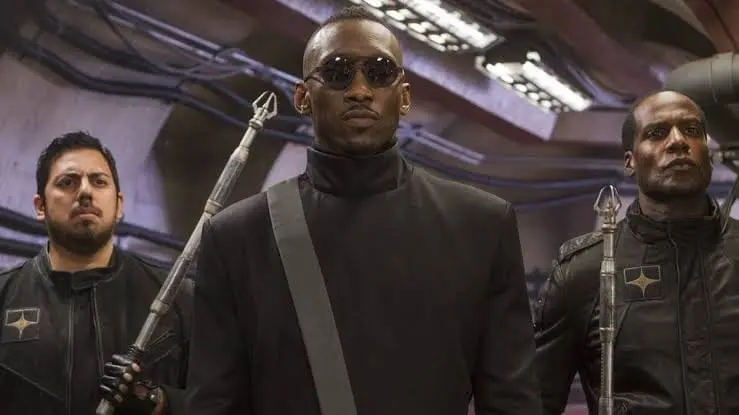
The development cycle of Marvel Studios’ long-gestating Blade reboot has become a cautionary tale in modern Hollywood production, highlighting the friction between corporate scheduling and the creative necessity of a finished screenplay. Former director Bassam Tariq, who was originally tapped to helm the project, recently offered a candid glimpse into the chaotic pre-production process that defined his tenure. In an interview with The New Arab, Tariq disclosed that he was tasked with casting actors and overseeing the physical construction of the film’s foundation before a viable script even existed, a workflow he described as both "funny and strange."
This revelation underscores a systemic issue within the Marvel Cinematic Universe (MCU) that has been a subject of intense industry speculation since the project’s initial announcement in 2019. The failure to launch the film, which was intended to star Academy Award winner Mahershala Ali, serves as a focal point for a broader debate regarding the prioritization of release dates over foundational narrative development.
A Chronology of Stalled Progress
The history of the Blade reboot is marked by repeated delays, director departures, and creative pivots. The project was first unveiled during a high-profile presentation at San Diego Comic-Con in July 2019, where Marvel Studios President Kevin Feige surprised fans by announcing that Mahershala Ali would portray the iconic Daywalker.
The production timeline saw its first major leadership milestone in July 2021, when Bassam Tariq was officially hired to direct the film. However, the momentum stalled significantly over the next year. By September 2022, Tariq exited the project, citing "continued shifts in our production schedule." Following his departure, the studio brought in Yann Demange to take over directorial duties, while a revolving door of screenwriters—including Stacy Osei-Kuffour, Beau DeMayo, and Michael Starrbury—attempted to crack the narrative code.
Despite these efforts, the project failed to enter principal photography. In early 2024, reports surfaced that the standalone film had been effectively shelved or indefinitely delayed, with industry insiders suggesting that Marvel was reconsidering its approach to the character. Throughout this period, Mahershala Ali remained attached to the project, though his public comments have increasingly reflected frustration with the lack of progress, noting in interviews that he was disappointed by the studio’s inability to bring the film to fruition despite the resources at its disposal.
The Cost of Script-less Development
Tariq’s recent comments provide a specific explanation for why the film’s development became untenable. According to the filmmaker, the lack of a screenplay forced him into an impossible position. He was required to pitch the vision of the film to prospective cast members without having the finalized pages to support his promises. This created a credibility gap; when the inevitable corporate-driven changes to the story occurred, the director was left to explain decisions he did not make and could not justify.
"Life’s too short to make shit films," Tariq remarked, emphasizing that his departure was predicated on the desire to have creative control over the script and the authority to stand behind the final product. His experience suggests that the "assembly line" nature of the MCU, which often prioritizes cross-platform interconnectivity and rigid release windows, may be incompatible with the needs of individual character-driven features.

Industry Context and the "Blade" Legacy
The weight of expectation surrounding the Blade reboot is largely derived from the success of the 1998 original directed by Stephen Norrington and starring Wesley Snipes. That film was a landmark achievement in the superhero genre, earning $131 million globally at a time when the genre was considered a niche interest. It provided the template for modern comic book adaptations, blending R-rated intensity with a serialized, gritty aesthetic.
When Marvel Studios announced its own version of the character, the assumption was that it would be a cornerstone of the franchise’s expansion into more supernatural, adult-oriented territory. However, the shift in industry standards has made such an endeavor more complicated. Since the release of Iron Man in 2008, the MCU has operated on a model of extreme interconnectivity. While this strategy facilitated the massive success of The Avengers and Infinity War, it has created a "universe-first" environment where individual films must justify their existence through their relation to the larger, ongoing narrative arc.
Analysis: The Risks of Scheduling Over Story
The issues Tariq describes point to a broader concern among industry analysts: the "release date trap." Studios often stake out release dates years in advance to satisfy shareholders and secure theater distribution. This creates a deadline that must be met, regardless of whether the script is ready. When a film is pushed into production before the story is solidified, the resulting movie often lacks the thematic cohesion and narrative tension that defined earlier, more standalone hits.
For a character like Blade, who exists on the fringes of the Marvel comic universe, the pressure to integrate him into the larger MCU may have been the primary obstacle. If the script was constantly being rewritten to align with the shifting mandates of the overarching franchise—such as the introduction of the Multiverse Saga or the Midnight Sons ensemble—it would explain why the project remained in development hell for over five years.
Future Implications and Potential Paths Forward
The current status of the Blade character remains uncertain. While recent reports from industry trade publications suggest that Marvel is moving away from a solo Blade film in favor of an ensemble approach—potentially as part of a Midnight Sons project—there has been no official confirmation from Disney or Marvel Studios.
If the studio decides to move forward with this pivot, it may solve the logistical problem of fitting the character into the current MCU timeline. However, it does not address the fundamental issue of creative management raised by Tariq. If the studio continues to treat scripts as secondary to schedules, the risk of alienating top-tier creative talent increases. Directors of Tariq’s caliber often seek projects where they can exert authorship and maintain a consistent vision. When that vision is constantly diluted by the demands of a corporate-managed universe, the quality of the final product inevitably suffers.
Conclusion
The saga of the aborted Blade reboot serves as a case study for the challenges facing the superhero genre in the late 2020s. As the market becomes increasingly saturated, audiences and critics are showing a marked preference for films that offer unique, director-driven visions rather than those that function primarily as connective tissue for a larger cinematic universe.
Bassam Tariq’s departure and subsequent reflections highlight a necessary conversation about the sustainability of the current Marvel production model. For the Daywalker to eventually grace the screen again, Marvel Studios will likely need to reconsider its approach to development, prioritizing the integrity of the screenplay and the creative autonomy of its filmmakers over the demands of a rigid, multi-year release schedule. Until that shift occurs, the legacy of the 1998 Blade will remain, for many, the definitive cinematic iteration of the character. Whether the studio can recover its momentum and deliver a film that meets these high expectations remains the most significant question facing the franchise’s future.