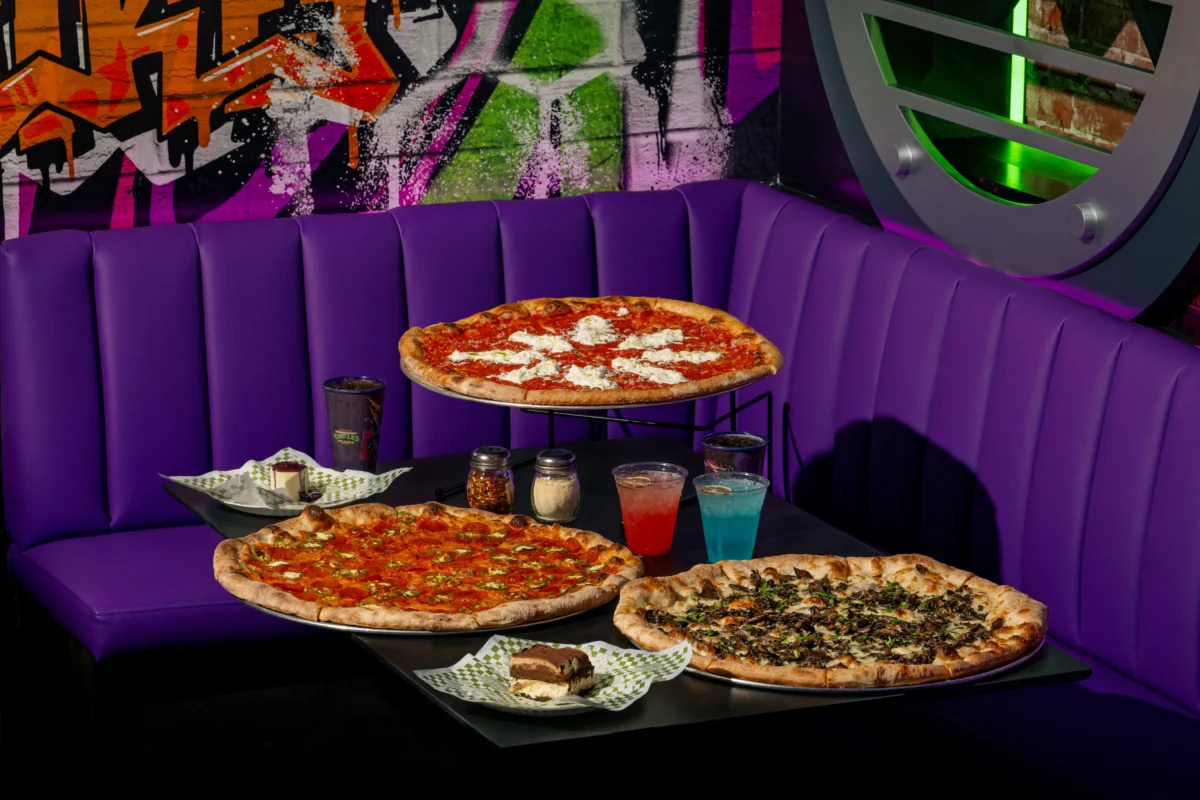
The intersection of nostalgic intellectual property and high-end culinary craft has reached a new milestone with the official opening of the Teenage Mutant Ninja Turtles (TMNT) themed pizzeria on Santa Monica’s Third Street Promenade. This venture, spearheaded by renowned IP-oriented restaurateur Andy Nguyen in partnership with Paramount Global, represents the culmination of a decade-long pursuit to translate one of the most recognizable elements of 1980s and 90s pop culture—the Turtles’ obsession with pizza—into a tangible, gourmet reality. Debuting on June 20, the restaurant marks a strategic pivot for the franchise, moving away from the gritty realism of recent cinematic adaptations and returning to the vibrant, lighthearted aesthetic of the 1987 animated series. For Nguyen, who has successfully launched concepts centered on Hello Kitty and Sonic the Hedgehog, the project is a professional "dream" that required navigating years of corporate restructuring and rights negotiations before finally receiving the "green light" from Paramount’s current leadership.
A Decade of Development and Strategic Alignment
The journey to the Santa Monica opening was not a linear one. For over ten years, Nguyen sought to pitch a TMNT-themed restaurant to the rights holders, initially meeting with indifference during the Viacom era. The landscape shifted significantly following the rebranding of the parent company to Paramount Global and a renewed focus on "experiential retail" as a core pillar of franchise management. This shift coincides with a broader resurgence of the TMNT brand, which includes a robust slate of upcoming media, including two major franchise films currently scheduled for release in 2027 and 2028.
The partnership with Paramount’s Global Products and Experiences division, led by President Josh Silverman, reflects a sophisticated approach to brand extension. Silverman’s division is no stranger to the "eatertainment" sector, currently managing 32 Bubba Gump Shrimp Co. locations worldwide—a brand born from the 1994 film Forrest Gump. The TMNT pizzeria is viewed not merely as a novelty shop but as a "brand deposit"—a strategic move intended to increase the value and emotional resonance of the IP rather than exploiting it for short-term gains. This philosophy of "new-stalgia" aims to bridge the generational gap, providing a fresh experience for children while tapping into the deep-seated childhood memories of Millennial parents who grew up during the height of "Turtlemania."
The Aesthetic of New-Stalgia: The 1987 Influence
Central to the restaurant’s identity is its rejection of the modern, CGI-heavy interpretations of the Turtles. Instead, Nguyen and his creative team have leaned heavily into what he calls the "Millennial Turtles"—the specific visual language of the 1987 animated series. This era is characterized by bold primary colors, expressive character designs, and a sense of unadulterated fun that defined the Saturday morning cartoon landscape for a generation.
By utilizing the 1987 look as a "keystone piece of creative," the Santa Monica location serves as a physical archive of the franchise’s golden age. This aesthetic choice is not limited to California; Paramount has confirmed that two additional TMNT pizzerias are slated to open by the end of the year in Sao Paulo, Brazil, and Mexico City. These international locations will remain "spiritually the same," ensuring that the 1987 animation style remains the global face of the Turtles’ culinary brand.

Culinary Engineering: Beyond the Novelty Gimmick
Recognizing that themed restaurants often suffer from a reputation for mediocre food, Nguyen took significant steps to ensure the product could stand on its own merits. To achieve this, he enlisted Angelo Womack, a veteran of the acclaimed Brooklyn-based pizzeria Roberta’s, to serve as the project’s lead pizza consultant. The mandate was clear: the food had to be a "surprise element" that exceeded the expectations of both casual fans and "pizza connoisseurs."
The technical specifications of the pizza are rigorous, aiming to replicate a true New York City profile in the heart of Southern California. The production process includes:
- Water Chemistry: The local Santa Monica water is pH-balanced and treated to match the mineral content of Manhattan tap water, a factor many experts believe is essential for the specific texture of New York pizza dough.
- Ingredient Sourcing: The kitchen utilizes high-protein flour from King Arthur, premium Grande cheese (a industry standard for high-end pizzerias), and California Stanislaus tomatoes for the sauce.
- Menu Inspiration: The offerings are inspired by legendary New York cult favorites such as Scarr’s Pizza, Mama’s TOO!, and Brooklyn DOP.
One of the standout menu items, "The Shredder’s Revenge," features a spicy combination of pepperoni, jalapeños, and Mike’s Hot Honey—a direct homage to the "Hotboi" slice at Scarr’s. Another notable creation is the "TCRI" pie, named after the fictional research institute responsible for the "ooze" that mutated the Turtles. This pizza features a bright green, basil-infused olive oil designed to mimic the glowing radioactive mutagen, providing a visual link to the lore without sacrificing flavor.
Addressing the "Cartoon Pizza" Dilemma
One of the primary challenges Womack faced was reconciling the physics of real pizza with the visual expectations established by animation. In the 1987 cartoon, pizza is often depicted with an exaggerated, gravity-defying "cheese pull" that is virtually impossible to achieve with a traditional, balanced New York slice.
Womack noted that a high-quality New York pizza requires a specific ratio of tomato to cheese to prevent the crust from becoming soggy or the slice from becoming overly greasy. However, acknowledging the "experiential satisfaction" guests derive from the cartoon aesthetic, the restaurant offers an option to "cheese it up." This allows diners to customize their pies for maximum visual impact—and social media shareability—while maintaining the integrity of the base product for those who prioritize culinary balance. Notably, the restaurant avoids the use of whole basil leaves on standard slices, a decision based on the belief that the animated characters—and the children who emulate them—would view "greenery" as a deterrent to the classic pizza experience.
Economic and Cultural Context
The opening of the TMNT pizzeria comes at a critical time for Santa Monica’s Third Street Promenade, a world-famous shopping district that has faced challenges in the post-pandemic retail environment. The introduction of a high-profile, immersive dining experience is expected to drive significant foot traffic, contributing to the area’s economic revitalization.

Furthermore, the project reflects a growing trend in the $50 billion U.S. pizza industry toward "niche-ification" and the blending of entertainment with dining. As consumers increasingly seek "experiences" over simple transactions, the ability to inhabit a fictional world while consuming a high-quality product provides a competitive edge.
Chronology of the TMNT Franchise and Culinary Integration
To understand the significance of this opening, one must look at the timeline of the franchise’s relationship with its favorite food:
- 1984: Kevin Eastman and Peter Laird create the original TMNT comic; the Turtles’ love for pizza is established early as a relatable human trait for the mutant brothers.
- 1987: The animated series debuts, cementing pizza as a central plot device and cultural icon.
- 1990s: Various promotional tie-ins with Pizza Hut and Domino’s create a permanent link between the IP and the commercial pizza industry.
- 2010s: Andy Nguyen begins initial outreach to Viacom to pitch a dedicated TMNT restaurant concept.
- 2020-2023: Paramount Global restructures its approach to IP, focusing on immersive experiences.
- June 20, 2024: The first official, permanent TMNT pizzeria opens in Santa Monica.
- Late 2024: Planned expansion into South American and Mexican markets.
- 2027-2028: Scheduled release of new TMNT feature films, which the pizzerias will support as physical marketing hubs.
Implications for Future Brand Management
The success of the Santa Monica TMNT pizzeria will likely serve as a blueprint for Paramount’s future brand extensions. By prioritizing quality and "brand deposits," the company is setting a standard that moves away from the "novelty gimmick" model of the past. If the restaurant succeeds in satisfying both "Ninja Turtles snobs" and "pizza snobs," it could lead to further immersive concepts based on other high-value Paramount properties, such as SpongeBob SquarePants or Star Trek.
For Andy Nguyen, the project reinforces his status as a leading figure in the "IP-to-table" movement. By bridging the gap between corporate rights holders and street-level culinary trends, Nguyen has demonstrated that nostalgia, when handled with technical proficiency and respect for the source material, can be a powerful driver of modern consumer behavior. As the "Millennial Turtles" return to the spotlight, they do so not just as icons of the past, but as the faces of a sophisticated, global dining brand.