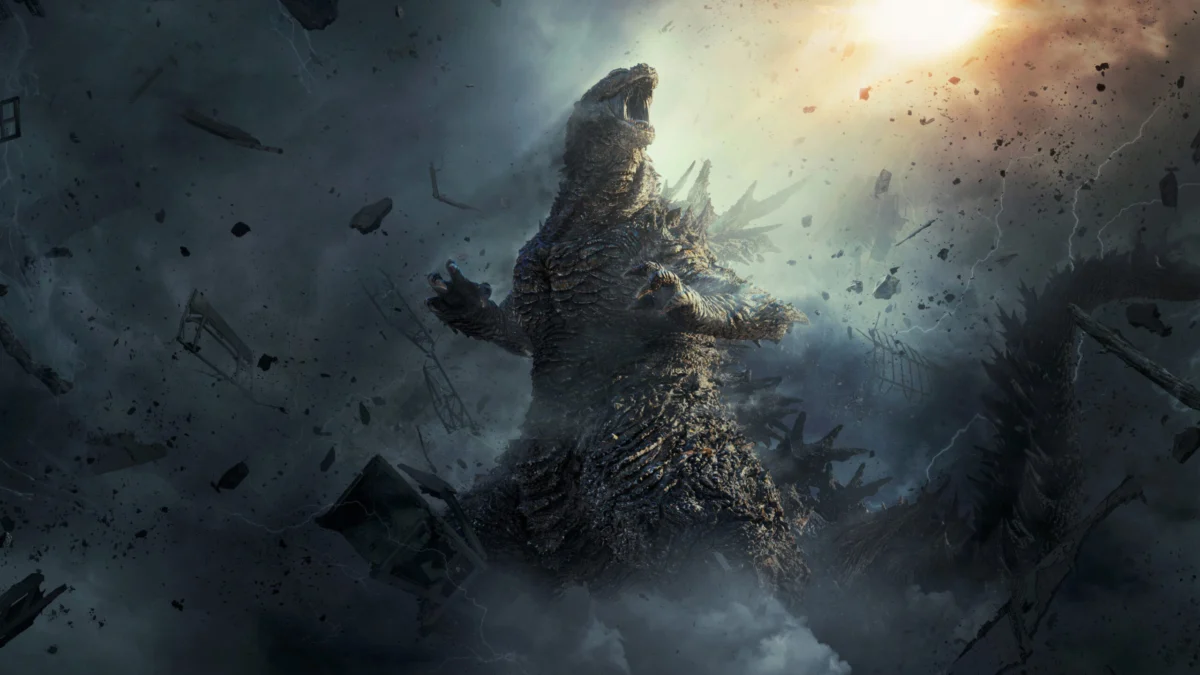
Takashi Yamazaki’s return to the legendary Toho kaiju franchise, Godzilla Minus Zero, marks a significant expansion of the narrative universe established by his 2023 Academy Award-winning predecessor, Godzilla Minus One. Following its successful world premiere at the New York Film Festival’s prestigious Spotlight Gala, the film is scheduled for a wide domestic release in the United States on November 6, distributed by GKIDS. This sequel continues to bridge the gap between high-stakes blockbuster monster spectacle and the intimate, grounded humanism that defined Yamazaki’s previous entry. By focusing on the lingering psychological wounds of post-WWII Japan, the production maintains its status as both a technical marvel and a thematic continuation of the franchise’s 1954 origins.
A Legacy Reimagined: The Evolution of the Toho Kaiju
The Godzilla franchise, which originated in 1954 as a direct allegory for the horrors of nuclear warfare, has seen numerous iterations over seven decades. However, the "Minus" series—a stylistic departure from the more cartoonish Monsterverse entries—seeks to re-establish the creature as a source of existential dread. In the previous installment, Godzilla Minus One, audiences were introduced to Koichi Shikishima, a kamikaze pilot grappling with survivor’s guilt. The film’s commercial success was unprecedented for a Japanese-language production, grossing over $115 million worldwide on a modest budget, a feat largely attributed to Yamazaki’s innovative use of VFX to create high-production-value imagery at a fraction of the cost of typical Hollywood tentpoles.
Godzilla Minus Zero builds upon this foundation, introducing a secondary antagonist that has been a staple of the series since its first appearance in 1964: King Ghidorah. While earlier depictions of the three-headed dragon involved complex lore regarding alien invaders or time-traveling terrorists, the current production strips away the "geek lore" in favor of a visceral, biological threat. This stylistic choice aligns with the film’s grounded tone, treating the dragon as an apex predator with regenerative capabilities, forcing a confrontation between the two entities that is central to the film’s third act.
Chronology of Production and Release
The development of this sequel was fast-tracked following the critical and financial triumph of the 2023 film. Toho, the Japanese titan of the genre, recognized the international appetite for "prestige kaiju" films, which prioritize character development and historical context over pure CGI noise.
- November 2023: Godzilla Minus One concludes its theatrical run, cementing its status as a global phenomenon and an Oscar frontrunner for Best Visual Effects.
- January 2024: Pre-production for the sequel commences under the title Godzilla Minus Zero.
- August 2024: The film completes its post-production phase, noted as the first Japanese feature film to be captured entirely for the IMAX format.
- October 2024: World premiere at the New York Film Festival, receiving positive reviews for its seamless blend of practical and digital effects.
- November 6, 2024: Official U.S. theatrical release through GKIDS.
The Human Element: Characters and Cast
The emotional core of the film remains the found family dynamic established in the previous chapter. Ryunosuke Kamiki reprises his role as Koichi Shikishima, whose journey remains tethered to the societal reconstruction of Japan. Alongside him, Minami Hamabe returns as Noriko, whose mysterious survival and accelerated recovery—linked to exposure to Godzilla’s cellular tissue—serves as a primary plot device.
The ensemble cast includes Hidetaka Yoshioka as Noda, the former naval engineer who now leads the Disaster Countermeasures Bureau, and Sakura Ando, who reprises her role as the indomitable neighbor Sumiko. New additions to the cast, such as Masami Nagasawa as meteorological forecaster Aoyama and Min Tanaka as Professor Murakami, provide the necessary expertise to propel the narrative, as the team attempts to track Ghidorah’s movements through electromagnetic patterns associated with severe storm systems.
Technical Innovations and Cinematography
One of the most notable aspects of the production is the commitment to visual authenticity. Cinematographer Kozo Shibasaki, returning for this installment, utilizes the IMAX medium to emphasize the scale of the destruction. The film’s VFX team, overseen directly by Yamazaki, has been significantly expanded to handle the complexities of rendering King Ghidorah.
The creature design reflects a shift toward more menacing, organic aesthetics. Ghidorah’s "gravity beams"—depicted as lightning-like bolts that manipulate anti-gravitational fields—allow for sequences where buildings and infrastructure are hoisted into the atmosphere before being pulverized. This approach moves away from traditional explosions, favoring a more terrifying display of physics-defying wreckage. Naoki Sato’s score complements these visuals with a mix of solemn, choral undertones for the human drama and thunderous symphonic arrangements for the kaiju encounters.
Socio-Political Context and Implications
While the film is set in 1949, its themes remain highly relevant to contemporary discourse regarding military-industrial complexes and the long-term impact of war on civilian populations. By highlighting the Japanese public’s complex perceptions of American influence in the post-war era, the film avoids becoming a mere action vehicle.
Industry analysts have pointed out that the success of the "Minus" series highlights a shift in international film consumption. There is a growing preference for films that integrate cultural specificity into genre storytelling. While U.S.-produced kaiju films have historically focused on "monster-versus-monster" spectacle with minimal human stakes, the success of the Yamazaki entries suggests that global audiences are increasingly favoring narratives where the monster serves as a catalyst for human growth, trauma, and societal reflection.
Broader Impact on the Kaiju Genre
The release of Godzilla Minus Zero positions Toho to continue its dominance in the international marketplace. By maintaining a cohesive, albeit grim, narrative thread, the production house has effectively created a "prestige" wing of the Godzilla franchise that sits comfortably alongside its more commercial, popcorn-friendly counterparts.
The inclusion of Professor Murakami’s plan to lure the monsters into conflict—an homage to the suspense-building techniques found in classic cinema—demonstrates a level of narrative craftsmanship that is often absent in contemporary creature features. As the film prepares for its U.S. debut, the consensus among critics is that this entry not only honors the 1954 original but elevates the genre by insisting that the horror of the monster is only as effective as the emotional investment the audience has in the lives of those standing in its shadow.
Future Prospects for the Franchise
With the plot left open for future developments, speculation regarding further sequels is already surfacing. Industry observers suggest that the current success of the franchise provides Toho with the leverage to explore other iconic monsters from its vaults, such as Mothra, provided they are treated with the same level of narrative rigor as the Godzilla and Ghidorah depictions.
As of the current release, the collaboration between director Takashi Yamazaki and the production team has set a high benchmark for the industry. The ability to produce high-concept science fiction that resonates on both an emotional and visceral level has, for the moment, shifted the center of gravity in the genre toward the East, challenging Hollywood to reconsider its approach to the "monster movie" formula. With the upcoming November 6 release, the film is poised to continue its run as one of the most significant cinematic achievements of the year.