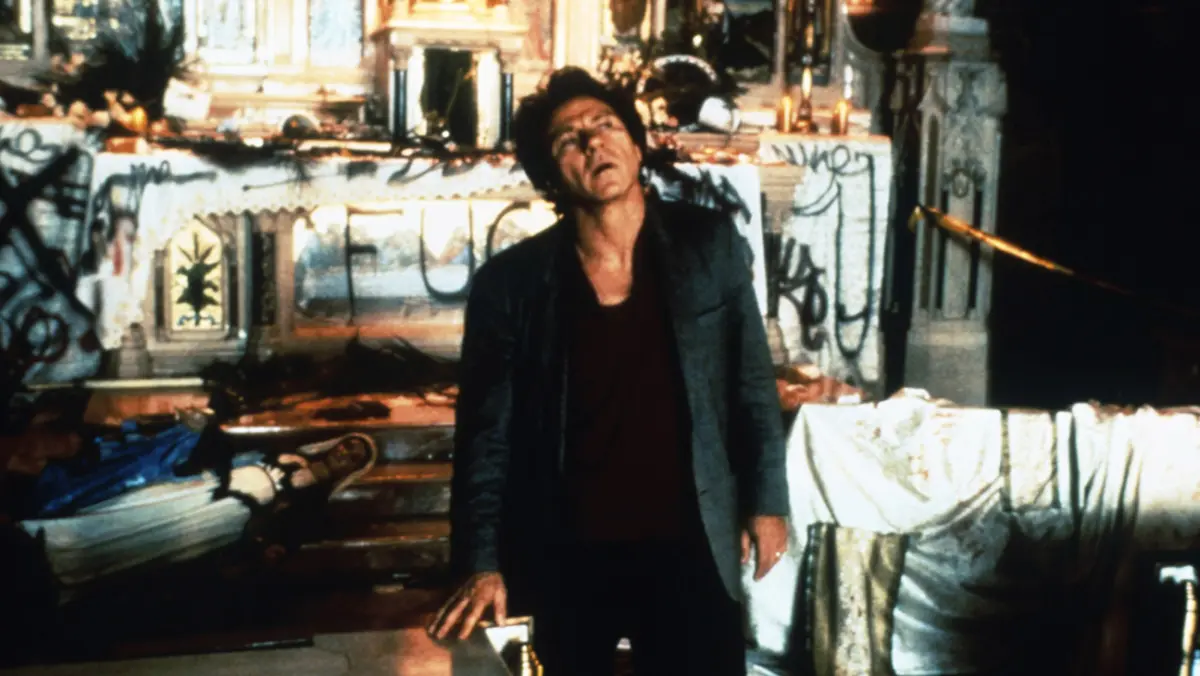
Three weeks before principal photography was scheduled to begin on the 1992 crime drama Bad Lieutenant, director Abel Ferrara found himself in a professional and financial tailspin. The project, a visceral exploration of moral decay, police corruption, and spiritual crisis in New York City, had already been a Herculean task to bring to fruition. After two years of navigating a hostile financing landscape where investors balked at the script’s unflinching portrayal of a drug-addicted detective, the production finally had a green light. However, the film’s star, Christopher Walken, abruptly withdrew from the project, leaving the production in a state of existential uncertainty.
The departure of Walken, who had previously anchored Ferrara’s 1990 breakout success King of New York, was not merely a casting setback; it was a total collapse of the film’s creative architecture. Ferrara, speaking on The Hollywood Reporter’s It Happened in Hollywood podcast, candidly admitted that the loss of his lead actor coincided with a period of intense personal volatility. Having already liquidated his salary on personal expenses and lifestyle habits, Ferrara faced the prospect of total ruin.
A Timeline of Creative Turmoil
The development of Bad Lieutenant was characterized by a series of high-stakes negotiations and artistic clashes. Following the critical recognition earned by King of New York, the industry viewed the Ferrara-Walken partnership as a bankable commodity. The two had spent an intensive week at the Chateau Marmont in Los Angeles, refining the character of the Lieutenant—a man spiraling through the underbelly of New York’s drug trade and gambling circuits.
The chronology of the breakdown is as follows:
- 1990: Ferrara and his team begin pitching the concept for Bad Lieutenant, facing immediate resistance from studios concerned about the protagonist’s irredeemable nature.
- Early 1992: Financing is finally secured. The production schedule is set, and rehearsals commence between Ferrara, Walken, and producer Edward R. Pressman.
- Three Weeks Pre-Production: During a Saturday morning meeting at the Chateau Marmont, Walken declares his inability to embody the character, stating he understands the director’s vision but cannot execute it.
- The Search for a Replacement: Following Walken’s departure, Ferrara approaches Harvey Keitel.
- The Casting Pivot: After an initial rejection, Keitel re-evaluates the script with the help of actor Victor Argo, ultimately signing on to lead the project.
The Financial and Artistic Stakes
The reluctance of financiers to support Bad Lieutenant was rooted in the film’s uncompromising realism. Unlike standard police procedurals of the early 1990s, the screenplay—co-written by Zoë Lund—refused to offer the audience a moral anchor. The title character’s descent into addiction and exploitation was designed to shock, a creative choice that made the project a significant financial risk.
Data from the era suggests that independent films dealing with such dark thematic material often struggled to secure distribution without significant compromises. By refusing to soften the edges of his protagonist, Ferrara placed immense pressure on his lead actor to provide a performance of extraordinary depth. When Walken withdrew, he cited a lack of alignment with the character’s trajectory, effectively acknowledging that the internal logic Ferrara was crafting was perhaps too bleak even for a seasoned actor of his caliber.
The Keitel Intervention
The transition from Walken to Harvey Keitel represented a fundamental shift in the film’s DNA. When the script was first presented to Keitel, his reaction was dismissive; he reportedly discarded the initial draft after reading only three pages. The script, which was unconventional in structure and lacked the traditional narrative arcs of Hollywood genre films, failed to resonate with him until an intervention by mutual friend Victor Argo.
Argo’s influence, combined with a specific, harrowing passage written by Zoë Lund regarding the confession of a raped nun, finally compelled Keitel to commit. This passage served as the film’s emotional center—a moment of spiritual reckoning that stood in stark contrast to the surrounding scenes of drug use and petty crime.
For Ferrara, the transition required a complete abandonment of the work he had done with Walken. "All the whole week I rehearsed with Walken, all that shit went out the window," Ferrara reflected. This pivot proved to be the most critical decision in the film’s production history. Keitel’s performance brought a raw, frantic energy to the role that redefined the "corrupt cop" archetype, cementing the film’s place in the canon of American independent cinema.
Broader Implications for Independent Filmmaking
The production of Bad Lieutenant serves as a case study in the unpredictability of auteur-driven projects. The film’s eventual success—and its long-term status as a cult classic—illustrates how external pressures, such as the sudden departure of a lead actor, can sometimes force a director toward a more authentic creative solution.
From an industry perspective, the incident highlights the "high-risk, high-reward" nature of the 1990s independent film boom. The project was saved not by corporate intervention or studio oversight, but by the fortuitous involvement of an actor (Keitel) whose artistic sensibilities were uniquely suited to the material.
The legacy of the film continues to be felt today. It remains a fixture in retrospective screenings, including the current Criterion Channel series dedicated to Ferrara’s body of work. Critics and film historians often point to the intensity of the performance as the primary reason the film remains relevant over three decades later. While Ferrara has directed over 35 feature films throughout his career, the persistent cultural footprint of Bad Lieutenant serves as a testament to the fact that the film’s chaotic genesis was instrumental in its ultimate achievement.
Analysis: The Psychology of the Performance
The difference between a Walken-led Bad Lieutenant and the Keitel version is a matter of academic fascination for film scholars. Walken’s screen presence is often characterized by a detached, rhythmic, and intellectual menace, whereas Keitel’s portrayal was defined by an exposed, visceral vulnerability.
The decision by Walken to exit the project was, in hindsight, an act of professional self-awareness. He recognized that the specific "pitch-dark" nature of the film, as envisioned by Ferrara and Lund, demanded a level of psychological surrender that he was not prepared to give. By contrast, Keitel’s willingness to inhabit the role’s extremes allowed the film to bypass traditional Hollywood tropes entirely.
This episode also underscores the vital role of the supporting cast and creative collaborators. Figures like Zoë Lund, whose writing provided the film’s moral gravity, and Victor Argo, who acted as a bridge between the director and his new lead, were just as essential to the film’s completion as the director himself.
Conclusion
As the film remains a centerpiece of Ferrara’s filmography, the story of its near-collapse serves as a reminder of the fragility of art. The transition from a polished, anticipated performance by an established star to a raw, improvisational turn by an actor who initially rejected the material encapsulates the unpredictable nature of the creative process. Bad Lieutenant exists not in spite of its chaotic production history, but because of it. For audiences revisiting the film through modern digital retrospectives, the work stands as a stark, uncompromising document of a moment in time where artistic vision triumphed over logistical failure. The upcoming episode of The Hollywood Reporter’s It Happened in Hollywood podcast promises to offer further insights into these behind-the-scenes dynamics, providing a definitive account of one of cinema’s most successful last-minute pivots.