If you’ve missed writer/director(/musician/producer/activist) Boots Riley on the big screen since 2018’s Sorry to Bother You, and could really use another reminder of the absurdity inherent in late-stage capitalism, I Love Boosters is here, and it is an absolute knockout. The film, inspired by a 2006 track by Riley’s hip-hop group The Coup, delves into the complex world of “boosters” – individuals who steal from high-end fashion brands and resell the items at more accessible prices within their communities. This premise serves as a vibrant, thought-provoking backdrop for Riley’s signature blend of social commentary, surrealism, and heartfelt humanism.
The Velvet Gang and the Haute Couture Heist
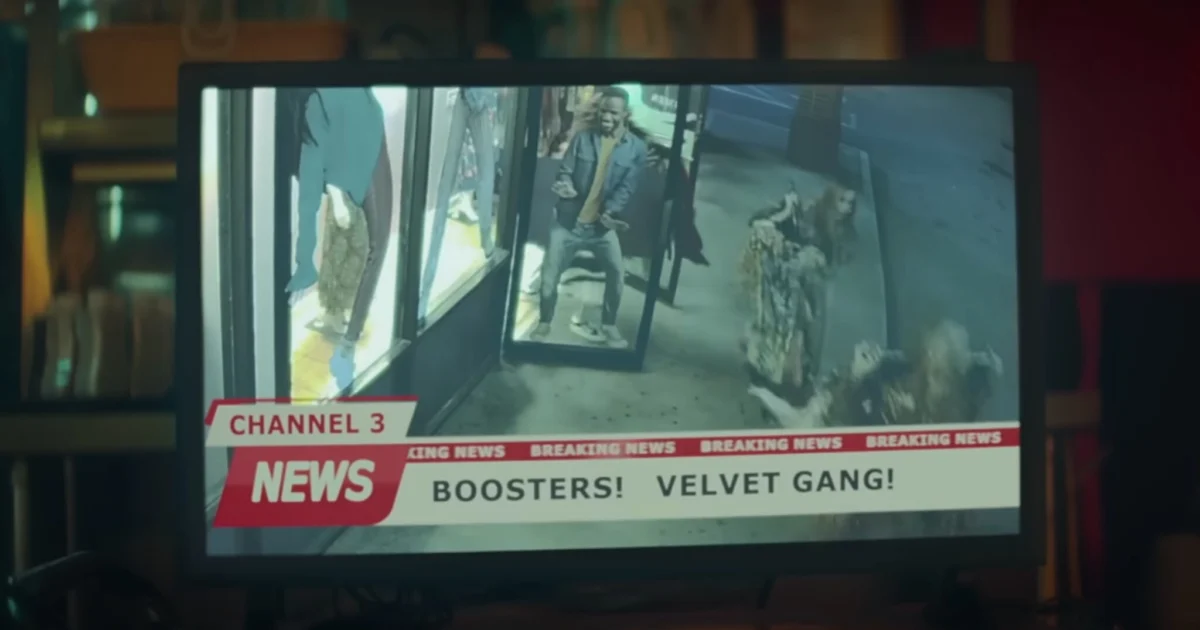
At the heart of I Love Boosters is the story of "The Velvet Gang," a crew of boosters operating out of San Francisco. Led by the ambitious Corvette (Keke Palmer), whose own design aspirations are stifled by the current economic landscape, the gang includes her sharp-witted friends Sade (Naomi Ackie) and Mariah (Taylour Paige). They are also joined by Stevie (Rachel Walters), a white associate often utilized for her perceived innocuousness as a distraction, and two male accomplices for more substantial operations.
Their primary target is Metro Designers, a prominent clothing brand helmed by the enigmatic Christie Smith (Demi Moore). Smith, a figure who embodies the self-obsessed, cult-of-personality CEO so prevalent in contemporary business, is aware of The Velvet Gang and actively denigrates them on social media and in public statements. She labels them as "low class, urban bitches" who are incapable of genuine creation and merely profit from the work of others.
Corvette’s initial encounter with Smith, orchestrated through a calculated infiltration of Smith’s opulent apartment building, reveals the designer’s shallowness and self-absorption. During this encounter, Corvette overhears plans for a new line of $100,000 suits. This sparks a bold plan: The Velvet Gang decides to secure employment at a Metro Designer retail outlet, under the watchful, and often exasperated, eye of store manager Grayson (Will Poulter). Their objective is to systematically dismantle the store from within, targeting these high-value garments and, in doing so, striking a blow against Smith and the exploitative system she represents.

The narrative takes a significant turn when, halfway through their tenure, Corvette recognizes one of her own designs appearing in the Metro Designer collection. This act of blatant appropriation ignites a burning desire for retribution, escalating the stakes of their operation.
Beyond the Boost: Unionization and Technological Disruption
While The Velvet Gang’s personal vendetta against Christie Smith drives much of the plot, the film expertly weaves in other crucial thematic threads. Their Metro Designer coworker, Violeta (Eiza González), is actively engaged in unionizing efforts, attempting to mobilize the retail workers against unfair labor practices. This subplot introduces a critical dimension of collective action and worker solidarity, contrasting with the individualistic pursuits of the boosters.
On the day the gang plans their major heist, they are unexpectedly outmaneuvered by Jianhu (Poppy Liu), a young woman who appears to possess a "magic bag." This seemingly supernatural artifact is, in reality, a sophisticated device developed by a factory in China in conjunction with the Chinese government. Jianhu, a sweatshop worker for Metro Designs, has utilized two of these devices – designed to drastically cut shipping costs – to travel to the U.S. Her mission is not personal gain, but rather to disrupt the company’s operations, negate the perceived benefit of "free shipping," and force Metro Designs into fair negotiations with its exploited workforce.
The Philosophy of Liberation: Dialectical Materialism and Collective Action
The motivations within The Velvet Gang begin to diverge and converge as the narrative progresses. Corvette remains singularly focused on revenge against Smith. Sade, driven by the need for financial stability, seeks to maximize their merchandise sales. Mariah, however, views their act of selling stolen goods at affordable prices as a meaningful form of community redistribution.
A critical juncture is reached when The Velvet Gang, now aware of Jianhu’s advanced technology, strikes a deal to rob every Metro Designer store in the Bay Area. This ambitious plan is ultimately thwarted by Christie Smith. It is at this moment that Violeta intervenes, revealing the true capabilities of Jianhu’s devices. Beyond mere teleportation, these devices are imbued with principles of dialectical materialism, offering two additional functions: a "situational accelerator," which propels conflicts toward their inevitable conclusion, and a "deconstructor," which breaks down objects and situations to their moment of creation.

This intersection of advanced technology, philosophical underpinnings, and surreal imagery is characteristic of Riley’s directorial style. In an era where societal connections are increasingly strained by capitalist pressures, I Love Boosters offers a powerful exploration of interconnectedness and the vital role of community.
A Shift Towards Hope and Feminist Revolution
While both Sorry to Bother You and I Love Boosters tackle similar themes – the absurdities of capitalism, worker exploitation, the cult of personality surrounding CEOs, the dehumanizing effects of wealth, and the richness of African American art and culture – I Love Boosters presents a notably more hopeful outlook than its predecessor.
The shift in tone can be attributed to two primary factors. Firstly, the nearly decade-long gap between films has coincided with a period of increasing global despondency. Audiences, perhaps more than ever, are seeking narratives that offer uplift and a vision for positive change. Secondly, and crucially, I Love Boosters centers the narrative of uprising and revolution around women, and specifically women of color. This emphasis on female agency and leadership in the fight against oppression is a defining characteristic of the film.
This focus is so pronounced that even the introduction of a potential romantic interest for Corvette, the persistent "Pinky Ring Guy" (LaKeith Stanfield), is strategically navigated away from. His eventual reveal as a literal demon underscores the film’s stance on the detrimental impact of unproductive or self-serving relationships on women’s hard-won efforts. While this can be interpreted metaphorically as a symbol of wasted time and energy, the film’s literalization offers a refreshing counterpoint to the pervasive "Manosphere" messaging often encountered online.
Examining Internal Conflicts and the Path to Unity
The film masterfully illustrates the myriad obstacles that hinder collective progress. Beyond the external pressures of exploitative corporations and societal inequalities, internal conflicts within communities are brought to the forefront. Sade’s involvement in a pyramid scheme, driven by a desperate belief in a quick fix, highlights the vulnerabilities created by economic precarity. Corvette’s singular focus on revenge, a powerful emotional response to being wronged and having her creative work stolen, initially blinds her to broader objectives. The gang’s initial reluctance to assist their unionizing coworkers, prioritizing their own immediate goals, exemplifies the challenges of shifting from individualistic survival to collective action.

Critically, the film avoids shaming characters for their knee-jerk reactions or personal struggles. Instead, it presents these conflicting needs and desires as natural impediments to unified action, emphasizing that the path to collective power is paved with understanding and empathy.
Visual Spectacle and Socioeconomic Critique
For those anticipating Riley’s signature visual flair, I Love Boosters does not disappoint. The film is replete with striking imagery, both grounded in reality and steeped in surrealism. From Christie Smith’s dramatically tilted apartment floors to Corvette’s haunting, massive rolling ball of garbage, the visual landscape is as compelling as the narrative. The soundtrack is a powerhouse, and the meticulously crafted costumes, wigs, and makeup serve as integral elements of storytelling in every frame.
Christie Smith, portrayed by Demi Moore, represents a distinct form of villainy compared to the corporate titans of previous Riley films. She embodies a critique of the "girlboss" archetype and the co-option of art by capitalism. Smith genuinely believes she is providing the masses with access to a creative vision – her own – thereby denying them their inherent right and need to create for themselves. This serves as a scathing commentary on how even artistic expression can be commodified and controlled within a capitalist framework.
The Emotional Core: Sisterhood and Shared Paving
One of the most unexpected and emotionally resonant moments in the film occurs during a heated argument between Sade and Corvette. As the heists escalate, Sade consistently offers Corvette alternative strategies and even suggests abandoning their plan if it becomes untenable. Corvette’s growing irritation with Sade’s pragmatic suggestions culminates in a powerful confrontation. Sade, exhausted by the constant pressure and the feeling of being blamed for bringing down the group’s morale, expresses her frustration at having offered numerous pivots and options, all while trying to support her best friend through a personal spiral.
This raw, authentic argument between two women, set against the backdrop of high-stakes action, underscores a profound truth about relationships and collective endeavors. Sade’s need to be heard and supported, irrespective of her potential vulnerability to schemes like MLMs, is paramount. Corvette, in turn, learns a vital lesson: that even when facing immense challenges, the burden cannot solely rest on her shoulders. In fact, the experience might become far less overwhelming if it is shared.

I Love Boosters ultimately offers a potent message: the road to liberation and collective power is smoother when it is paved together. The film’s conclusion, featuring a series of hilarious and distracting cameos from notable actors like Don Cheadle, Viggo Mortensen, and Eric André (whose appearance is particularly memorable), further reinforces its playful yet profound approach. A post-credit scene, where González’s Violeta continues to expound on temporal mechanics, hints at the ongoing exploration of these concepts.
While employing a sci-fi device to facilitate collective action against powerful entities might seem like a narrative shortcut, it also serves as a gift, allowing audiences to experience the journey toward victory with a sense of exhilaration. In reality, the fight for justice is often arduous and protracted, and one rarely achieves liberation for oneself alone. I Love Boosters invites viewers to witness that jump to the triumphant finale and then, crucially, to be inspired to take action in their own capacities.