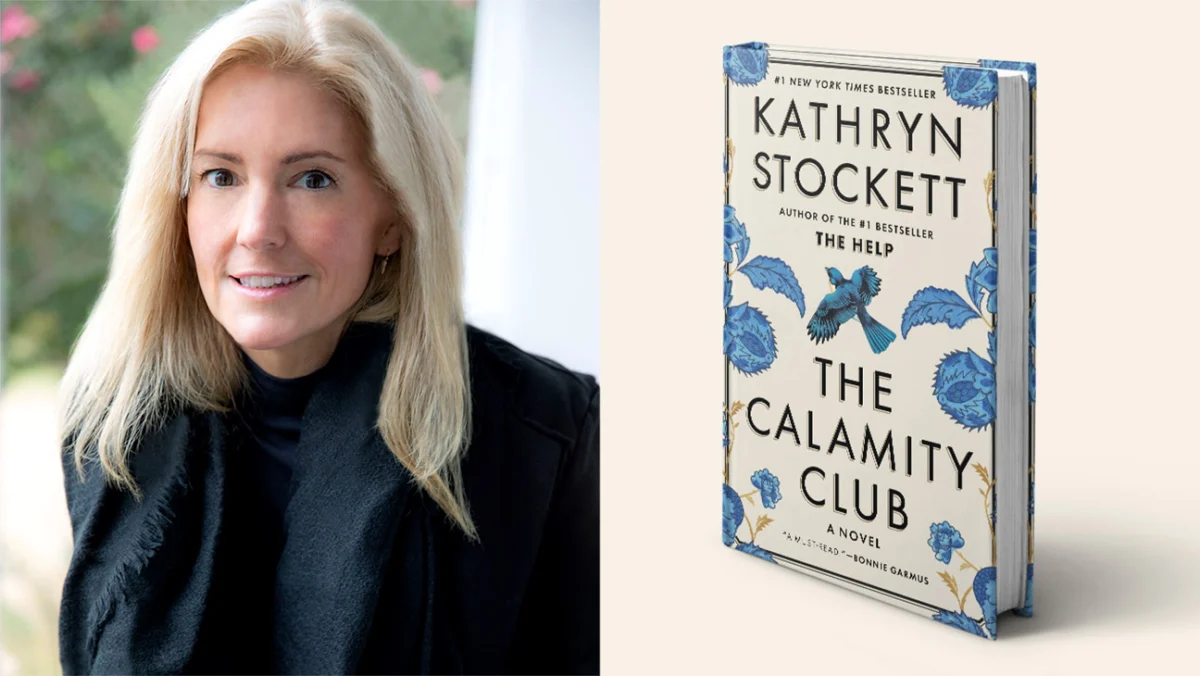
The literary and entertainment landscapes have converged once again as bestselling author Kathryn Stockett has officially signed with Creative Artists Agency (CAA). This move, confirmed on September 18, 2026, marks a pivotal moment for the author, whose career has been defined by long periods of meticulous preparation followed by explosive, culture-shifting commercial success. The signing with one of Hollywood’s most powerful talent agencies signals a clear intent to bridge the gap between her recent literary triumph, The Calamity Club, and potential future adaptations in the film and television sectors.
A Triumphant Return to the Bestseller Lists
Stockett’s current literary project, The Calamity Club, released on May 5, 2026, has proven to be a juggernaut in the publishing industry. As of mid-September, the novel has maintained a prestigious position on the New York Times bestseller list for 19 consecutive weeks. Market data indicates that the book has already surpassed 1.5 million copies sold in the United States alone. The international reach of the work is equally significant; publishing rights have been secured in 35 languages, underscoring the universal appeal of the story’s themes.
The Calamity Club serves as a thematic evolution for Stockett. Set against the stark, unforgiving backdrop of the 1933 Great Depression, the narrative centers on an orphan and a spinster—two women pushed to the margins of society—who forge an unexpected sisterhood. Their journey to seize autonomy over their futures has resonated deeply with contemporary readers, a sentiment echoed by critical reception. The New York Times lauded the novel’s execution, noting that Stockett’s prose possesses a "down-to-earth" quality, where dialogue and character interiority feel "inevitable" rather than manufactured.
Chronology of a Literary Career
The trajectory of Stockett’s career is unique in modern publishing. The gap between her debut and her sophomore effort spanned 17 years, a period that allowed for both professional growth and the accumulation of significant cultural capital.
- 2009: Stockett publishes her debut novel, The Help. It becomes a global phenomenon, selling over 15 million copies worldwide.
- 2011: The feature film adaptation of The Help is released by Disney. The film becomes a critical and financial success, grossing over $200 million globally.
- 2011–2025: Stockett maintains a low public profile, focusing on the research and composition of her second major work.
- May 5, 2026: The Calamity Club is released to widespread anticipation and immediate commercial success.
- September 18, 2026: Stockett signs with CAA, signaling a transition into the next phase of her professional management and project development.
The Impact of The Help: Setting the Precedent
To understand the weight of Stockett’s signing with CAA, one must examine the legacy of her debut, The Help. Set in 1960s Mississippi, the novel navigated the fraught intersection of race, domestic service, and class. Its transition to the screen in 2011 remains a hallmark case study for how literature can drive Hollywood production cycles.
The film adaptation was not only a financial windfall but an awards-season contender. With a cast featuring Viola Davis, Emma Stone, and Octavia Spencer, the production highlighted the power of character-driven storytelling. Octavia Spencer’s performance earned her the Academy Award for Best Supporting Actress, and the film received a nomination for Best Picture. This precedent establishes a high expectation for any future screen projects derived from Stockett’s work, and her decision to join CAA is likely a strategic effort to manage the high-stakes negotiations and creative partnerships that accompany such high-profile literary properties.
Strategic Implications of the CAA Partnership
The decision to sign with a powerhouse agency like CAA is rarely coincidental, particularly for an author whose work has already demonstrated such potent "transmedia" potential. In the modern entertainment industry, the lines between authorship and content development have blurred. Agencies now function as incubators for intellectual property, guiding authors through the complex landscape of streaming rights, production deals, and international distribution.
Industry analysts suggest that by partnering with CAA, Stockett is positioning herself to exercise greater control over the adaptation rights of The Calamity Club. Given the historical success of her first novel’s transition to film, it is logical to infer that studios and production houses have been aggressively pursuing the rights to her current work. CAA’s role will be to curate these opportunities, ensuring that the integrity of the source material is maintained while maximizing the reach of the intellectual property across various platforms.
Market Context and The Resilience of Historical Fiction
The success of The Calamity Club arrives at a time when the publishing market has shown a renewed appetite for historical fiction that highlights female agency. The "Calamity Club" narrative, which explores the survival strategies of women during the Great Depression, taps into broader societal interests regarding resilience and the history of social structures.
The sales data—1.5 million copies in less than five months—is particularly striking in a digital-first era where consumer attention is fragmented. The fact that the book is slated for translation into 35 languages confirms that the narrative’s appeal is not limited to domestic audiences, but spans a wide variety of cultural contexts. This global footprint is a vital metric for an agency like CAA, which specializes in leveraging local success to achieve international dominance.
Future Outlook and Industry Anticipation
As of late 2026, the literary community is watching closely to see how this partnership will manifest. For Stockett, the transition from a long-term hiatus to a high-profile agency signing marks a professional maturation. She is no longer just an author of a singular breakthrough book; she is now a proven commodity with a consistent track record of capturing the public imagination.
While neither Stockett nor CAA has released details regarding specific upcoming projects, the industry is rife with speculation about a potential adaptation for The Calamity Club. Given the success of her previous works, the market anticipates a project that combines high-quality production values with the same emotional resonance that defined her earlier writing.
In conclusion, Kathryn Stockett’s move to CAA represents the confluence of literary achievement and the high-stakes reality of modern media production. By aligning with one of the industry’s premier talent representatives, Stockett is well-positioned to navigate the next chapter of her career, whether that involves further exploration of the 1930s landscape or the development of entirely new narratives. As the 19-week bestseller streak continues, the focus remains on how her unique voice will continue to shape both the bookshelf and the screen. For an author who has spent nearly two decades defining her own pace, this new chapter suggests that the best may still be yet to come.