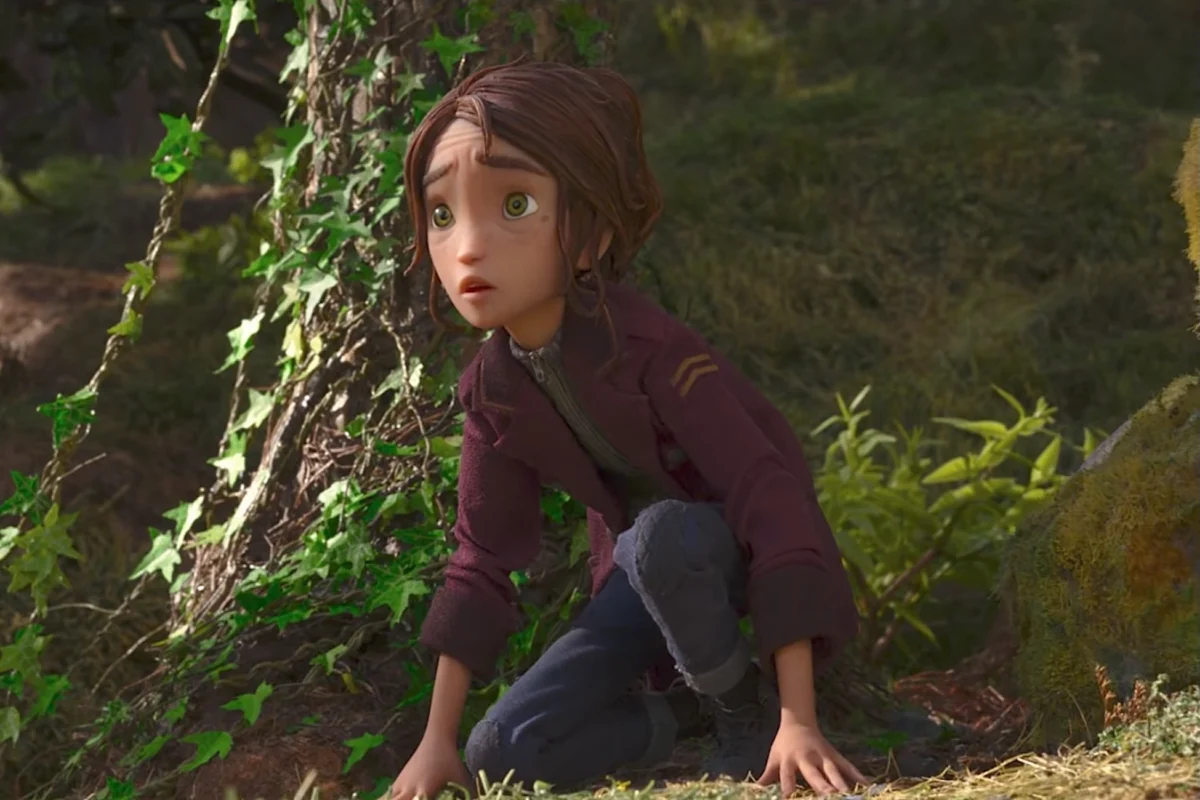
Laika, the acclaimed stop-motion animation studio renowned for its meticulous craftsmanship and dark fantasy storytelling, has released the final promotional trailer for its upcoming feature film, Wildwood. Based on the bestselling children’s fantasy novel authored by Colin Meloy and brought to visual life through the illustrations of Carson Ellis, Wildwood represents one of the studio’s most ambitious undertakings to date. Set against the atmospheric backdrop of the Pacific Northwest, the narrative follows a young protagonist named Prue McKeel as she embarks on a perilous rescue mission into the hidden depths of the Impassable Wilderness outside Portland, Oregon, after a murder of crows abducts her infant brother.
The forthcoming film is slated to arrive in theaters on October 23rd, drawing immense interest from animation enthusiasts, literary fans, and industry observers alike. As the theatrical release window approaches, the newly unveiled footage provides the most comprehensive look yet at the sprawling scale, emotional weight, and intricate stop-motion techniques that define Laika’s signature production style.
Narrative Premise and Literary Origins
The underlying material for Wildwood is rooted in a rich, expansive literary universe established by Colin Meloy, the lead singer of the indie-rock band The Decemberists, with artistic accompaniment from his wife, Carson Ellis. Published originally in 2011, the novel serves as the first installment in a trilogy that captures the imagination through detailed world-building, folkloric undertones, and a distinct regional aesthetic inspired by the geography and mythology of Oregon.
In the cinematic adaptation, headstrong teenager Prue McKeel—voiced by Peyton Elizabeth Lee—finds her ordinary life upended when a flock of territorial crows whisks her baby brother away into the forbidden, enchanted forest known as the Impassable Wilderness. Refusing to abandon her sibling, Prue launches a desperate search operation. She is accompanied by her well-meaning but ill-prepared classmate, Curtis Mehlberg, voiced by Jacob Tremblay.
Once inside the forest, the duo must navigate a complex sociopolitical landscape populated by talking woodland animals, formidable bandits, and influential figures whose motivations are deeply intertwined with personal ambition and unresolved grief. As Prue and Curtis are progressively drawn into a high-stakes conflict that threatens to destabilize the ecological and magical equilibrium of the ecosystem, the narrative expands beyond a simple rescue mission. It evolves into an exploration of duty, the consequences of isolation, and the burden of sorrow.
Production Background and Creative Leadership
The transition of Wildwood from page to screen has been a prolonged labor of love for the creative personnel at Laika. Founded in 2005 and led by Travis Knight, the studio has carved out a unique niche in the modern animation landscape by steadfastly prioritizing traditional stop-motion fabrication, advanced 3D printing technologies, and physical set construction over purely digital pipelines.
Travis Knight, who previously directed the critically acclaimed Kubo and the Two Strings (2016) and Bumblebee (2018), serves as the director for Wildwood. Scriptwriting duties were handled by Chris Butler, whose previous credits at Laika include the Academy Award-nominated stop-motion features ParaNorman (2012) and Missing Link (2019). This creative pairing signals a deliberate continuity in tone for the studio, which has consistently leaned into darker, more mature thematic elements traditionally avoided in mainstream family animation.
In statements discussing the creative vision behind the project, Knight emphasized that the filmmakers made a conscious decision not to dilute the heavier, more somber emotional beats found within Meloy’s original text. Speaking to industry publication Empire, Knight described the film’s thematic exploration, noting that the narrative wanders through the long corridors of loss and grief, examining the strange and heavy ways human beings carry the burdens that cannot be easily set down. This fidelity to the book’s melancholy and philosophical undertones distinguishes Wildwood from lighter, more conventional animated fare, aligning it more closely with European dark fantasy traditions and classic folklore.
Star-Studded Voice Ensemble
To bring the sprawling cast of human and animal characters to life, Laika has assembled an expansive and decorated voice ensemble. Alongside Peyton Elizabeth Lee and Jacob Tremblay in the central adolescent roles, the production features an array of high-profile talent spanning cinema, television, and music.
The voice cast includes Academy Award winner Carey Mulligan (An Education), Academy Award winner Mahershala Ali (Moonlight), Academy Award winner Angela Bassett (Strange Days), and multifaceted entertainer Awkwafina (Crazy Rich Asians). The roster is further bolstered by Jake Johnson (Spider-Man: Into the Spider-Verse), Charlie Day (Mythic Quest), Amandla Stenberg (The Acolyte), Jemaine Clement (Time Bandits), and Maya Erskine (Mr. & Mrs. Smith). Rounding out the ensemble are veteran performers Tantoo Cardinal (Killers of the Flower Moon), renowned singer-songwriter Tom Waits (Seven Psychopaths), and veteran British actor Richard E. Grant (The Franchise).
This diverse assemblage of performers underscores Laika’s growing industry clout, allowing the studio to attract elite dramatic talent to projects driven by physical craftsmanship and specialized animation workflows.
Chronology and Promotional Timeline
The path to the release of Wildwood spans several years of careful planning, physical fabrication, and strategic marketing. Laika officially announced its development of the Wildwood adaptation, securing the rights to Meloy’s novel shortly after its publication. However, the sheer logistical complexity of producing a feature-length stop-motion film—requiring thousands of individual replacement faces printed via rapid prototyping, meticulously hand-sewn costumes, and massive miniature set builds—resulted in a protracted production schedule.
Throughout the promotional cycle leading up to the October 23rd theatrical premiere, the studio has steadily released teaser art, behind-the-scenes featurettes, and sequential trailers designed to acclimate audiences to the visual lexicon of the film. While earlier promotional materials focused heavily on establishing the geography of Portland, Oregon, and the mysterious allure of the Impassable Wilderness, the final trailer pivots decisively toward the narrative’s climax. It highlights the impending battle for the forest and the ambivalent nature of the creatures inhabiting it, effectively showcasing the scale of the conflict without revealing critical plot resolutions.
Industry Implications and Market Position
The release of Wildwood arrives at a pivotal juncture for the feature animation industry. In recent years, the theatrical landscape has been heavily dominated by computer-generated imagery (CGI) produced by major studios such as Disney, Pixar, Illumination, and DreamWorks. While stop-motion animation retains a dedicated and passionate global following, studios specializing in the medium—such as Aardman Animations in the United Kingdom and Laika in the United States—face distinct economic and operational pressures due to the high labor costs and extended production timelines inherent to the craft.
Laika’s strategy has consistently relied on establishing prestige value through uncompromising artistic quality. Previous releases from the studio, including Coraline (2009), ParaNorman (2012), The Boxtrolls (2014), Kubo and the Two Strings (2016), and Missing Link (2019), have collectively earned multiple Academy Award nominations and built a reputation for visual innovation. Wildwood represents an expansion of this commercial and artistic footprint, serving as the studio’s first foray into adapting an established, multi-volume contemporary literary franchise.
Market analysts and box-office observers will be closely monitoring the performance of Wildwood upon its October debut. The film’s late-October release window strategically positions it to capture family audiences during the autumn season while simultaneously appealing to older demographics drawn to dark fantasy, atmospheric storytelling, and auteur-driven animation. Furthermore, the success of the film could determine the viability of adapting subsequent books in Meloy’s Wildwood chronology—Under Wildwood and Wildwood Imperium—potentially securing a long-term intellectual property pipeline for the Oregon-based studio.
As the countdown to October 23rd continues, anticipation remains high among cinephiles eager to witness how Laika translates the dense mythology and emotional resonance of the printed page into the tactile, handmade reality of stop-motion cinema.