
The contemporary cinematic landscape frequently grapples with how societies document, process, and retain historical trauma, particularly in regions subjected to protracted conflict. In her ambitious 76-minute debut feature Do You Love Me, Beirut-based multidisciplinary artist and filmmaker Lana Daher confronts this challenge head-on. The documentary, which premiered at the Venice Days section of the Venice International Film Festival and subsequently embarked on an international festival run including screenings at CPH:DOX before arriving at Metrograph in New York City, serves as a visceral tapestry of Lebanese cultural memory. Spanning seven decades of found footage, newsreels, home movies, and independent cinema, Daher constructs an evocative portrait of a nation caught in perpetual cycles of crisis, resilience, and reconstruction.
The Genesis and Evolution of the Project
The conceptual origins of Do You Love Me trace back to 2018, when Daher initially set out to examine the intricate relationship between war and music, specifically investigating how melodies carry memory and navigate conflict. Her preliminary focus centered on the Bendaly Family, a popular Lebanese musical ensemble whose catalog ultimately inspired the film’s title. While the project was always envisioned as an archive-based documentary, the scope shifted organically as Daher engaged more deeply with the material.
The endeavor transformed from an external research initiative into a deeply personal reflection on her own relationship with Beirut, her childhood, family trauma, and the broader societal frameworks of memory and history. What emerged was a cinematic love letter to her home city, designed to articulate the emotional reality of living in a country marked by continuous geopolitical instability. Rather than offering a traditional historical overview, Daher sought to capture the psychological fabric, contradictions, and fundamental humanity of individuals navigating a permanent state of crisis.

Sourcing the Unofficial Archive: A Monumental Archival Hunt
One of the most formidable challenges facing the production of Do You Love Me was the structural absence of a national archive or a unified, officially sanctioned history textbook in Lebanon. Consequently, the compilation of source material required an exhaustive hunt spanning multiple years rather than a conventional archival search.
Daher and her research team drew upon approximately 106 independent Lebanese fiction and documentary features produced between 1958 and the present day. This cinematic foundation was supplemented by international and domestic journalistic footage, amateur home videos dating as far back as 1928, personal photographs, podcasts, music videos, radio broadcasts, and abandoned archival troves. In total, the production amassed more than 20,000 distinct audiovisual fragments distributed across multiple hard drives.
The filtration process was exceptionally rigorous. Approximately seven percent of the initially researched material made its way into the final cut of the 76-minute feature. To secure legal clearance for this mosaic of media, the production team successfully negotiated and finalized nearly 400 separate rights contracts. This painstaking administrative and creative effort was driven by a core necessity: in a nation where many families, including Daher’s own, lost their personal archives to successive wars and waves of forced migration, the filmmaker aimed to construct a vernacular record. The resulting film relies on Lebanese citizens speaking in their own languages—primarily Arabic and French—and observing their history through domestic lenses.
Chronology and Editing Philosophy: Rejecting Linear History

A defining characteristic of Do You Love Me is its deliberate rejection of a linear chronological structure. Daher posits that neither human memory nor collective trauma operates in a straight line; therefore, the cinematic grammar of the documentary must reflect this fractured reality.
For nearly five years, Daher worked independently—assisted intermittently by junior researchers—to assemble an initial four-hour rough cut of the film. Seeking an external perspective to distill the mountain of footage, she partnered with Paris-based Syrian editor Qutaiba Barhamji, whose notable editing credits include Kaouther Ben Hania’s Academy Award-nominated documentary Four Daughters (2023) and The Voice of Hind Rajab (2025). Rather than refining the existing four-hour assembly, Daher and Barhamji elected to start from scratch.
By engaging an editor who was not Lebanese, Daher deliberately insulated the creative process from local attachments to specific images, events, and historical traumas. The editorial team established strict structural rules: no full scenes would be lifted directly from existing films, and Lebanese politicians would be entirely excluded from both the visual frame and the sound design. Instead, the narrative relies on intuitive associations, fragmenting isolated shots to build an emotional logic. The soundtrack transitions fluidly from traditional Middle Eastern compositions to contemporary hip-hop, while the visual narrative juxtaposes action movie scenes with gritty street footage of Beirut, deliberately blurring the boundary between staged fiction and historical reality.
Contextualizing the Lebanese Experience: Historical Precedents and Geopolitical Realities
The release of Do You Love Me coincides with a period of severe geopolitical volatility in Lebanon, drawing renewed international attention to the country’s turbulent modern history. The documentary’s framework engages heavily with the artistic and journalistic legacies of pioneering Lebanese figures, most notably the late filmmaker and journalist Jocelyne Saab. Excerpts from Saab’s landmark documentary work, such as Lebanon in Turmoil (1975), feature prominently in Daher’s film, capturing the immediate devastation of early conflicts. The thematic resonance of Saab’s work prompted Metrograph to accompany the theatrical run of Do You Love Me with a dedicated screening series titled "Jocelyne Saab: Letters from Lebanon."
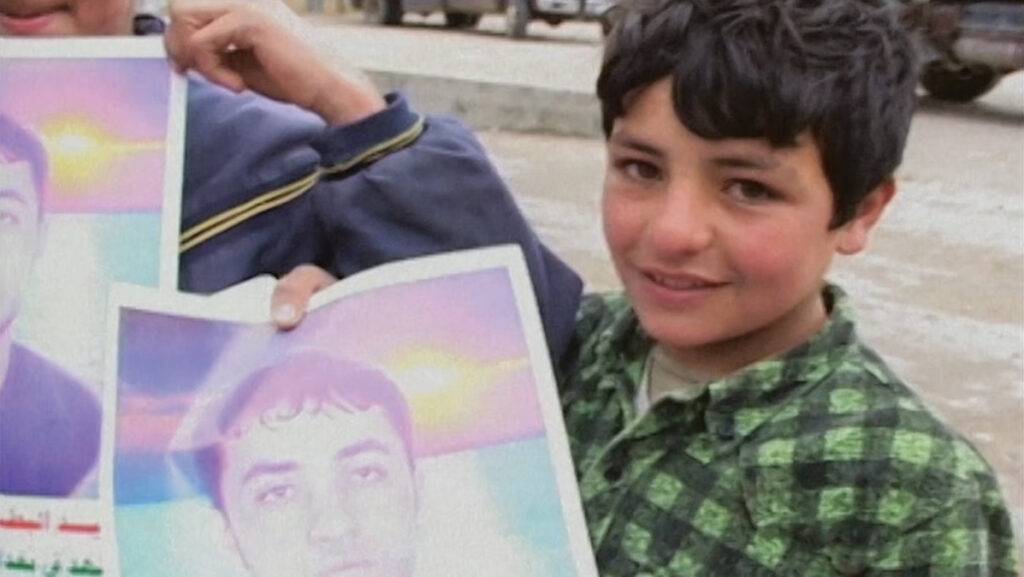
Daher’s engagement with historical source material has also fueled broader discussions regarding external geopolitical interventions and internal societal fragmentation. Rejecting reductive media narratives that frame ongoing hostilities merely as an isolated crossfire between specific factions, Daher and cultural commentators emphasize the deep historical roots of the region’s conflicts. The documentary highlights that military incursions and occupations by neighboring states span multiple decades—predating the emergence of various contemporary political and militant organizations—and have resulted in the systematic displacement of communities and the erasure of towns and villages across southern Lebanon.
Furthermore, the film addresses the internal fissures within Lebanese society. Decades of sectarian political confessionalism, compounded by recurring economic collapses and structural crises, have left the populace internally divided. Daher has noted that during domestic screenings of Do You Love Me in Beirut amid ongoing conflict, contemporary realities—such as the acoustic signature of surveillance drones audible outside cinema venues—frequently bled into the exhibition space, collapsing the distance between archival history and present-day survival.
Centering the Female Gaze in Historical Preservation
A critical analytical dimension of Do You Love Me is its intentional centering of the female perspective within a historical record traditionally dominated by masculine geopolitical and military narratives. Daher observed throughout the archival process that while women were frequently excluded from institutional history-making, they served as the literal and figurative custodians of domestic memory.
Home videos, family photograph albums, and personal collections that survived the ravages of war were predominantly shot, curated, and preserved by women. By utilizing these materials, Daher’s film elevates the female gaze, transforming everyday domestic spaces, acts of mourning, birthday celebrations, and community resilience into foundational pillars of national history. This approach honors not only pioneering female directors like Jocelyne Saab and everyday women who acted as the silent witnesses of time, but also a broader network of artists, journalists, and musicians whose creative practices grappled with the contradictions of Lebanese identity.
Broader Implications and Cultural Legacy
As Do You Love Me continues its international exhibition trajectory, industry analysts and cultural critics have evaluated its broader implications for documentary filmmaking and historical preservation. In the absence of state-sponsored archival infrastructure in Lebanon, independent cinematic works increasingly function as alternative repositories for collective memory.
The film’s reception underscores a growing appetite for non-traditional historiography—documentaries that prioritize emotional and psychological truth over encyclopedic objectivity. By refusing to reduce its subjects to statistical casualties of war, Do You Love Me asserts the enduring humanity, humor, and vitality of the Lebanese populace.
Reactions from audiences have varied intensely, reflecting the weight of inherited trauma. While some viewers report emerging from screenings with a renewed appreciation for the resilience and life-affirming spirit of the community, others confront the somber realization of generational cycles of conflict. Ultimately, Daher’s documentary succeeds in holding space for these complex, unresolved emotions, offering an invaluable cinematic artifact that bridges the gaps left by institutional silence and geopolitical erasure.