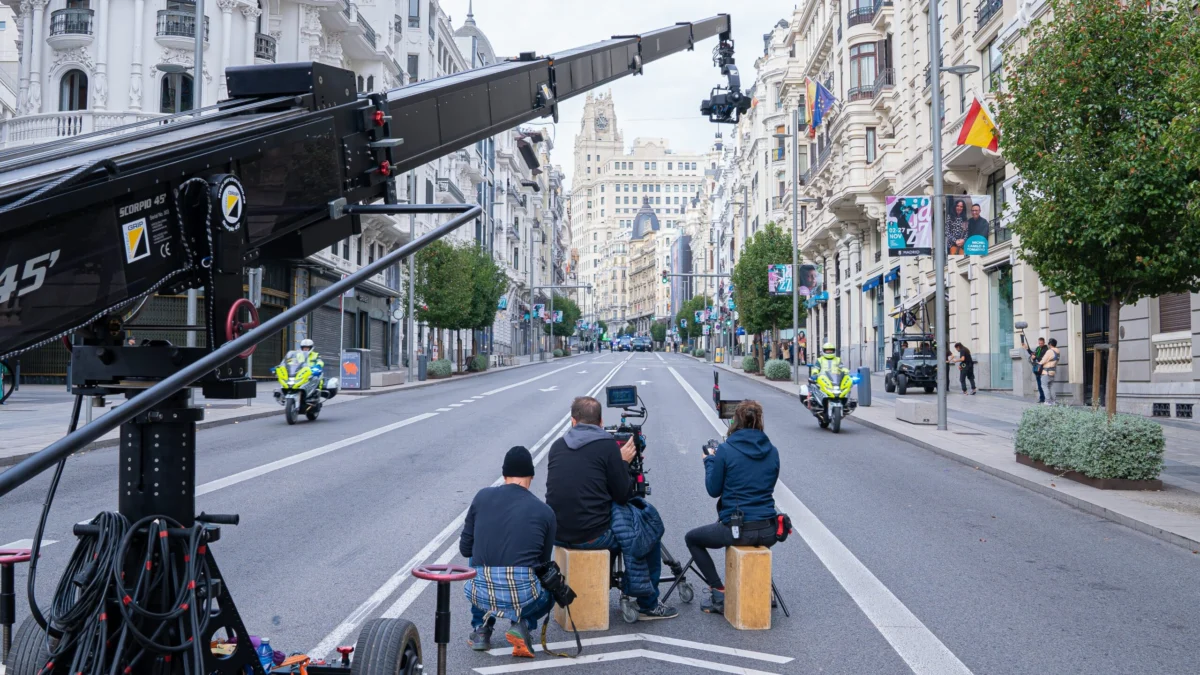
The Spanish capital has undergone a profound transformation over the last decade, evolving from a regional filming hub into one of the most sought-after production backdrops in the world. According to the latest data released by the Madrid Film Office—the municipal agency tasked with facilitating audiovisual production—the city hit a historic milestone in 2025, hosting 71 feature film shoots. This figure represents a staggering increase from the 47 projects recorded in 2022, signaling a robust trajectory that shows no signs of slowing down as the city heads into 2026.
Raúl Torquemada, the director of the Madrid Film Office, remains the central figure navigating this rapid expansion. His office, which operates under the City Council’s Tourism Area, has been instrumental in bridging the gap between international production houses and the city’s local infrastructure. As the industry gathers for the sixth edition of Iberseries & Platino Industria—a premier event connecting Spanish- and Portuguese-language content creators—the focus has shifted from merely attracting volume to fostering a sustainable, long-term ecosystem.
A Chronology of Growth and Strategic Investment
The current surge in Madrid’s production profile is not an accidental phenomenon but the result of a deliberate, multi-year strategic plan. Between 2021 and early 2026, the Madrid City Council injected nearly €15 million ($17 million) into the sector through specialized grants for production, promotion, and distribution. These financial incentives were designed to complement Spain’s national tax credit system, creating a two-tiered fiscal environment that is highly competitive on a global scale.
The timeline of this growth is marked by several key institutional developments:
- 2021-2022: The city formalized its commitment to the audiovisual sector, establishing a dedicated support structure for location scouting and navigating municipal regulations.
- 2023-2024: The focus shifted toward long-term infrastructure, including the integration of virtual production studios, VFX facilities, and post-production houses.
- 2025: The "Record Year" for feature films, during which the city also hosted 52 series and over 410 large-scale commercial shoots.
- 2026: The current phase, defined by the expansion of support for series and miniseries development, as well as an increased focus on decentralizing filming across all 21 of Madrid’s administrative districts.
The Woody Allen Factor: A Case Study in City Branding
Among the most high-profile developments is the imminent commencement of an untitled Woody Allen project, scheduled to begin principal photography on October 5. The production is emblematic of Madrid’s modern strategy: securing institutional sponsorships in exchange for international promotion and the prominent inclusion of the city’s identity.

Under the terms of the agreement, the Madrid City Council has provided a €1.5 million ($1.7 million) institutional sponsorship. A critical condition of this funding is that the film’s title must incorporate the word "Madrid," effectively turning the city into a permanent part of the film’s marketing legacy. Such arrangements are designed to emulate the "Paris or Rome effect," where the city serves as a character rather than a mere backdrop, thereby bolstering screen tourism for years to come. The cast for this project includes a diverse array of international talent, such as Alexi Wasser, Jemima Kirke, and Marton Csokas, further emphasizing the city’s role as a meeting point for global creative forces.
Economic Impact and Multiplier Effects
The economic benefits of this surge extend far beyond the film set. A comprehensive study conducted by the Universidad Autónoma of Madrid revealed that the audiovisual sector generated approximately €1.54 billion ($1.75 billion) in economic output between 2021 and 2024.
The data highlights a significant "multiplier effect" across various sectors:
- Employment: The industry now supports more than 10,100 full-time-equivalent jobs within the city.
- Fiscal Contribution: These productions have contributed roughly €367.3 million ($418 million) in tax revenues.
- Collateral Spending: The hospitality, transport, and construction sectors have seen a direct rise in demand, as productions require everything from specialized logistics and equipment rentals to long-term housing for international crews.
Torquemada emphasizes that the goal is not just the number of titles, but the quality and variety of the work being done. "We are seeing a convergence of Spanish domestic productions, European and Ibero-American co-productions, and increasingly complex U.S. and U.K. projects," he notes. The list of recent and ongoing productions—ranging from Apple TV+’s Safe Houses and Murderbot to Netflix’s Love Affair and Fox’s The Interrogator—reflects this international diversification.
Navigating Challenges: Sustainability and Coexistence
Despite the growth, the Madrid Film Office is acutely aware of the potential for friction between high-intensity production schedules and the daily lives of residents. To address this, the city has implemented a "Best Practices Guide for Filming," which focuses on maintaining a balance between the industry’s needs and the needs of local communities.
Furthermore, the strategy of decentralization is being pushed aggressively. By encouraging producers to look beyond the central landmarks and explore districts like Usera, Villaverde, Carabanchel, and Tetuán, the city aims to spread the economic benefits of filming more equitably. This approach not only provides filmmakers with fresh, untapped visual aesthetics but also alleviates the pressure on the heavily trafficked city center.

Iberseries & Platino Industria: Building the Ecosystem
The sixth edition of Iberseries & Platino Industria serves as the ultimate showcase for these efforts. The event has become a primary driver for networking, attracting over 2,700 professionals from 50 countries in previous years.
For the Madrid Film Office, the event is less of a trade show and more of an "ecosystem builder." It provides a platform where an Ibero-American writer can meet a European producer, and where global streaming giants can identify local talent and production capacity. By facilitating these connections, Madrid ensures it remains a permanent fixture in the production pipeline of global media conglomerates.
Future Outlook and Strategic Challenges
As Madrid looks toward the future, the primary challenge will be sustaining this momentum without compromising the quality of life for its citizens or the creative integrity of the projects it hosts. The city’s investment in data analysis—continually assessing the impact of filming via academic studies—suggests a mature, evidence-based approach to urban management.
The shift toward screen tourism is another vital pillar for the coming years. By leveraging the audiovisual heritage created by popular series like Money Heist (and its spinoff Berlin) and The Walking Dead: Daryl Dixon, the city plans to develop cultural trails and experiences that keep the "Madrid brand" alive in the minds of global audiences long after the cameras stop rolling.
In conclusion, Madrid has effectively moved from being a participant in the global film market to a lead architect of it. With a combination of aggressive financial incentives, a clear focus on infrastructure, and a proactive approach to industry-resident relations, the city has successfully carved out a position that is as essential to the film industry as the scripts themselves. As the 2026 slate continues to expand with both high-budget international spectacles and sophisticated local narratives, the city remains poised to maintain its status as one of the most vibrant, reliable, and lucrative production destinations on the planet.