In the early hours of January 8, 2020, Ukraine International Airlines Flight PS752 departed Tehran’s Imam Khomeini International Airport, bound for Kyiv. Within minutes of takeoff, the Boeing 737-800 was struck by two surface-to-air missiles fired by the Islamic Revolutionary Guard Corps (IRGC). All 176 passengers and crew members on board perished. The event, which occurred amidst heightened tensions following the U.S. assassination of Qasem Soleimani, sparked international outrage, a protracted legal battle, and a profound sense of grief within the Iranian-Canadian community. Now, Kurdish-Canadian filmmaker Soran Mardookhi offers a poignant look at this tragedy through his latest documentary feature, The Flight, which is set to premiere at the Vancouver Film Festival.
While the incident remains a flashpoint of geopolitical tension and legal dispute, Mardookhi’s film consciously pivots away from the machinations of statecraft. Instead, it serves as a vessel for the stories of the victims—a diverse group of students, newlyweds, and families who had sought to build a future in Canada. By centering the voices of those left behind, the documentary attempts to move beyond the cold statistics of the disaster, humanizing a tragedy that has, for many, faded from the front pages of international newspapers.
A Chronology of the Disaster and its Aftermath
The destruction of Flight PS752 remains one of the most controversial aviation incidents in modern history. Following the launch of the missiles, Iranian authorities initially attributed the crash to "technical failure." This narrative was maintained for three days, even as international intelligence agencies, including those from Canada, the United Kingdom, and the United States, began pointing toward evidence of a missile strike.
On January 11, 2020, the Iranian government finally admitted that the IRGC had inadvertently targeted the plane, claiming it had been mistaken for a "hostile target" due to human error amidst the heightened state of military alert. The subsequent years have been defined by a lack of transparency and a failure to provide a credible, independent investigation.
For the families of the victims, the aftermath was not merely a period of mourning but a transformation into a cohesive political force. The Association of Families of Flight PS752 Victims was formed to hold the Iranian regime accountable, demanding a thorough international investigation and justice for their lost loved ones. The legal struggle has been uphill; the families have faced persistent harassment, lack of cooperation from Iranian officials, and the systemic denial of rights that, according to legal observers, characterizes the regime’s treatment of those who challenge its version of events.
The Human Dimension: Beyond the Headlines
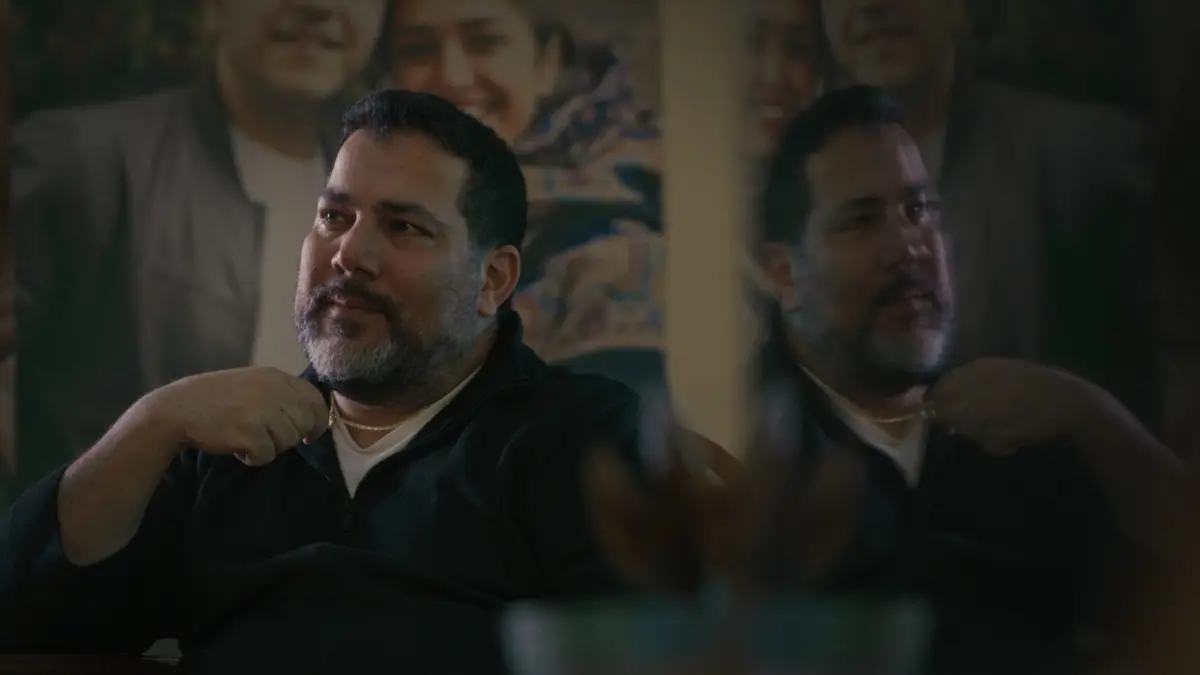
Mardookhi’s approach in The Flight is intimate. The documentary utilizes home videos—footage of the victims laughing, dancing, and celebrating life events—to contrast the vibrant reality of their existence with the sudden violence that claimed them. "Once I start making the film, I kind of forget myself," Mardookhi explains. "I gave that space to the families who actually tell their own story."
The director notes that the film avoids the "political and legal machinations" that often dominate discussions of the crash. Instead, it explores the resilience of a community that found collective strength in the face of insurmountable loss. The film highlights how individuals, many of whom were struggling with their own personal tragedies, coalesced into a force that has persistently asserted that Iran violated international law.
This humanization is crucial, as the victims were more than mere names on a manifest. Among the 176 killed were 55 Canadian citizens and 30 permanent residents. Many were academic professionals, researchers, and students who represented the depth of the Iranian diaspora’s contribution to Canadian society. Their loss created a vacuum in the academic and professional spheres in Canada, a fact often overlooked in the broader discussion of the crash’s international repercussions.

Examining the Context of Censorship and Identity
For Mardookhi, the creation of this documentary is also a personal journey regarding the nature of artistic freedom. A veteran filmmaker who left Iranian Kurdistan in 2010 after a decade of working under the watchful eye of state censors, Mardookhi is intimately familiar with the pressure of self-censorship. His 2007 work, And Thus I Was Born, was produced in an underground capacity to evade state scrutiny.
His transition to life in Canada was not an immediate escape from the psychological weight of the regime’s reach. He recounts a pivotal moment in 2014, while directing the drama Turbulence, when he realized he was still engaging in self-censorship to avoid potential repercussions for his family back in Iran. "I was directing a scene and talking to the cast and, at that moment, I realized, oh my God, I’m censoring myself, even here," he recalls.
This realization catalyzed a shift in his creative philosophy. Today, he views art as a narrative tool, free from the constraints of the state-mandated narratives he once had to navigate. This liberation is evident in the tone of The Flight. By focusing on the families’ quest for truth, he avoids the trap of simply documenting a geopolitical event, choosing instead to document the persistent human spirit in the face of state-sponsored obfuscation.
Broader Implications and International Stance
The shooting down of Flight PS752 has had long-lasting consequences for international aviation and diplomatic relations between Canada and Iran. The incident raised critical questions about the safety of commercial flights operating through contested airspace. International organizations, including the International Civil Aviation Organization (ICAO), have faced scrutiny for their role in the subsequent investigations and their perceived inability to compel Iran to provide a full accounting of the chain of command that led to the missile launch.
Furthermore, the case has become a central point of tension in Canada-Iran relations. The Canadian government has consistently pressured Iran to participate in a transparent, independent investigation, but these efforts have been met with silence or obstruction. For the victims’ families, this is not just a matter of compensation, but a matter of fundamental justice. As Mardookhi notes, the families have been "put through the wringer" by a system that refuses to acknowledge their humanity or their loss. "As victims of terrorism, they have no rights," he says of the families’ ongoing struggle.
The Significance of Documentation
The Flight arrives at a time when the memories of the disaster are in danger of being eclipsed by newer global conflicts. By preserving the individual stories of those on board, the film acts as a safeguard against historical erasure. It forces the viewer to confront the reality that for every geopolitical statistic cited in a news brief, there is a family whose life was irrevocably altered.
The film’s focus on the Association of Families of Flight PS752 Victims also serves as a study in collective action. It illustrates how grief, when channeled into a singular purpose, can create a powerful advocacy movement. The families’ refusal to accept the Iranian government’s narrative has been instrumental in keeping the international community’s attention focused on the lack of accountability.
As the film prepares for its world premiere at the Vancouver Film Festival, it serves as a testament to the victims and a challenge to the institutions that have failed them. It asks the audience not just to witness the tragedy of the past, but to acknowledge the ongoing fight for truth that continues to this day. Through Mardookhi’s lens, the tragedy is no longer a distant news event; it is a living history, carried by the families who continue to demand that the world does not forget the lives that were so abruptly extinguished in the skies over Tehran.
The documentary stands as a bridge between the personal and the public, transforming the intimate pain of the families into a broader, more resonant narrative about the cost of power and the necessity of remembrance. It is a work that, like its subjects, refuses to be silenced by the weight of authority, asserting the primacy of human truth over the obfuscations of state power.