The Digital Archaeologist: Marcus Batto’s Vision
Marcus Batto, a 31-year-old polymath operating at the intersection of art, archiving, and programming, has carved a unique niche as a "YouTube ethnographer." His fascination with the internet’s formative decade, particularly the unpolished authenticity of early YouTube, underpins his artistic practice. Unlike conventional documentaries, Batto’s films are not just compilations but carefully curated historical tapestries, woven from the digital detritus of a bygone era. He delves into the vast, often overlooked archives of user-generated content, seeking to capture "certain moments to remember" that define shared human experiences in the digital age.
The ambitious scope of There’ll Likely Be Michael Jackson Vigils Throughout the Night reflects Batto’s deep understanding of the internet’s inherent contradictions. He acknowledges the near-impossibility of truly reconstructing a single day in the life of the internet, where the relentless pace of scrolling, algorithmic myopia, and the constant threat of digital obsolescence conspire against comprehensive preservation. As search engines morph from reliable archives to ad-laden, AI-driven information silos, our collective digital past grows increasingly blurred, making Batto’s meticulous archival efforts all the more vital. His work serves as a powerful counter-narrative to this digital erosion, attempting to salvage and recontextualize moments that might otherwise be lost to the ever-accelerating current of online content.
June 25, 2009: A Day That Halted the Internet
The choice of June 25, 2009, as the focal point for Batto’s feature film is deliberate and profoundly significant. It was a day that transcended typical celebrity news, marking an unprecedented convergence of global attention and emotional outpouring in the nascent social media landscape. Michael Jackson, the "King of Pop," died suddenly at his Holmby Hills home in Los Angeles at the age of 50. The news broke initially through TMZ at 2:44 PM PDT, a mere hour after paramedics responded to a 911 call, and rapidly cascaded across traditional and digital media.
The immediate aftermath saw an explosion of online activity that momentarily overwhelmed internet infrastructure worldwide. Google reported that search queries for "Michael Jackson" were so numerous and rapid that their systems initially flagged it as a DDoS attack. Twitter experienced outages, and news websites like CNN and the BBC struggled to keep up with traffic spikes. This was a pivotal moment in internet history, demonstrating the platform’s burgeoning power as a real-time global town square. Unlike previous major news events, June 25, 2009, unfolded not just on television screens and radio waves, but also simultaneously through millions of personal webcams, blog posts, and forum discussions. People, many for the first time, turned their front-facing cameras on themselves, recording raw, unedited reactions for audiences that might only number in the single digits. This collective, spontaneous documentation created a unique digital archive—a raw, unfiltered snapshot of global grief and bewilderment.
Unpacking Batto’s Archival Method and Artistic Language
Batto’s approach to filmmaking is deeply rooted in his background as an editor and archivist. He describes his creations as fitting ambiguously into categories of film, music videos, or art pieces, a fluidity that mirrors the amorphous nature of digital content itself. His films are less about linear narrative and more about immersive experience, designed to convey the overwhelming deluge of information that characterizes the internet.
In There’ll Likely Be Michael Jackson Vigils Throughout the Night, this is immediately evident. The film opens and frequently returns to a striking visual device: a rotating prism, each side comprising a five-by-four grid of rectangular videos. This means twenty distinct videos play simultaneously, assaulting the viewer with a cascade of disparate images and sounds from June 25, 2009. The effect is one of sensory overload, mirroring the chaotic and fragmented experience of navigating the internet. Batto then abruptly hones in on a single frame—a Botafumeiro swinging incense in a Spanish cathedral, a fleeting glimpse of ultrasound footage, or a group of refugees on a lifeboat. This rapid-fire montage defies easy categorization, challenging the viewer to process the seemingly unrelated streams of global life occurring concurrently with Jackson’s death. The process of cataloguing each scene quickly becomes futile, underscoring the internet’s inherent unmanageability and the impossibility of a singular, comprehensive narrative.
This method resonates with Batto’s broader philosophy, evident in his documentary Honeycomb (2024). This film, also composed entirely of found footage, explores the 2020-2022 phenomenon of catalytic converter theft in the United States. The "honeycomb" refers to the precious metal core of the converter, targeted by thieves for its valuable platinum, rhodium, and palladium content. Batto draws a powerful parallel between these "looters"—who extract hidden value from unexpected places—and himself as an "archivist" or "programmer" who unearths untapped meaning from the overlooked corners of the internet. Both activities share "an obsession with the untapped value sitting where it’s least expected," whether at the bottom of a car or buried deep within YouTube search results sorted by view count, bottom-to-top. This frantic activity, driven by the realization of hidden worth, forms a core thematic link across Batto’s work.
A Chronology of Global Reactions: The Film’s Narrative Arc
Batto’s film meticulously documents the immediate and diverse global reactions to Jackson’s passing, weaving a compelling narrative out of disparate threads. The chronology of June 25, 2009, as presented in Michael Jackson Vigils, moves from the initial shock and personal expression to broader public gatherings.
The early hours following the news are dominated by raw, unfiltered webcam reactions. This was the nascent era of the front-facing camera boom, a time when YouTube vlogs were a developing genre and individuals, unburdened by today’s highly curated online personas, felt comfortable turning cameras on themselves to process breaking news. Batto captures this era’s innocent authenticity: an emo teenager performing sarcastic grief, impassioned individuals issuing threats against blogger Perez Hilton (who initially suggested Jackson’s death was a publicity stunt), and others reacting to the day’s other celebrity death, that of Farrah Fawcett. One amateur film reviewer, framed by a poster for Halloween H20, solemnly declares, "One of Charlie’s Angels just became an angel herself." These early digital artifacts highlight a moment when the internet felt less like a performance stage and more like a collective confessional.
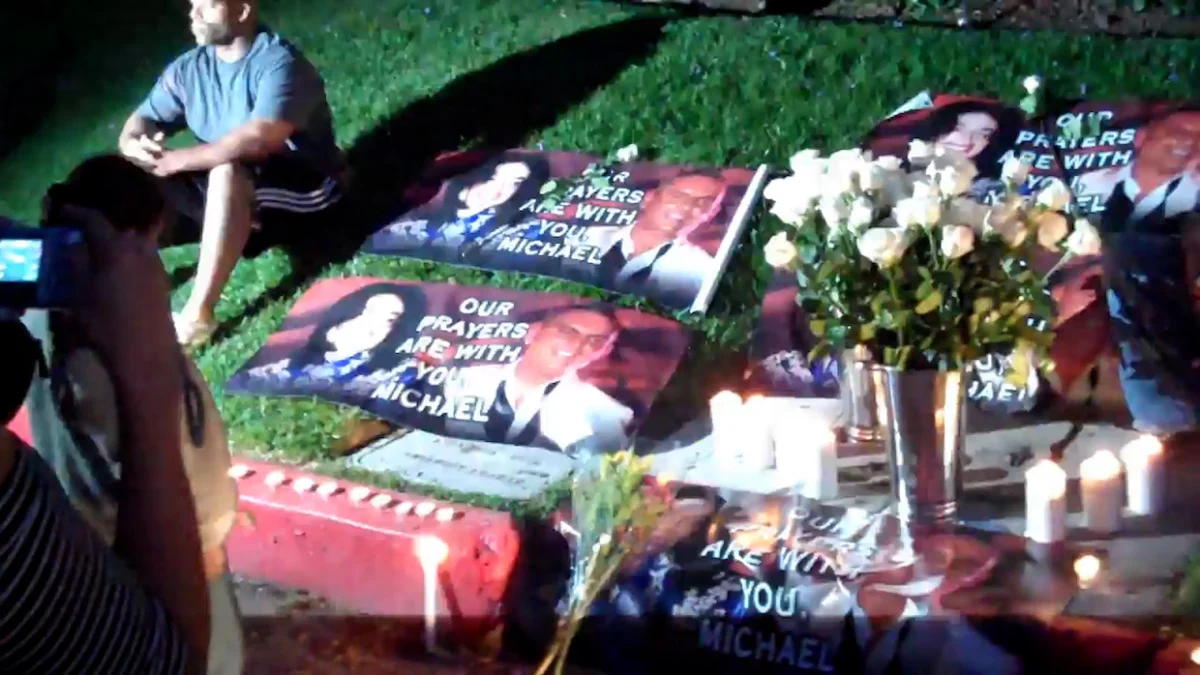
As the day progresses, the film shifts from individual, isolated reactions to broader communal expressions of grief. Batto follows mourners onto the streets of Los Angeles, gathering spontaneously around the Hollywood Walk of Fame. In a poignant and somewhat humorous twist, many of these initial gatherings occurred around the star of British radio DJ Michael Jackson, mistakenly believing it belonged to the King of Pop (whose actual star was temporarily obscured by a red carpet for Sacha Baron Cohen’s Bruno premiere). This accidental pilgrimage serves as a powerful metaphor for the era—a moment where the internet’s cacophony, despite its occasional misdirection, could still coalesce into something resembling a single, if sometimes misguided, chorus of collective sentiment.
Contextualizing Batto’s Work: "Certain Moments to Remember"
There’ll Likely Be Michael Jackson Vigils Throughout the Night is a natural progression of Batto’s ongoing "Certain Moments To Remember" series (2020–), which he describes as "bearing witness to subculture, shared experience, and social phenomena." This series consistently explores the unique cultural artifacts generated during the early days of online platforms.
A standout entry, RANDOM WEBCAM DANCE @ DA IMAC STORE (2023), exemplifies Batto’s keen eye for capturing peculiar digital rituals. It compiles footage of people dancing in Apple Stores in 2011, utilizing the then-novel front-facing cameras on Mac products. The soundtrack, Johnny Duncan and Jane Fricke’s 1978 lovelorn rendition of “Stranger,” creates a powerful temporal dissonance. As Duncan croons, "Stranger, could I believe in you?" a V-necked teenager performs the robot dance in front of an iPad 2 advertisement from 2011. This layered nostalgia, juxtaposing different eras of technology and culture, imbues the film with "an eerie sense of technological determinism," simultaneously celebrating the techno-utopian vision of Apple Stores and lamenting the "overpopulated graveyard of lost media."
Other works in the series, such as Flashmob Compilation (2023) and Maid of the Mist VII (2023), further demonstrate Batto’s fascination with ephemeral online-IRL spectacles—flash mobs, dance crazes, and celebrity deaths—all of which reveal a shared sense of "naïveté." He notes, "People didn’t care about how they looked on their webcam, or how they came off, in the same way they do today. They were just experimenting with this new technology." This innocence, a hallmark of early internet participation, is a central theme in Batto’s work, providing a stark contrast to the performative, self-conscious digital interactions prevalent today.
The immense task of compiling and editing these vast archives is not lost on Batto. He recounted having playlists of "maybe 800 videos" for Michael Jackson Vigils, admitting that even after a work-in-progress screening, he "couldn’t stop finding videos." This echoes the challenges faced by fellow found-footage documentarian Ian Bell with his film WTO/99 (2025), which chronicled four days of anti-globalization protests. Both artists confront the monumental task of distilling coherence from an overwhelming abundance of raw, often chaotic, material.
Broader Implications: Digital Memory and the Vanishing Present
Batto’s work, and particularly There’ll Likely Be Michael Jackson Vigils Throughout the Night, functions as more than just a historical reconstruction; it is a profound meditation on digital memory, cultural impact, and the accelerating pace of audiovisual history. The film is a "double memorial"—for the King of Pop himself, and for a specific, irreplaceable moment in internet history when its "cacophony could still sound something like a single chorus."
His concern extends to the global nature of these phenomena. Batto’s gridded video arrays are often overlaid onto a digital rendering of the rotating earth, emphasizing the worldwide scope of these shared experiences. He posits that while the archive of daily experience captured on video continues to grow exponentially, it also becomes increasingly unstable and fleeting. He chose June 25, 2009, not out of personal devotion to Michael Jackson, but because it represented a unique moment where "much of the world’s diffuse energy was harnessed in one direction." The question, "Where were you when Michael Jackson died?" resonates deeply precisely because, as Batto notes, "In my lifetime, there hasn’t really been another death that was so effective, culturally." For a significant portion of the global population, the answer was, "on the computer," huddled around a desktop, witnessing the news unfold in real-time.
The film serves as a poignant reminder of a digital era that feels increasingly distant from 2026. The unvarnished authenticity of early YouTube footage, the "curious faces of British children encountering a movie camera for the first time" in Mitchell and Kenyon’s late 19th-century "Local Films for Local People," finds an odd kinship with the webcam-captured mourners in Batto’s film. Both represent a profound innocence in their interaction with novel recording technologies, compressing a long century between 1897 and 2009, and both seeming "a long way off from 2026."
This sense of lost innocence is a recurring thread. When asked about making a similar film for a more recent celebrity death, Batto expressed skepticism. He believes today’s internet "doesn’t create discernible moments in the same way." The constant churn of content, the fleeting trends, and the fragmented nature of online discourse mean "it’s all so fleeting… You can’t really hold it anymore." The internet, once a space for shared, unscripted moments, has become a hyper-individualized, algorithmically driven echo chamber, where collective consciousness is increasingly difficult to attain or preserve.
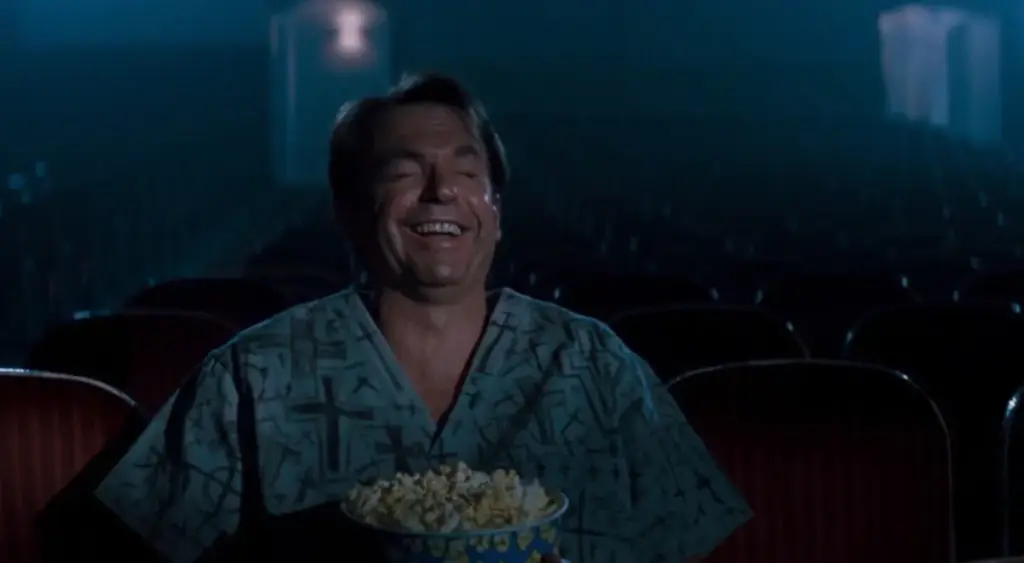
The film’s premiere itself underscored this nostalgic yearning for a tangible past. It was accompanied by a giveaway of refurbished third-generation iPod Touches, preloaded with the film and a curated playlist—a physical manifestation of digital history. Even the presence of a Michael Jackson impersonator, who reportedly fell asleep during the film and offered an "okay" assessment, adds to the meta-commentary: an iconic figure, digitally resurrected, observed by a living homage, both grappling with the legacy and the ephemeral nature of memory.
In conclusion, There’ll Likely Be Michael Jackson Vigils Throughout the Night is more than a documentary; it is a vital act of digital archaeology. Marcus Batto, like the catalytic converter thieves he depicts, seems to be "waiting at the end of a certain product’s life-cycle," meticulously stripping value from what others might discard. His work bridges the gaps—between artist and archivist, between 2026 and 2009—and while he may mourn a lost innocence in our digital interactions, he remains keenly aware of what meaningful fragments might still be salvaged and recontextualized, offering profound insights into our evolving relationship with technology, memory, and shared human experience.