Masaki Ando, the acclaimed manga artist known for his keen observations of regional culture and humorous storytelling, has officially announced that his ongoing comedy series Mojiponika! will conclude its serialization in the upcoming issue of Kodansha’s Afternoon magazine. The final installment is scheduled for release on November 25, 2026, marking the end of a narrative journey that began in May 2025. This announcement, confirmed via the author’s official social media channels, brings a definitive close to a project that has gained a dedicated following for its unique fusion of traditional Japanese craftsmanship and quirky character dynamics.
Narrative Premise and Cultural Context
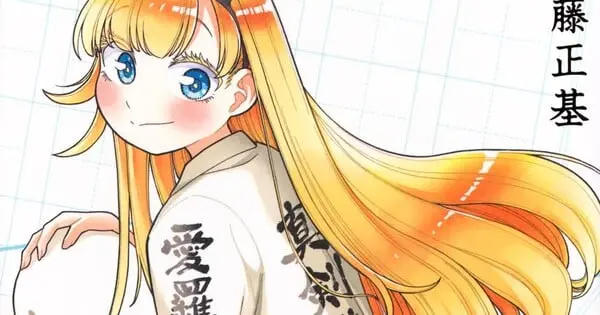
At the heart of Mojiponika! is the character Tsumugu, the son of an embroidery shop proprietor. The series utilizes a classic "fish-out-of-water" trope, pairing the unassuming Tsumugu with Gina, a foreign exchange student whose specific set of interests serves as the primary catalyst for the story’s development. Gina possesses an intense, almost obsessive fascination with two distinct facets of Japanese culture: the intricate beauty of kanji characters and the aesthetic of yakuza films.
The plot kicks off when Gina enlists Tsumugu to perform specialized embroidery on her tokkofuku—the ornate, heavily embroidered jackets historically associated with bōsōzoku (motorcycle gangs) and yakuza subcultures. This professional request forces Tsumugu, who previously viewed kanji as mere functional symbols he often struggled to decipher, into a role of linguistic discovery. Through his interactions with Gina, Tsumugu is compelled to learn the deeper meanings and histories behind the characters he stitches. This transformation serves as a metaphor for the broader exploration of language and cultural identity, themes that Ando has navigated throughout his career.
Chronology of Publication and Editorial Trajectory
The serialization of Mojiponika! followed a relatively brisk timeline within the competitive landscape of the seinen manga market. Since its debut in Kodansha’s Afternoon magazine in May 2025, the series became a staple for readers who appreciate character-driven comedy.
- May 2025: The series officially launches in Afternoon magazine.
- October 2025: Kodansha releases the first collected tankōbon volume, signaling strong initial interest from the publisher.
- August 21, 2026: The third volume of the series is published, which, in retrospect, appears to have been the penultimate stage of the story’s architectural plan.
- November 25, 2026: The series is slated to reach its conclusion in the magazine’s upcoming issue.
This timeline suggests a planned conclusion rather than a sudden cancellation, allowing the author to bring the narrative arc of Tsumugu and Gina to a satisfying resolution. In the manga industry, a run of approximately 18 months in a major monthly publication like Afternoon is significant, indicating that the series achieved a consistent level of engagement from its readership.
Masaki Ando’s Established Career and Influence
To understand the weight of the Mojiponika! conclusion, one must look at Masaki Ando’s extensive history within the manga industry. Before delving into the world of embroidery and kanji, Ando achieved widespread acclaim for Yatogame-chan Kansatsu Nikki. Launched in Ichijinsha’s Comic Rex magazine in May 2016, that series became a phenomenon for its focus on the regional identity of Nagoya, Aichi Prefecture.
Yatogame-chan Kansatsu Nikki functioned as both a comedy and a cultural bridge. By highlighting the distinct linguistic quirks, culinary habits, and social mores of the Nagoya region, Ando managed to elevate a local perspective to national popularity. The series was so impactful that in March 2017, the title character was officially appointed as a Nagoya Tourism Cultural Exchange Mission Ambassador, a rare crossover between fictional intellectual property and municipal governance.

The success of Yatogame-chan Kansatsu Nikki culminated in a robust multimedia franchise. Over four years, the manga inspired four seasons of a television anime, which aired between 2019 and 2022. The consistency of these adaptations—distributed internationally by platforms like Crunchyroll—solidified Ando’s reputation as an author capable of sustaining long-term interest in niche, observational humor. The transition from the hyper-local focus of Yatogame-chan to the more thematic, language-focused comedy of Mojiponika! represents a deliberate evolution in Ando’s creative portfolio.
Implications of the Conclusion
The ending of Mojiponika! provides an opportunity to analyze the current state of "slice-of-life" comedy in the manga industry. Readers often gravitate toward titles that blend specific technical skills—in this case, embroidery—with personal character development. The focus on kanji, while niche, resonates with a broad demographic that includes both domestic readers interested in linguistics and international fans fascinated by Japanese pop culture icons like the tokkofuku.
From an industry perspective, the conclusion of a series in a high-profile magazine like Afternoon often frees up an artist to begin new ventures. Given the track record of Ando’s previous work, industry observers will likely look for his next project to see if he continues his exploration of cultural nuances or shifts into an entirely new genre. Furthermore, the completion of the three-volume run of Mojiponika! provides a concise, accessible package for new readers, which is a significant factor in the long-term sales of physical and digital manga volumes.
Analysis of the Creative Evolution
The move from the regional comedy of Yatogame-chan Kansatsu Nikki to the more intimate, character-centered narrative of Mojiponika! shows an artist refining his ability to focus on specific, character-driven motivations. While Yatogame-chan relied on the broad, often hilarious misunderstandings between people from different Japanese prefectures, Mojiponika! focuses on the micro-interactions between two individuals who are learning to understand one another through the medium of craft.
This shift suggests that Ando is moving toward more nuanced storytelling. By utilizing the tokkofuku—a garment inherently laden with themes of rebellion and identity—as a narrative device, he managed to ground his comedy in a visual and historical reality. The embroidery of kanji becomes an act of translation, not just of characters, but of personality and intent.
Broader Impact on the Manga Landscape
The announcement has prompted a wave of reaction from the Japanese manga community, with fans expressing appreciation for the series’ unique premise. While the series is nearing its end, the influence of Ando’s work remains palpable. His ability to turn highly specific interests—such as local Nagoya customs or the intricacies of kanji embroidery—into accessible, humorous narratives is a hallmark of his style.
As the industry prepares for the final chapter of Mojiponika!, the focus shifts to how Kodansha will handle the final volume release and whether there will be any promotional tie-ins to commemorate the end of the series. For enthusiasts of the genre, the conclusion of a series is not merely the end of a story, but the closure of a creative chapter that has contributed to the diversity of the Afternoon magazine lineup.
In conclusion, the finalization of Mojiponika! marks a quiet but significant moment in the manga world. It reflects the career of a creator who has consistently found ways to bridge the gap between traditional Japanese cultural elements and modern comedy. As Masaki Ando prepares for his next endeavor, the legacy of Tsumugu and Gina, and their journey through the world of kanji and embroidery, serves as a testament to the enduring appeal of well-crafted, character-driven storytelling in the contemporary manga market. Readers are encouraged to keep an eye on the November issue of Afternoon for the final installment, as the series bids farewell to its audience.