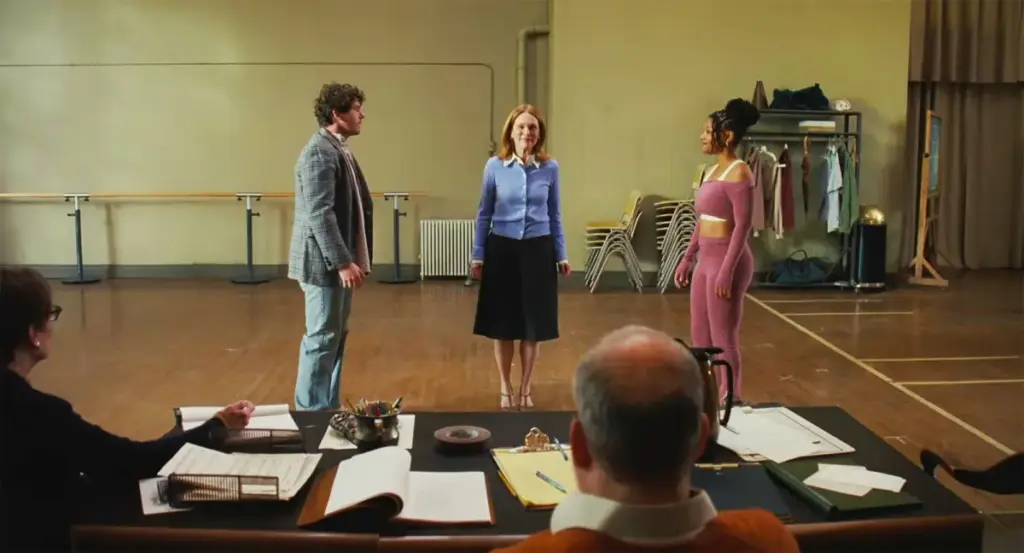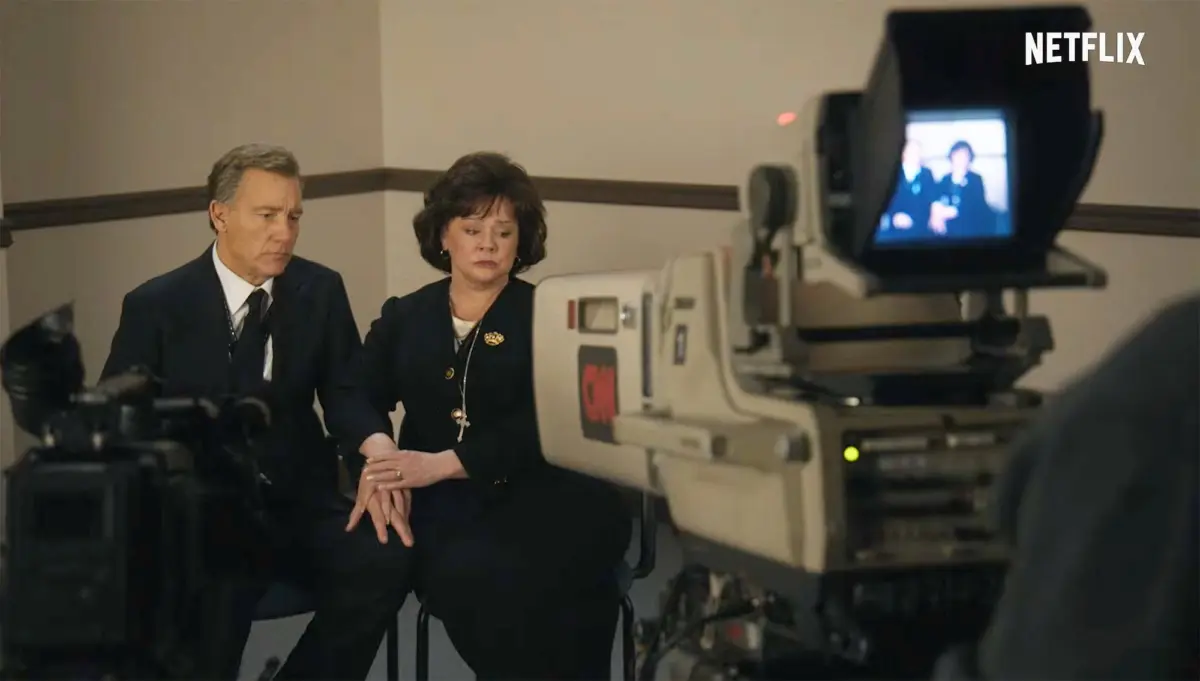
Netflix has officially released the first trailer for its highly anticipated dramatic limited series, The Murder of JonBenét Ramsey, bringing a cinematic, fictionalized perspective to one of the most enduring and confounding mysteries in modern American criminal history. Scheduled to premiere globally on December 10, 2026, the series arrives just as the tragic case approaches its grim 30-year milestone. Led by Academy Award nominees Melissa McCarthy and Clive Owen in deeply dramatic transformations as Patsy and John Ramsey, the project seeks to reexamine the psychological toll, intense media scrutiny, and systemic failures that surrounded the tragic death of the six-year-old beauty queen on Christmas night in 1996.
The release of the trailer offers audiences a glimpse into a gritty, emotionally charged narrative that focuses heavily on the parents navigating unimaginable grief while subjected to a relentless court of public opinion. With a star-studded supporting cast and a creative team headed by veteran filmmaker Richard LaGravenese, the series joins a long lineage of documentaries, investigative specials, and fictional explorations dedicated to the Boulder, Colorado tragedy. However, unlike prior documentary efforts—such as Netflix’s meta-documentary Casting JonBenet—this project marks a high-profile, scripted exploration of the human element behind the sensationalized headlines.
The Historical Background and 1996 Timeline
To understand the weight of Netflix’s upcoming series, one must revisit the chilling events of late December 1996. JonBenét Ramsey, a child pageant star, was reported missing on the morning of December 26, 1996, after her mother, Patsy Ramsey, allegedly discovered a lengthy ransom note demanding $118,000—coincidentally the exact amount of John Ramsey’s recent work bonus—staircased in their Boulder home.

Hours later, during a police search of the premises, John Ramsey discovered his daughter’s body in the home’s dank basement. She had been beaten and strangled. An autopsy later revealed she died of asphyxiation associated with strangulation, alongside a craniocerebral trauma.
The timeline of the investigation remains a textbook study in police and forensic missteps. Key milestones in the early days of the case set the stage for decades of controversy:
- December 26, 1996: JonBenét is reported missing; her body is found in the family home several hours later. Friends and family members are permitted to wander freely through the crime scene, severely contaminating physical and biological evidence.
- Early 1997: Suspicion immediately falls upon the parents. The media relentlessly covers every facet of the family’s life, turning the suburban Boulder household into a global spectacle.
- 1998–1999: A grand jury is convened to hear evidence in the case. Though the grand jury reportedly voted to indict John and Patsy Ramsey on charges of child abuse resulting in death, then-Boulder District Attorney Alex Hunter declined to sign the indictments, citing insufficient evidence to secure a conviction at trial.
- 2003–2008: DNA technology evolves. In 2008, Boulder District Attorney Mary Keenan officially cleared the Ramsey family of any involvement based on trace DNA found on JonBenét’s clothing, which matched an unknown male profile.
- 2016–Present: Countless docuseries, books, and investigative specials continue to revisit the case. Despite renewed calls for independent DNA testing using advanced genealogical methods, no definitive match has ever been found, leaving the case officially unsolved.
Cast, Creative Team, and Production Scale
The production of The Murder of JonBenét Ramsey represents a major television undertaking for Netflix and 101 Studios. The series is showrun by Richard LaGravenese, widely known for directing acclaimed dramatic features such as Freedom Writers, P.S. I Love You, and The Last Five Years. The project marks LaGravenese’s first foray into television showrunning, bringing his signature emotional depth and character-driven storytelling to the episodic format.
The scripts were co-created and penned by Harrison Query (Heads of State) and Tommy Wallach, both making their television writing debuts alongside LaGravenese. Directing duties are shared between LaGravenese, Pippa Bianco, and Anne Sewitsky, establishing a multi-layered directorial vision for the limited run.

The ensemble cast features a remarkable roster of talent surrounding McCarthy and Owen. The lineup includes:
- Emily Mitchell
- Garrett Hedlund
- Alison Pill
- Shea Whigham
- Owen Teague
- Clifton Collins Jr.
- Rory Cochrane
- Chris Bauer
- Angus Caldwell
- Will Patton
- John Billingsley
- Margo Martindale
- Tzi Ma
- Kate Butler
The inclusion of high-caliber dramatic actors like McCarthy and Owen—traditionally known for comedic and action-thriller roles, respectively—signals a deliberate pivot toward a raw, prestige-drama aesthetic. The trailer heavily highlights their performances, showcasing scenes of crushing vulnerability, defensiveness under interrogation, and the psychological fractures within a family enduring a public nightmare.
Critical Analysis and Societal Implications
The decision to produce a narrative drama about the JonBenét Ramsey murder raises persistent ethical questions regarding the true-crime genre’s treatment of real-life tragedies. For decades, the public fascination with the case has blurred the line between legitimate investigative interest and exploitative true-crime entertainment.
Media analysts point out that while documentaries attempt to parse factual anomalies and police failures, fictionalized miniseries often run the risk of dramatizing trauma for entertainment value. The trailer hints at this exact tension, featuring dialogue that underscores the contamination of evidence: "Our evidence has been so contaminated, who knows what will stand in court."

Conversely, defenders of the project argue that a narrative framework allows creators to explore the profound human cost of the media frenzy. By focusing on the systemic institutional failures of the Boulder Police Department—who were widely criticized for tunneling on the family while ignoring alternative leads—the series may offer a broader sociological critique of how high-profile crimes are investigated and consumed by the public.
Furthermore, the timing of the release, arriving just ahead of the 30th anniversary, ensures that a new generation of viewers will be introduced to the case. Whether this will spark renewed public interest that aids in pushing for modern DNA testing, or simply rehash decades-old speculation, remains to be seen.
Broader Impact on the Streaming Landscape
Netflix continues to dominate the true-crime and biographical drama space, leveraging high-profile limited series to drive global engagement. Projects that deconstruct notorious historical events—ranging from Dahmer – Monster: The Jeffrey Dahmer Story to When They See Us—frequently rank among the platform’s most-watched content.
However, unlike biographical serial-killer narratives, The Murder of JonBenét Ramsey occupies a unique space as an active, unsolved mystery. The lack of resolution poses unique challenges for dramatists, who must carefully balance narrative closure with the stark reality that no definitive perpetrator has ever been brought to justice.

As the December 10, 2026 premiere date approaches, industry watchers will be monitoring audience reception closely. The series has all the markers of an awards-season contender given its pedigree, but its ultimate legacy will depend on whether it handles a deeply sensitive, tragic real-world event with the journalistic and artistic integrity it demands.