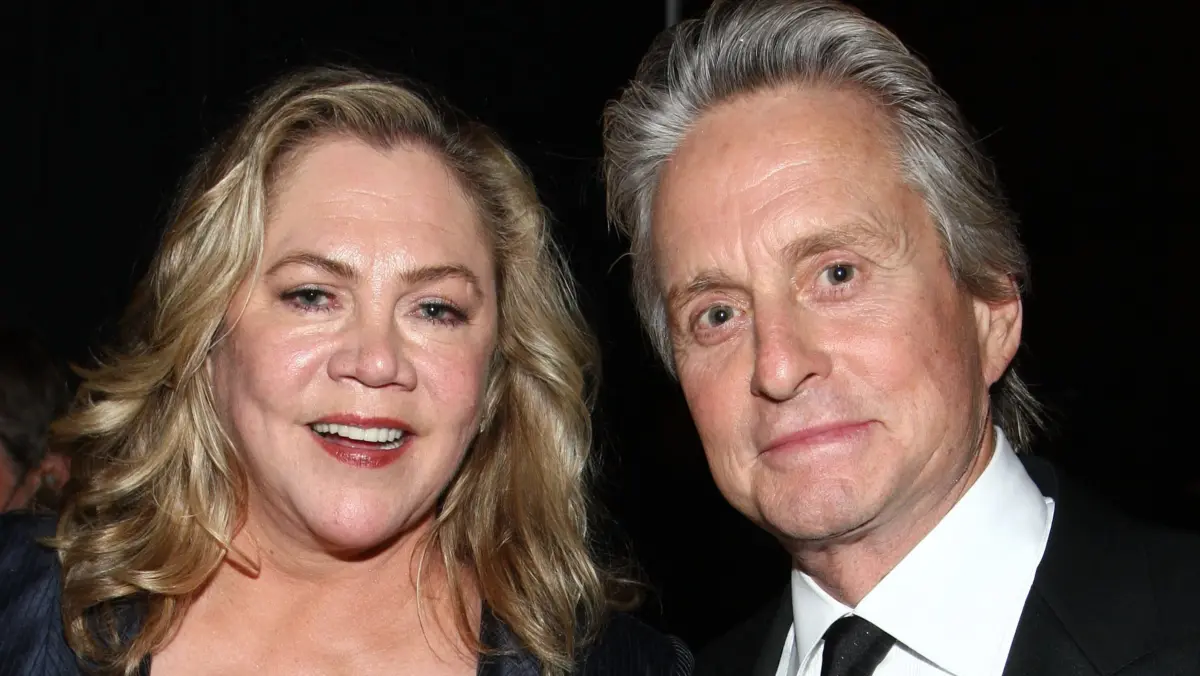
The enduring allure of Hollywood’s golden age of romantic adventure films has long been anchored by the palpable, electric chemistry shared between Michael Douglas and Kathleen Turner. For four decades, the duo maintained a strictly professional narrative regarding their off-screen relationship, consistently denying the rumors that their intense connection on-camera extended into their private lives. That long-standing facade was dismantled this week as Michael Douglas released an exclusive excerpt from his upcoming memoir, One Helluva Ride, confirming that he and Turner were, in fact, romantically involved during the production of their breakout 1984 film, Romancing the Stone.
A Secret Behind the Silver Screen
The revelation provides a definitive answer to a question that has persisted in tabloid journalism and fan discourse for forty years. According to Douglas, the romance was not merely a brief fling but a significant emotional and physical connection that blossomed under the intense pressures of filming on location. Douglas, a two-time Academy Award winner, wrote with uncharacteristic candor about the circumstances of his life at the time, noting that he and his then-wife, Diandra Douglas, were in the midst of a strained marriage and were living under an arrangement where both parties were engaging in extramarital affairs.
Douglas describes the attraction as overwhelming, stating, "The chemistry I had with Kathleen Turner was so strong, audiences have been certain for years that we were in a relationship together while making the film." The intensity of their connection was shielded from the public eye—and even from close colleagues. Douglas reveals that the production’s director, Robert Zemeckis, and their frequent co-star, Danny DeVito, remained entirely unaware of the clandestine relationship throughout the filming process.
Chronology of a Hollywood Partnership
The professional and personal intersection of Douglas and Turner spans several decades and multiple iconic films, which now must be viewed through the lens of this newfound context.
- 1984: Romancing the Stone is released, propelling both actors to new heights of stardom and cementing their reputation as a quintessential screen couple.
- 1985: The pair reunites for the sequel, The Jewel of the Nile.
- 1989: They star in the dark comedy The War of the Roses, a film that depicts a volatile divorce and serves as a sharp contrast to their earlier collaborative chemistry.
- 2018–2021: The two shared the screen again in the acclaimed Netflix series The Kominsky Method, during which they continued to deny any romantic history in press junkets.
For years, the official narrative provided by the pair was that they were "terrible flirts" who understood the necessity of chemistry to sell a film, but that the boundary between professional performance and personal life was never crossed. Douglas now admits that this long-held narrative was a deliberate deception, maintained primarily to protect his family life during a tumultuous period.
The Dynamics of a High-Stakes Production
The memoir excerpt details the fragility of the affair, which was ultimately brought to a halt by the realities of Douglas’s existing marriage. During a set visit, Diandra Douglas reportedly sensed the friction and the burgeoning emotional bond between her husband and his co-star. Upon confronting Turner, the message regarding the status of the marriage was made clear.
"Her view of the terms of our separation was different from mine," Douglas writes. "This gave Kathleen pause. She didn’t want to interfere. After that visit, Kathleen and I ended things, and I went back to Diandra." The incident highlights the complex intersection of personal morality, professional reputation, and the high-pressure environment of 1980s film production, where the lines between reality and artifice were frequently blurred for the sake of marketing and image management.
Kathleen Turner’s Response
Following the publication of the memoir excerpt, Kathleen Turner addressed the admission with characteristic pragmatism. In a statement provided to People magazine, the actress expressed a desire to move past the decades-old news, stating, "Good heavens, what a fuss about something 40 years ago! I love Michael and I look forward to enjoying the book."
Turner’s response suggests that while the affair was a significant chapter in their professional history, it has not diminished the mutual respect and affection they have maintained for each other throughout their careers. By acknowledging the relationship without lingering on the details, Turner effectively closes the book on a rumor that had become a hallmark of their shared Hollywood legacy.
Analysis: The Evolution of Celebrity Transparency
The confession by Douglas is part of a broader trend in the entertainment industry where aging icons are increasingly moving away from the curated, guarded public personas of the 20th century in favor of autobiographical honesty. In the 1980s, the "official story" was a necessary component of stardom; public perception was carefully managed by studios to ensure that a lead actor’s personal life did not detract from the box-office viability of their films.
The fact that this secret was kept for four decades speaks to a different era of celebrity management. Today, the ubiquity of social media and the 24-hour news cycle makes such sustained silence nearly impossible for A-list stars. Douglas’s decision to reveal the truth now, at this stage in his life and career, suggests a desire for legacy-building that values personal truth over the preservation of an outdated image.
Implications for Their Professional Legacy
The retrospective knowledge of this affair does not inherently change the quality of the performances in Romancing the Stone or The War of the Roses, but it does offer a new layer of depth for film historians and fans alike. Much of the success of Romancing the Stone was attributed by critics at the time to the "sparks" flying between the leads. Knowing that those sparks were grounded in a genuine, albeit short-lived, romance provides empirical evidence for the long-held belief that true chemistry is often born of real-life emotional intimacy.
Furthermore, the revelation underscores the volatility of the film sets of the era. The pressure of balancing a high-budget production, the scrutiny of the press, and the complexities of personal relationships often pushed stars into high-stakes situations that required intense discretion. For Douglas, the admission serves as a cathartic acknowledgment of his past, while for Turner, it remains a footnote in a long, storied career.
Cultural Significance of the "On-Screen/Off-Screen" Blur
The fascination with whether on-screen couples are dating in real life is a perennial feature of cinema culture. From Spencer Tracy and Katharine Hepburn to modern-day pairings, audiences have always sought to validate the authenticity of film romance by looking for evidence of real-world affection. Douglas and Turner were the subject of such speculation for decades because their onscreen rapport felt so undeniably authentic.
By finally confirming the rumors, Douglas has validated the intuition of generations of viewers. While the disclosure does not fundamentally alter the history of these films, it does provide a sense of closure to a long-running Hollywood mystery. As the industry continues to evolve toward greater transparency, the story of Douglas and Turner serves as a reminder that behind even the most polished, studio-approved marketing campaigns, there exists a human reality that often defies the carefully constructed public image.
In the final assessment, the revelation is less about the scandal of an extramarital affair and more about the evolution of how we perceive our cultural icons. As One Helluva Ride hits bookshelves, it promises to provide further insight into the life of a man who has spent over 50 years at the center of the Hollywood machine, balancing the demands of his craft with the complexities of a life lived in the public eye. For now, the story of the Romancing the Stone stars serves as a bridge between the guarded era of 1980s celebrity and the more open, self-reflective nature of modern discourse.