South Korea has, without exaggeration, fundamentally reshaped and dominated the zombie sub-genre for a significant period. Its filmmakers have innovatively placed the undead in diverse and compelling settings: on a high-speed train, spanning the entire Korean peninsula, within the historical Joseon dynasty, confined to an apartment complex, terrorizing a school, most recently in a bustling shopping mall, and even humorously presenting one for sale. After such extensive variations, one might logically conclude that the market for zombie narratives is oversaturated. Yet, this perception has not deterred visionary filmmakers from continuing to explore its fertile ground. The latest to venture into this crowded landscape is Pil Gam-sung, director of the acclaimed "Hostage: Missing Celebrity" (2021). Gam-sung now brings to the screen his adaptation of Lee Yun-chang’s widely popular manhwa of the same name, presenting "My Daughter is a Zombie" as a fresh entry into the evolving canon of Korean genre cinema.
The K-Zombie Phenomenon: A Genre Redefined
The global ascendancy of the South Korean zombie narrative is a cinematic phenomenon worthy of close examination. Beginning with the groundbreaking success of Yeon Sang-ho’s "Train to Busan" in 2016, which seamlessly blended relentless action with poignant social commentary and familial drama, Korean cinema introduced a distinct flavor to the zombie apocalypse. This initial breakthrough was swiftly followed by a wave of equally innovative productions, solidifying the "K-zombie" as a unique and influential entity. Series like Netflix’s "Kingdom" ingeniously transported the undead plague to a meticulously recreated Joseon-era Korea, intertwining political intrigue with grotesque horror, while "All of Us Are Dead" transformed a high school into a harrowing crucible of survival and moral dilemmas. Films such as "#Alive" explored isolation in an urban setting, and others like "Rampant" continued the historical horror trend. This consistent output, characterized by high production values, compelling character development, and a willingness to infuse the horror with deeper social or emotional resonance, has set Korean zombie narratives apart.
The secret to their success lies not merely in depicting flesh-eating monsters, but in using the apocalyptic backdrop to explore profound human themes: sacrifice, loyalty, societal collapse, and the enduring power of family. Korean filmmakers often eschew the typical zombie survival tropes in favor of stories that dissect the human condition under extreme duress, making the zombies themselves almost secondary to the human drama unfolding. "My Daughter is a Zombie" is a prime example of this evolution, consciously shifting its focus from the widespread pandemic to an intimate, singular relationship, thereby carving out its own niche within an already robust sub-genre.
From Manhwa to Screen: Adapting Lee Yun-chang’s Vision
The adaptation of popular webtoons and manhwa into live-action films and television series has become a significant trend in the South Korean entertainment industry. These source materials often come with pre-existing fanbases and rich narrative potential, offering filmmakers a strong foundation upon which to build. Lee Yun-chang’s "My Daughter is a Zombie" manhwa is one such property, lauded for its unique blend of dark humor, emotional depth, and an unconventional take on the zombie apocalypse. Its popularity suggested a strong narrative core, but also presented a distinct challenge: translating its episodic, often whimsical, tone and specific character designs into a cohesive feature film.
Director Pil Gam-sung, known for his work on the critically well-received "Hostage: Missing Celebrity" (2021), a film praised for its suspense and sharp character focus, was a fitting choice to helm this adaptation. His prior experience in crafting narratives that delve into intense personal stakes, even within heightened genre frameworks, prepared him to tackle the delicate balance required for "My Daughter is a Zombie." The director’s task was not just to depict a zombie outbreak, but to maintain the manhwa’s specific blend of absurdity and pathos, ensuring that the unique relationship between a father and his zombified daughter remained the emotional anchor. This involved making careful choices about pacing, characterization, and how to visually represent the manhwa’s distinct art style and comedic timing while grounding it in cinematic realism.
Narrative Core: An Unconventional Father-Daughter Saga
The story of "My Daughter is a Zombie" unfolds against the grim backdrop of a rapidly collapsing Seoul, where a virulent pathogen transforms humans into ravenous zombies almost instantaneously upon infection. Our protagonist, Lee Jung-hwan, an animal keeper, and his daughter, Soo-ah, embark on a perilous journey to escape the infected metropolis, seeking refuge in the supposedly untouched village of Eungbong-ri, where Jung-hwan’s mother resides. This initial premise sets up a familiar zombie survival narrative, yet the film swiftly veers into uncharted territory. During their harrowing escape, Soo-ah succumbs to a bite, becoming one of the undead.
What follows is the film’s defining departure from convention. Defying both the desperate pleas of his mother and his best friend Dong-bae, and contravening government-mandated protocols for neutralizing the infected, Jung-hwan makes a radical decision. Drawing on his experience training tigers at his zoo, he clings to the belief that a flicker of his daughter’s consciousness and memories persists within her zombified state. His conviction that he can "train" her, much like he trained his animals, becomes the central, compelling, and often darkly humorous conceit of the film. This decision not only plunges him into an unprecedented domestic challenge – raising a zombie daughter while preventing her from biting everyone – but also strains his relationships with his closest confidantes. The arrival of Yeon-hwa, Jung-hwan’s old crush and a self-proclaimed zombie hater and hunter, further complicates his already precarious existence, adding layers of romantic tension and ideological conflict to the intimate drama. The village of Eungbong-ri, initially envisioned as a safe haven, transforms into a microcosm of societal anxieties and personal struggles, as Jung-hwan’s unorthodox choice challenges the very definition of family and humanity in a world overrun by monsters.
Balancing Act: Humor, Heart, and Horror
For "My Daughter is a Zombie" to stand out in a genre brimming with entries, Pil Gam-sung strategically pivoted the narrative’s focus, relegating the broader zombie pandemic to a simmering background threat. Instead, the film prioritizes the deeply personal and often absurd relationship between Jung-hwan and his zombified daughter. This approach is both its greatest strength and, at times, its Achilles’ heel. The film initially teases audiences with the promise of a zombie survival comedy, centered on the father-daughter duo’s frantic escape. However, it quickly reveals its fresher intent: to function as an intimate drama exploring the unbreakable, albeit severely tested, bond between them.
Jung-hwan’s unwavering insistence on saving and attempting to "train" Soo-ah creates a multifaceted conflict. It tests his direct relationship with Soo-ah, as he constantly navigates the fine line between paternal affection and the primal threat she poses. It also strains his connections with his pragmatic mother, his loyal best friend, and the woman he once harbored feelings for, Yeon-hwa, whose very existence as a zombie hunter represents the antithesis of his choices. Crucially, Pil Gam-sung largely sidesteps heavy-handed melodrama, opting instead for a tone that is predominantly lighthearted and imbued with humor.
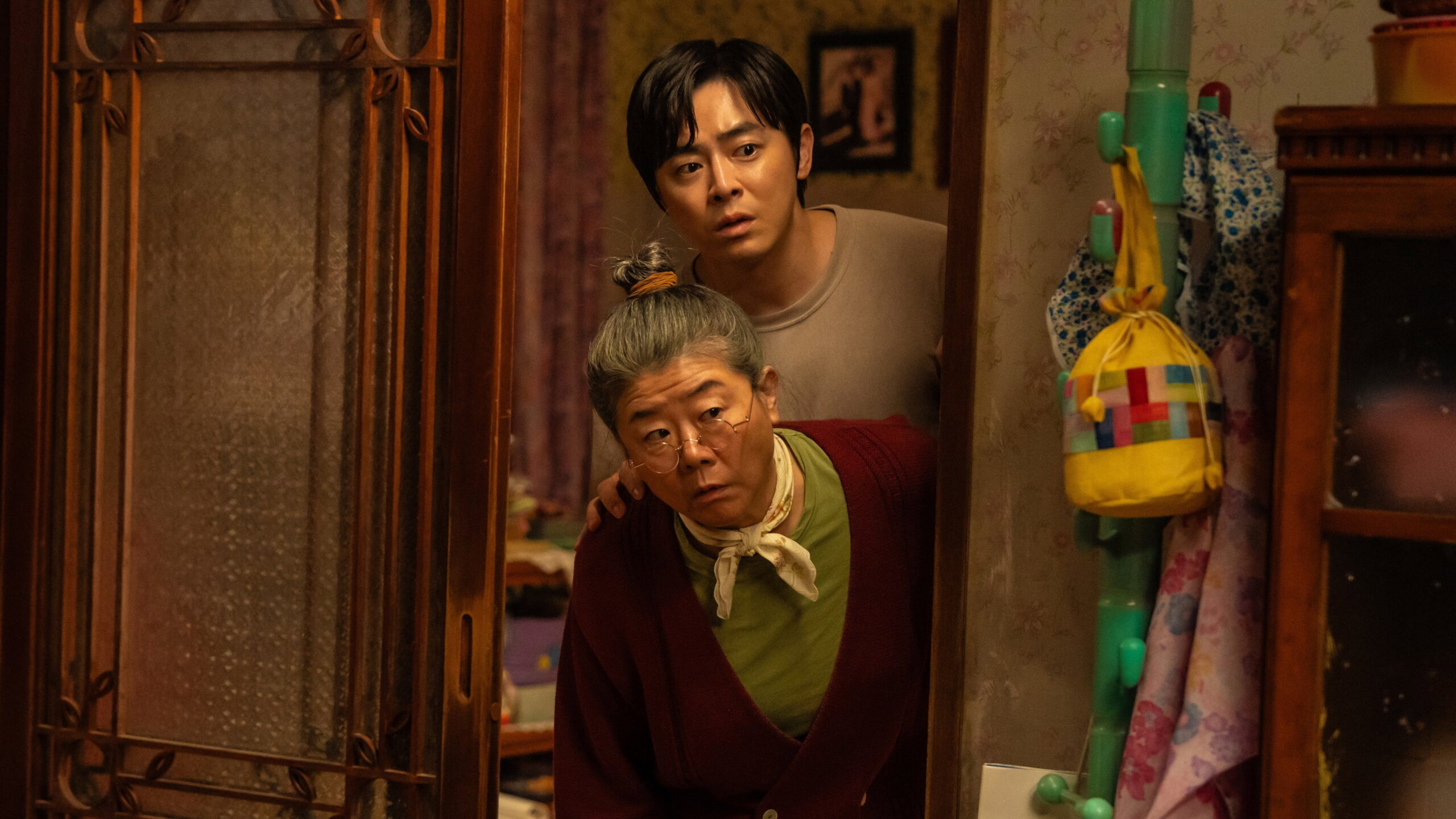
Much of this humor is masterfully delivered by Lee Jung-eun, portraying Jung-hwan’s mother, Bam-soon. Her character is a quintessential, no-nonsense Korean grandmother – quick to drink, prone to swearing, and an avid hwatu player. Lee Jung-eun imbues Bam-soon with a compelling duality: capable of profound regret and guilt over Soo-ah’s fate one moment, only to unceremoniously dunk her zombified granddaughter’s head in a bucket of water the next for a mere growl. Her immaculate comic timing and ability to embody a character both fiercely loving and comically stern make her easily the film’s most memorable performance.
However, not all comedic beats land with equal impact. A particular sequence set in a school, which is swiftly introduced and then seemingly forgotten, stands out as an underdeveloped and somewhat jarring diversion. Similarly, the recurring presence of Meowmeow the cat seems to build towards a significant comedic payoff that never materializes, rendering the pet ultimately redundant to the main narrative. The film introduces a notable twist around the halfway mark. While this narrative device might not resonate with all viewers, it undeniably serves to propel the story forward, even as the plot occasionally feels as if it’s running out of steam. The introduction of the brother-in-law character, for instance, adds an unnecessary burden to the narrative, distracting from the core emotional arc. This heavy emphasis on relationship drama, while central to the film’s unique identity, inevitably means that the audience experiences less of the promising zombie action, which makes only a brief, impactful appearance at the outset.
Casting and Performances: Strengths and Missed Opportunities
The casting choices for "My Daughter is a Zombie" present a nuanced picture of individual aptitude juxtaposed with a perceived lack of synergistic chemistry between the primary leads. Jo Jung-suk, as the animal keeper Lee Jung-hwan, delivers a performance consistent with his established versatility. He is no stranger to roles that demand a blend of comedic timing and dramatic depth, and Jung-hwan’s character, with his unwavering paternal devotion bordering on the absurd, fits squarely within this wheelhouse. Jo navigates the emotional complexities of Jung-hwan’s dilemma with conviction, embodying the character’s unique blend of grief, hope, and stubbornness.
Choi Yu-ri, in the challenging role of the zombified daughter Soo-ah, impresses with her nuanced portrayal. She successfully conveys the arduous struggle of a zombie who, despite her symptoms, retains an understanding of human emotions. Her physical performance, particularly her "zombie dances," offers moments of dark humor and pathos, and her interactions with her grandmother Bam-soon are among the film’s most endearing.
Yet, despite their individual strengths, the chemistry between Jo Jung-suk and Choi Yu-ri as father and daughter doesn’t consistently "sizzle" with the profound bond the narrative purports. This lack of an undeniable, visceral connection occasionally undermines the film’s central emotional premise, requiring the audience to infer the depth of their relationship rather than overtly feeling it.
In stark contrast, Lee Jung-eun’s portrayal of Bam-soon is, without question, the standout performance. Her immaculate comic timing, robust delivery, and ability to shift effortlessly between fierce protectiveness and exasperated pragmatism make her character the undeniable heart and comedic soul of the film. Her scenes are consistently engaging, often eliciting genuine laughter and sympathy. Cho Yeo-jeong, as Jung-hwan’s former crush Yeon-hwa, delivers a watchable performance, bringing a layer of external conflict and romantic tension. Yoon Kyung-ho provides solid comedic support as Jung-hwan’s best friend Dong-bae, contributing to the film’s lighter moments. The ensemble, therefore, is largely strong, but the perceived slight disconnect between the central duo remains a point of contention for some viewers.
Technical Craftsmanship: Visuals, Sound, and Special Effects
Beyond its narrative choices and performances, "My Daughter is a Zombie" distinguishes itself through several commendable technical aspects, particularly in its visual and auditory execution. A special mention must be accorded to the exceptional makeup work. While South Korean cinema is frequently lauded for its impressive zombie portrayals, the makeup for Soo-ah transcends mere grotesqueness. It is meticulously crafted to subtly reflect her evolving emotional state, an ambitious undertaking that speaks to the production’s attention to detail. As Soo-ah grapples with her zombification while retaining fragments of her humanity, her makeup subtly communicates these internal struggles, making her a more complex and empathetic figure than typical undead characters. This nuanced approach to prosthetics and makeup design serves as a testament to the creative team’s commitment to the film’s unique thematic core.
The film also makes judicious and effective use of songs by BoA, often referred to as the "Queen of K-Pop." These tracks are not merely incidental background music but are thoughtfully woven into the narrative, enhancing specific emotional beats or comedic moments. Their inclusion provides a familiar and often nostalgic auditory anchor for audiences, leveraging BoA’s iconic status to deepen the film’s cultural resonance. While the rest of the soundtrack is generally competent and serves its purpose, it is the strategic integration of BoA’s music that truly elevates the film’s auditory experience.
From a broader directorial standpoint, Pil Gam-sung effectively manages the film’s unique tone, juxtaposing the intimate, often whimsical, father-daughter drama against the understated threat of the wider apocalypse. The cinematography, while not overtly flashy, competently frames the emotional beats and the more action-oriented sequences, maintaining a cohesive visual language throughout. The production design, especially in the depiction of the rural village contrasting with the chaos of Seoul, contributes to the film’s grounded yet fantastical atmosphere. These technical elements collectively bolster the film’s distinct identity, allowing it to navigate its challenging genre blend with considerable skill.
Broader Implications and Industry Impact
Despite the aforementioned narrative and chemistry issues, "My Daughter is a Zombie" emerges as a perfectly passable and, indeed, compelling new entry into the zombie sub-genre, and a surprisingly decent comedy to boot. Its reported "immense success" as the most successful South Korean film of 2025 (as projected in the source article’s future context) is a testament to its fresh approach and the enduring appeal of K-content that dares to innovate within established genres. This commercial triumph carries several significant implications for the South Korean film industry.
Firstly, it reinforces the market’s appetite for genre films that prioritize character-driven narratives and emotional depth over relentless action. In an era where audiences are increasingly sophisticated, "My Daughter is a Zombie" demonstrates that a unique premise, even within a saturated genre, can capture widespread attention and achieve significant box office returns. This success could encourage more filmmakers to experiment with subverting genre conventions, pushing the boundaries of what a "zombie movie" or any other genre film can be.
Secondly, the film’s origin as a popular manhwa adaptation highlights the continuing importance of webtoons and digital comics as a fertile ground for cinematic inspiration. Its success will likely spur further investment in adapting beloved digital properties, expanding the pool of original content for film and television. This symbiotic relationship between digital comics and live-action productions strengthens the entire Korean entertainment ecosystem.
Thirdly, the film’s potential for international appeal, given the global hunger for K-content, is considerable. While its unique blend of humor and drama might require some cultural translation, the universal themes of parental love, sacrifice, and the struggle to maintain humanity in the face of the monstrous resonate across borders. This could further solidify South Korea’s reputation as a powerhouse of innovative storytelling, capable of delivering genre films that are both entertaining and thought-provoking.
However, the question of its "longevity" remains debatable. While its immediate success is undeniable, whether "My Daughter is a Zombie" will endure as a timeless classic or a momentary highlight in the vast K-zombie filmography depends on its lasting cultural impact and its ability to inspire future generations of filmmakers. Nevertheless, its contribution to expanding the thematic and tonal range of the zombie genre is significant, proving that even in a seemingly exhausted landscape, there are still fresh stories to be told.
In conclusion, "My Daughter is a Zombie" stands as a notable example of South Korean cinema’s continuing ability to innovate. It offers a distinct and often humorous perspective on the zombie apocalypse, anchoring its narrative in a compelling, if imperfectly executed, father-daughter relationship. As a decent comedy and a fresh entry, it undeniably carved out its own space within the K-zombie legacy, reinforcing the notion that creativity knows no bounds, even when dealing with the undead.