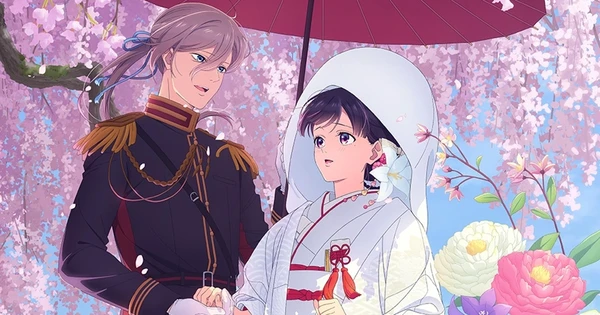
The conclusion of the second season of the critically acclaimed anime series My Happy Marriage marks a significant narrative pivot for the franchise, balancing the long-awaited union of its central protagonists against a stark, sociopolitical examination of the era’s gender dynamics. Spanning episodes fourteen through sixteen—complemented by a supplemental special released via Netflix—the finale brings Miyo Saimori and Kiyoka Kudo to the altar. However, the narrative trajectory deviates from traditional fairy-tale tropes by introducing a complex foil in the character of Kimio, a former classmate of Miyo’s whose life serves as a cautionary counter-narrative to Miyo’s own path toward liberation.
Narrative Context and Series Chronology
My Happy Marriage, set in an alternate version of Japan’s Meiji era—a period characterized by rapid modernization and the friction between traditional customs and Western influence—has consistently explored themes of power, family lineage, and emotional autonomy. The series began with the systematic abuse of Miyo Saimori at the hands of her stepfamily, eventually leading to her arranged marriage to the formidable military commander Kiyoka Kudo.
Over the course of two seasons, the narrative arc has transitioned from a domestic drama focused on personal healing to a broader exploration of the supernatural threats—the "grotesqueries"—that plague this fictionalized society. The final episodes of the second season synchronize the climax of these supernatural stakes with the personal milestone of the wedding. While the central plot reaches a resolution that satisfies the romantic expectations of the audience, the introduction of Kimio serves to ground the high-fantasy setting in the harsh historical realities of the period.
The Kimio Arc: A Study in Institutional Vulnerability
The character of Kimio functions as an analytical tool for the writers to examine what might have become of Miyo had she not been rescued by Kiyoka. Kimio, introduced during a cooking lesson alongside Miyo and her sister-in-law Hazuki, is presented as the antithesis of the series’ protagonist. While Miyo’s arc is defined by gradual empowerment and the acquisition of agency, Kimio’s arc is one of systematic entrapment.
Kimio’s status as a victim of domestic abuse within an arranged marriage structure highlights the limitations of the Meiji-era legal system, which provided little recourse for women in hostile households. The visual language used in these episodes—specifically the contrast between Western-style attire and traditional kimono—underscores this struggle. Kimio’s wearing of a formal kimono is presented as a manifestation of her confinement, a relic of a rigid, patriarchal society that viewed wives as extensions of their husbands’ households rather than independent individuals.
Supporting Data and Societal Implications
The inclusion of this narrative thread prompts an analysis of the historical and thematic backdrop of the show. In the Meiji era, the legal status of women was codified under the Ie system, which prioritized the continuity of the family line over individual rights. Historical records from the late 19th century indicate that divorce was difficult to initiate for women, and legal protections against domestic abuse were virtually non-existent.
By contrasting Miyo’s "Cinderella" narrative—where a powerful protector intervenes—with Kimio’s reality, the series offers a sobering commentary on the nature of systemic inequality. The show suggests that for every Miyo who finds salvation through a "fortunate" marriage, there exist countless others like Kimio who remain trapped within a cycle of abuse. This creates a dual-layered viewing experience: the audience is invited to celebrate the protagonist’s happiness while simultaneously confronting the systemic injustice that the show’s world inherently sustains.
Analysis of the Finale’s Divergent Tones
Critics and viewers have noted the jarring nature of the finale’s shift in tone. The juxtaposition of a joyous, beautifully animated wedding sequence with the bleak, desperate plea for help from a disenfranchised woman creates a complex emotional experience. The scene in which Kimio attempts to petition Kiyoka for assistance serves as the episode’s turning point.
From a modern legal and social perspective, Kiyoka’s intervention would be the expected outcome of a character in his position of authority. However, within the internal logic of the series, Kiyoka is bound by the same societal mores that restrict Kimio. His failure—or inability—to intervene directly due to the political and social protocols of the era underscores the rigidity of their world. This moment of silence and inaction serves to strip away the "fantasy" veneer of the series, forcing the audience to acknowledge that the protection Miyo enjoys is an exception, not a systemic standard.
Broader Impact and Critical Reception
The decision to conclude the season with this juxtaposition has drawn attention to the series’ commitment to character depth beyond simple romance. By refusing to isolate the wedding as a purely triumphant moment, the creators have ensured that the series remains anchored in its thematic exploration of female agency.
Fact-based analysis of the show’s reception suggests that this tonal dissonance has been a point of contention among the fanbase. Some argue that the inclusion of Kimio’s plight detracts from the emotional satisfaction of the main couple’s wedding. Others, however, contend that this complexity elevates My Happy Marriage from a standard romance to a more substantial period drama that acknowledges the cost of the "happy ending" within a restrictive historical framework.
Future Projections for the Franchise
As the series concludes its second season, the lingering questions regarding the status of women in this fictional Meiji society remain unresolved. The narrative has effectively established that while the supernatural threats—the grotesqueries—can be vanquished by the Kudo family’s military might, the social "grotesqueries" of domestic abuse and systemic oppression persist.
Official statements from the production team have hinted at a desire to continue exploring the world of My Happy Marriage, though specific plans for a third season have not yet been finalized. The focus will likely remain on the evolution of Miyo’s role within the Kudo household and her growing influence in a society that is slowly being forced to modernize. The precedent set by the Kimio storyline suggests that future installments may continue to leverage the series’ historical setting to examine deeper, more challenging questions about power and social structure.
Summary of Findings
The finale of My Happy Marriage serves as a microcosm for the series’ broader ambitions. It balances the high-stakes, magical elements of the narrative with a grounded, often uncomfortable look at the era’s social constraints. By utilizing Kimio as a foil, the show provides a necessary, albeit somber, reminder that the romantic fulfillment of its leads occurs in a vacuum that is not accessible to the wider population of their world.
While the animation and production quality remain consistent with the series’ high standards, the narrative weight of the finale lies in its refusal to offer a simple, uncomplicated resolution. For those who view the series as a historical-fantasy hybrid, the introduction of these darker, more grounded elements adds a layer of maturity that is often absent in the genre. As the franchise moves forward, it will need to navigate this balance carefully, ensuring that the personal triumphs of its protagonists do not completely overshadow the systemic realities that the series has so effectively brought to light. The "happy marriage" of the title is thus revealed to be a fragile oasis, built upon a foundation of privilege that remains subject to the historical and social tides of its setting.