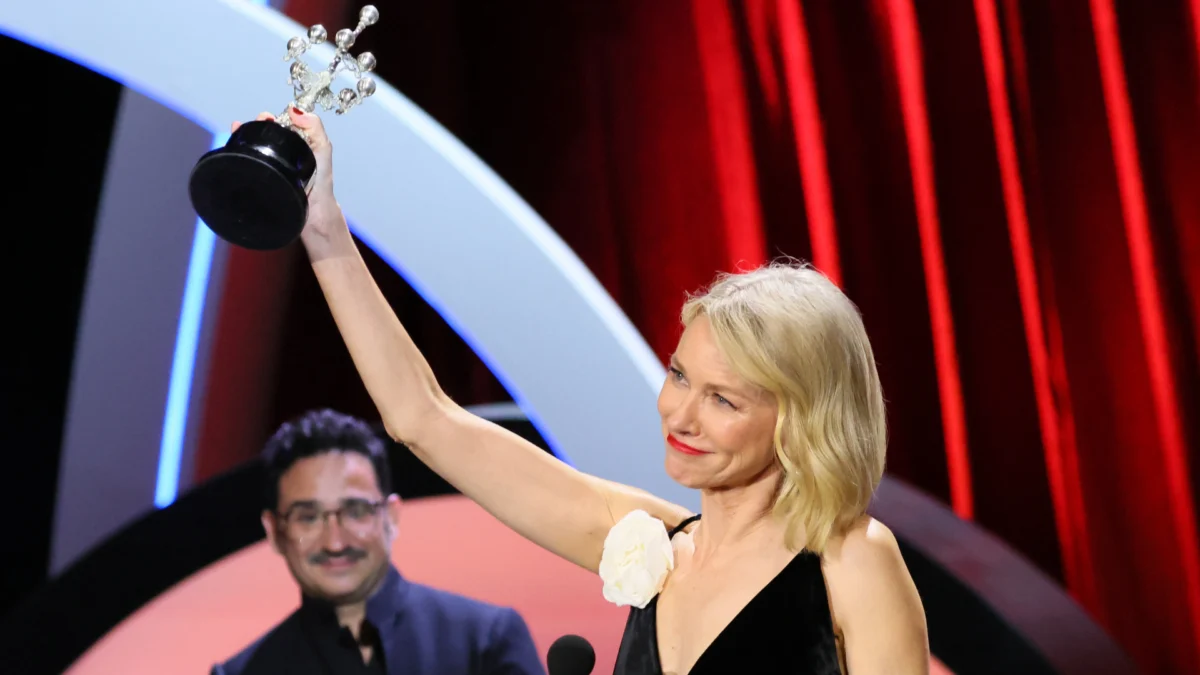
The San Sebastian International Film Festival reached a poignant crescendo on Saturday evening as British actress Naomi Watts received the Donostia Award, the festival’s highest honor for career achievement. The ceremony, held amidst the historic backdrop of the Spanish coastal city, served as a celebratory retrospective of a career that has spanned over three decades and transitioned seamlessly from independent arthouse dramas to global blockbuster spectacles. However, the evening was defined not only by the accolades bestowed upon Watts but by her emotional tribute to the late auteur David Lynch, the director whose creative vision served as the catalyst for her ascent to international stardom.
A Career Defined by Resilience and Transformation
The recognition in San Sebastian arrives at a pivotal moment for Watts, who at 57 continues to challenge industry perceptions regarding longevity for women in film. The Donostia Award, which recognizes outstanding contributions to the world of cinema, is a testament to an acting trajectory that was far from certain in its infancy. During her acceptance speech, Watts provided a candid reflection on the decade of rejection she faced before her breakthrough.
In the late 1990s, Watts navigated a landscape of frequent auditions and limited opportunities, a period she described as "not an easy trajectory." This phase of her professional life concluded in 2001 with the release of David Lynch’s surrealist masterpiece, Mulholland Drive. Watts recalled how Lynch saw potential in her where others saw only limitations, noting that he taught her to embrace the "strange and unexplained." By transforming her early professional wounds into artistic growth, Lynch provided the foundational confidence that would eventually lead to two Academy Award nominations for Best Actress: first for Alejandro González Iñárritu’s 21 Grams in 2003, and subsequently for J.A. Bayona’s The Impossible in 2012.
The Impact of The Impossible and Collaborative Bonds
The presentation of the award was preceded by an introduction from filmmaker J.A. Bayona, whose professional relationship with Watts began during the arduous production of The Impossible. The film, which depicts a family’s harrowing experience during the 2004 Indian Ocean tsunami, grossed over $198 million worldwide and cemented Watts’ reputation as an actress capable of immense physical and emotional endurance.
Bayona’s tribute highlighted the vulnerability required of both director and actor during the production. He praised Watts as the "best travel companion" he has worked with, emphasizing that the trust established between them during the intense water-tank sequences—some of which required as many as 30 takes—set a standard for his future collaborations. Watts’ own recollection of the shoot was characterized by a mixture of humor and respect, specifically acknowledging the debut performance of a 15-year-old Tom Holland. While Holland famously compared the demanding water sequences to a "water park," Watts joked that her own experience felt like "pure pain," a sentiment that underscored the technical rigors of the production.
Shifting the Narrative on Aging in Hollywood
One of the most resonant aspects of Watts’ address was her direct confrontation with the industry’s historical ageism. Reflecting on her early thirties, when she was cautioned that her career would "dry up and finish" by the age of 40, Watts expressed a sense of triumph in having outlasted such prognostications.
Her remarks serve as a critical commentary on the evolving landscape of Hollywood, where the demand for nuanced stories featuring mature protagonists is growing. By asserting that "women are consumers of films and storytelling too," Watts highlighted a significant demographic shift that studios are increasingly acknowledging. This analysis of her career trajectory reveals a deliberate pivot toward complex, character-driven narratives that defy the limitations often placed on women in the film industry, effectively shifting the narrative for future generations of performers.
The Housewife and Future Endeavors
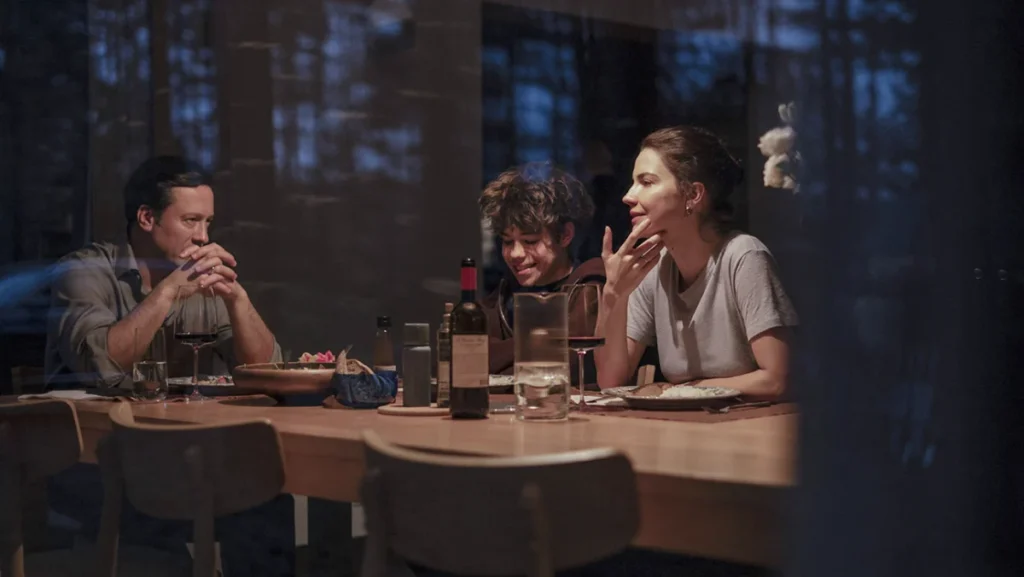
The festival also hosted a screening of Watts’ latest project, The Housewife, directed by Ben Shirinian. The film, which also stars Tye Sheridan, Michael Imperioli, and Luke Evans, is a historical thriller set in 1964 New York. The narrative follows a journalist who discovers a potential Nazi officer living in Queens, subsequently befriending the suspect’s wife. The film represents the latest in a long line of diverse projects for Watts, who has cultivated a filmography that includes collaborations with acclaimed directors such as Peter Jackson, David Cronenberg, Clint Eastwood, and Michael Haneke.
The selection of The Housewife for the San Sebastian screening aligns with the festival’s tradition of highlighting films that bridge the gap between high-concept drama and mainstream appeal. It further solidifies the festival’s reputation as a key European launchpad for prestige cinema during the autumn festival circuit.
Festival Context and Legacy
The 2026 San Sebastian International Film Festival, which runs from September 18 to 26, has maintained its status as a cornerstone of the film festival calendar. Under the leadership of outgoing director José Luis Rebordinos, the festival has navigated complex political and social dialogues, often using its platform to address global issues. The inclusion of the Donostia Award this year—awarded to both Naomi Watts and veteran filmmaker Werner Herzog—underscores the festival’s commitment to celebrating masters of the craft who have left an indelible mark on cinematic history.
The festival’s decision to honor Watts specifically for her ability to navigate both independent and large-scale studio productions speaks to her versatility. Throughout her career, she has demonstrated an ability to anchor intimate dramas like Mother & Child (2009)—which she brought to San Sebastian previously—while simultaneously leading high-budget commercial films. This balance has allowed her to maintain artistic credibility while achieving sustained commercial viability.
Broader Implications for the Industry
The emotional weight of Watts’ tribute to David Lynch highlights a recurring theme in the history of cinema: the importance of the mentor-protege relationship. Lynch’s death marks the end of a singular era in surrealist filmmaking, and Watts’ public acknowledgement of his influence serves as a historical record of the impact of his mentorship on contemporary acting styles.
Furthermore, Watts’ assertion that she is "still reaching for the stars" serves as a declaration of intent. As the industry continues to grapple with the integration of new technologies and shifting viewership habits, the role of established, seasoned actors remains a stabilizing force. Her career serves as a case study in resilience, demonstrating that success is not merely a product of early breaks, but of consistent, high-quality performance and the ability to adapt to a changing media landscape.
As the San Sebastian Film Festival moves into its final days, the echoes of Watts’ speech remain a focal point of the event. Her words serve as a reminder that the craft of acting is an ongoing process of discovery, requiring both the humility to learn from past experiences and the courage to challenge the status quo. For an audience of industry professionals and cinema enthusiasts, the message was clear: the narrative of the aging actress is being rewritten, and Naomi Watts remains one of its most compelling protagonists.