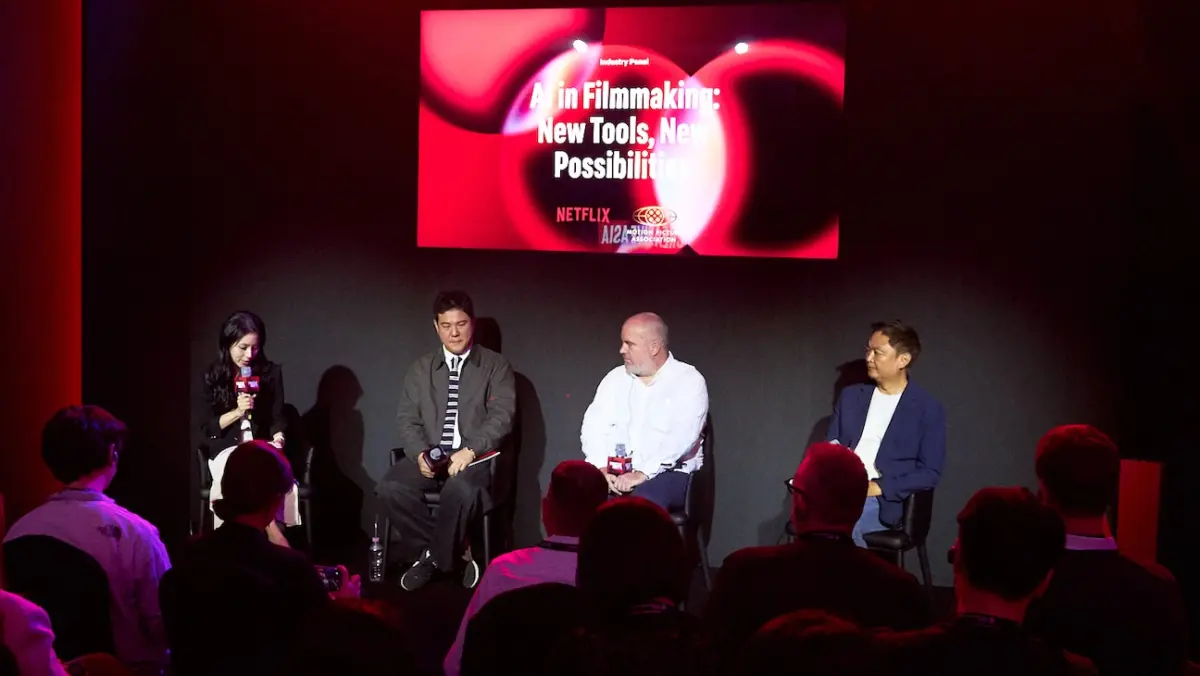
Netflix has officially integrated artificial intelligence into approximately 300 of its titles, marking a significant milestone in the streaming giant’s ongoing efforts to streamline production pipelines and enhance visual storytelling. This disclosure came during a high-profile industry panel at the Busan International Film Festival (BIFF), where senior executives and prominent filmmakers gathered to discuss the intersection of cutting-edge technology and human artistry.
The announcement underscores a broader shift within the global entertainment sector, where the appetite for generative AI tools is rapidly outpacing traditional production methods. As streaming platforms face increasing pressure to balance rising production costs with the demand for high-quality, visually stunning content, the deployment of AI in post-production, previsualization, and set design has moved from an experimental phase to a core operational strategy.
The Evolution of the Creative Workflow
At the heart of this transition is the philosophy articulated by Sung Q Lee, Netflix’s senior director of production for the Asia-Pacific region. During the "Creative Asia" event, co-hosted by the Motion Picture Association, Lee characterized the integration of AI not as a replacement for human talent, but as a catalyst for creative expansion.
According to Lee, the technology is being utilized in several key stages of filmmaking, including the initial previsualization of scenes, complex production design, the iterative process of set-dressing, and the labor-intensive fields of editing and visual effects (VFX). However, Lee was careful to frame the adoption of these tools through a human-centric lens. "The question that matters to me isn’t, ‘How much AI can we put into this title?’ but, ‘What more can this title do with AI’s help?’" he remarked.
This approach reflects a growing consensus among technology-forward production studios: AI is most effective when it serves as a "force multiplier" for human creators, enabling them to realize complex visions that were previously hampered by budgetary or temporal constraints.
The Asian Market Perspective vs. Hollywood Skepticism
The discussion in Busan highlighted a distinct cultural and professional divide in how AI is perceived within the industry. While the Hollywood creative community has been largely characterized by profound caution and, in some cases, labor-led resistance to AI, the Asian content sector—and particularly the South Korean film industry—has adopted a more pragmatic, opportunity-driven stance.
For many Asian filmmakers, the primary hurdle to creative ambition has historically been limited capital. AI tools are increasingly viewed as a solution to this structural disadvantage. By automating repetitive tasks, directors can reallocate their limited resources toward narrative depth and performance quality. This optimism, however, is tempered by the reality of early, often clumsy, deployments of the technology.
A notable case study discussed at the festival was Run to the West, directed by Kang Yun-sung and Kwon Han-seul. Billed as South Korea’s first fully AI-assisted feature, the project faced significant criticism upon release. The film, which earned roughly $100,000 at the box office, served as a stark lesson on the limitations of current generative models. Kang noted that the rapid pace of AI advancement meant that the visual aesthetics of the film felt outdated by the time it reached the public. Despite this setback, Kang remains a staunch advocate for the technology, currently leveraging generative tools from China’s Kling AI for his upcoming action feature, The Gulf of Aden.
Financial Implications and Efficiency Metrics
The financial case for AI integration is becoming increasingly difficult to ignore. Kang estimates that his reliance on generative AI for The Gulf of Aden could reduce overall production costs by approximately 40 percent. This reduction is not derived solely from the replacement of manual CG and VFX labor, but from a more efficient, streamlined shooting schedule.
For independent and mid-budget filmmakers, a 40 percent reduction in costs is transformative. It allows for the revival of projects that were previously deemed "unfinanceable" or too technically ambitious for local budgets. As Kang stated during the panel, "What has been buried due to budgetary issues was able to be put back on the table."
Technical Implementation: The Wētā FX Approach
Complementing the Netflix perspective, Kimball Thurston, chief technology officer at Wētā FX, emphasized the concept of "assistive AI." According to Thurston, the primary utility of these tools lies in the rapid generation of visual iterations, which allows directors and cinematographers to identify and rectify errors early in the production cycle.
"Our goal is to reduce simple, repetitive tasks," Thurston explained. He clarified that in the current Wētā FX pipeline, AI is strictly prohibited from altering the core creative intent of a project. Instead, it functions as a high-speed diagnostic and visualization engine. By compressing the feedback loop between the director’s vision and the technical execution, studios can avoid the "fix it in post" mentality that has historically inflated production timelines and costs.
The Human Element: The "Why" vs. The "How"
Despite the technical advancements, the panelists consistently returned to the necessity of human oversight. Sung Q Lee argued that while technology has fundamentally changed the "how" of filmmaking, it cannot replicate the "why"—the underlying human motivation and thematic resonance of a story.
"When it comes to conveying emotion, ultimately, a human has to touch it," Lee stated. "AI can get many jobs done, but does it touch human emotion? The human touch is critical and necessary."
This distinction is crucial as the industry navigates a period of profound uncertainty. The fear of "AI-generated" content—which often suffers from a lack of narrative soul—is prevalent. However, if major studios like Netflix continue to use these tools primarily as high-tech assistants to human directors, the industry may avoid the pitfalls of fully autonomous generative content, instead entering an era of "augmented creativity."
Broader Implications for the Global Film Industry
The implications of this shift are far-reaching. As AI-assisted production becomes the standard for major streamers, independent studios may find themselves under increased pressure to adopt similar technologies to remain competitive. This could lead to a democratization of high-end visual storytelling, as tools once restricted to massive Hollywood budgets become accessible to smaller production houses.
However, this transition also raises significant regulatory and labor questions. If production times are slashed by 40 percent and costs are reduced accordingly, the labor market for visual effects artists and junior production staff will inevitably change. Unions and guilds across the globe are currently grappling with how to ensure that the efficiencies gained through AI do not result in the devaluation of human labor.
Furthermore, the "Busan model" of AI integration serves as a bellwether for the international market. As Asian studios continue to experiment with aggressive AI workflows, they may set a new global standard for efficient, budget-conscious, yet visually ambitious filmmaking. Whether this will lead to a new golden age of independent cinema or a homogenization of visual styles remains to be seen.
A Look Ahead
The events at the Busan International Film Festival signify that the "AI era" in cinema is no longer a distant threat or a speculative concept; it is an active, ongoing component of global media production. With Netflix leading the charge—having already touched 300 titles with its AI-assisted workflows—the focus for the next few years will likely shift from can we use AI to how we can use it to elevate, rather than dilute, the cinematic experience.
As the technology continues to mature, the industry will need to establish clear ethical guidelines regarding transparency and authorship. For now, the sentiment among industry leaders is one of cautious optimism: a recognition that while the tools of the trade are evolving at a breakneck speed, the fundamental human necessity to tell stories remains the final, and most vital, frontier.
The convergence of technological capability and creative ambition will define the next decade of film, and as the discussions in Busan suggest, the winners will be those who can harness the speed of the machine without sacrificing the heart of the artist.