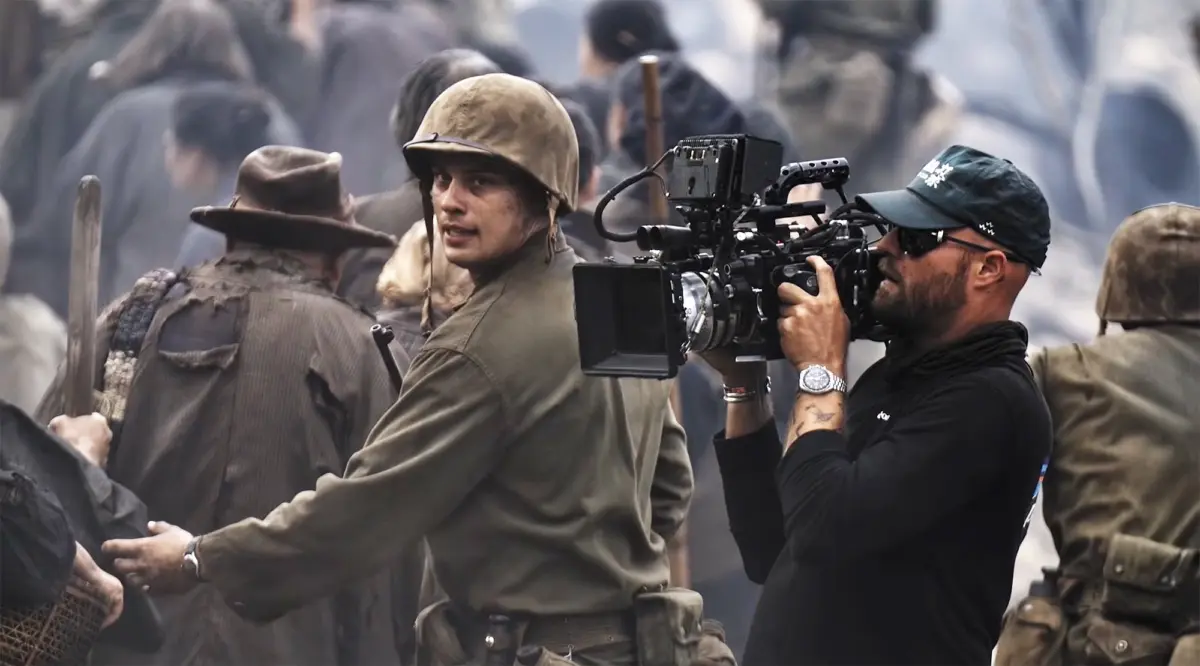
The landscape of World War II cinema has long sought to capture the profound human cost of global conflict through intensely personal narratives, and director Peter Berg’s latest cinematic endeavor, The Mosquito Bowl, dives directly into this tradition. Netflix has officially debuted a comprehensive behind-the-scenes featurette for the war action thriller, shedding light on the rigorous physical and emotional demands placed upon its ensemble cast. The film, which opened in select domestic theaters on October 30, 2026, ahead of its Thanksgiving streaming release on November 25, 2026, explores the convergence of athletic glory and the grim realities of total war during the mid-twentieth century.
Adapted from Buzz Bissinger’s acclaimed non-fiction bestseller, The Mosquito Bowl: A Game of Life and Death in World War II, the film chronicles an extraordinary historical footnote. Following the devastating December 7, 1941, attack on Pearl Harbor that thrust the United States into World War II, America’s premier college football players notably set aside their athletic fame, lucrative futures, and public adoration to enlist in the United States military. A striking majority of these collegiate sports stars gravitated toward the United States Marine Corps, drawn by its reputation for elite rigor and front-line engagement.
The Narrative Foundation and Historical Background
The core of the narrative centers on a legendary, albeit somber, athletic event that took place on Christmas Eve in 1944. Deep in the Pacific Theater, members of the 4th and 29th Marine regiments found themselves stationed on Guadalcanal, undergoing brutal, exhaustive preparations for what military strategists already anticipated would be the most harrowing amphibious assault of the Pacific campaign: the invasion of Okinawa.

Within the ranks of these two regiments lay an unprecedented concentration of athletic talent. The encampment housed numerous former All-Americans, as well as team captains hailing from prestigious institutions such as the University of Wisconsin, Brown University, and the University of Notre Dame. Despite the looming specter of combat and the oppressive tropical conditions, these servicemen organized a tackle football game—subsequently dubbed "The Mosquito Bowl" due to the swarms of insects infesting the makeshift field. For many of the young men who stepped onto the gridiron that humid afternoon, the game served as both a poignant reminder of the civilian lives they had left behind and the absolute final football match they would ever play.
Production Insights and Behind-the-Scenes Realities
The newly released promotional featurette offers audiences an intimate look at the grueling production process orchestrated by director Peter Berg, whose extensive filmography includes high-stakes dramas and action films such as Friday Night Lights, Lone Survivor, and Patriots Day. In the footage, Berg is seen collaborating closely with cast members including Ray Nicholson, Nicholas Galitzine, Bill Skarsgård, Tom Francis, Brent Comer, and Dominic Bogart.
Reflecting the central theme of perseverance, the featurette highlights the physical toll exacted upon the actors. Cast members are captured discussing the relentless stamina required to replicate the harsh conditions endured by the historical figures they portray. As one actor notes in the promotional material, the essence of the experience was "getting yourself ready to do it again the next day," mirroring the cyclical exhaustion of both wartime military training and elite-level athletic competition.
Berg’s directorial approach relies heavily on visceral realism, an aesthetic he has cultivated across projects like Deepwater Horizon and American Primeval. By utilizing handheld camera work, gritty production design, and immersive soundscapes, the production team sought to bridge the psychological gap between the collegiate gridiron and the blood-soaked beaches of the Pacific. Screenwriter Mark L. Smith collaborated with Berg to adapt Bissinger’s heavily researched historical text, ensuring the screenplay balances the camaraderie of sports culture with the unyielding gravity of historical warfare.

Theatrical Box Office Context and Streaming Strategy
The release of The Mosquito Bowl arrives at a complex juncture for mid-budget prestige and action cinema within the theatrical marketplace. Following its limited domestic theatrical window distributed by Netflix, the film recorded a quiet opening weekend, reflecting broader industry trends where historical dramas frequently struggle to draw audiences to traditional cinemas in the face of dominant franchise blockbusters.
Industry analysts note that Netflix’s hybrid distribution model—granting qualifying theatrical runs primarily to satisfy guild requirements and award season eligibility before premiering content globally on the streaming platform—fundamentally alters the financial expectations of films like The Mosquito Bowl. With the streaming release scheduled for November 25, 2026, just ahead of the Thanksgiving holiday, the platform anticipates capitalizing on captive family audiences seeking narrative-driven historical epics during a traditionally high-viewership period.
Creative Collaboration and Industry Pedigree
The production of The Mosquito Bowl represents a major collaborative effort between prominent figures in contemporary Hollywood. The film is produced by Peter Berg via his Film 44 production banner, alongside veteran producer Brian Grazer of Imagine Entertainment and producer Alex Gayner.

Imagine Entertainment and Film 44 have previously demonstrated a shared affinity for projects that merge visceral action with deep character studies based on true events. Buzz Bissinger’s source material provided a richly detailed blueprint, as the author spent years cataloging the lives of the young men who traded the cheers of packed stadiums for the deafening roar of artillery. The adaptation pays meticulous attention to historical accuracy, particularly concerning military uniform standards, period-accurate equipment, and the specific socio-political climate of the United States during the mobilization for World War II.
Broader Cultural Implications and Historical Legacy
Beyond its value as a cinematic enterprise, The Mosquito Bowl serves as a cultural artifact examining a generation profoundly shaped by institutional sacrifice. The historical event immortalized in the film highlights a unique era in American history when societal divisions were momentarily bridged by total national mobilization. Collegiate athletes, who enjoyed celebrity status in pre-war America, integrated seamlessly into the democratic melting pot of the Marine Corps, sharing foxholes, rations, and ultimately mortality with men from every walk of life.
The Battle of Okinawa, which commenced in April 1945 following the period depicted in the film, resulted in some of the heaviest casualties of the Pacific War, claiming the lives of many servicemen who had participated in the Christmas Eve football match. By focusing on the transient joy of the Mosquito Bowl against the dark horizon of the impending invasion, the film underscores the tragedy of unrealized potential.
As Netflix prepares to launch the film to its global subscriber base, the newly unveiled featurette functions as both an instructional guide to the film’s physical production and a respectful nod to the real-life historical figures. Through the combined efforts of Berg, his creative team, and a dynamic ensemble cast, The Mosquito Bowl seeks to ensure that the memory of these soldier-athletes endures well beyond the history books, translating their ultimate sacrifice into a vivid, harrowing cinematic experience for contemporary audiences.