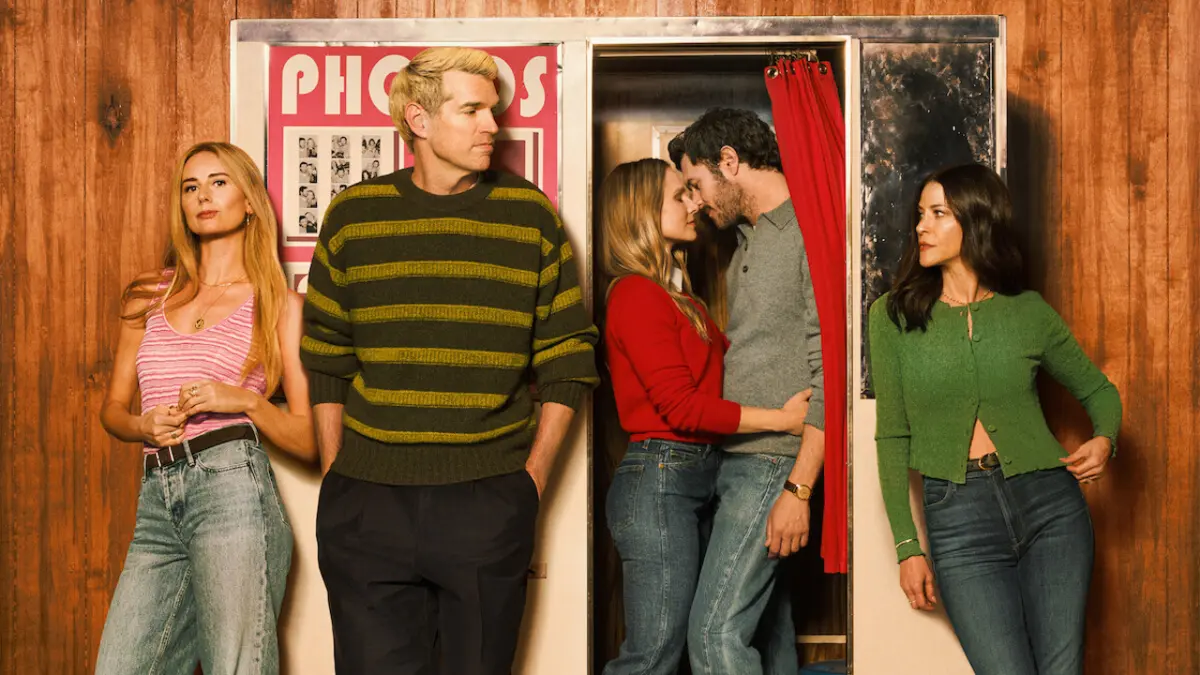
The romantic comedy landscape on streaming platforms continues to be dominated by the ongoing saga of an unorthodox romance, as Netflix officially confirms the continuation of its breakout hit. Following an eventful third-season finale characterized by a turbulent family confrontation and an impromptu beach elopement, the streaming giant has greenlit Season 4 of Nobody Wants This. The series, created by Erin Foster and produced by 3 Arts Entertainment, stars Kristen Bell as sex podcaster Joanne and Adam Brody as the devout Rabbi Noah. The official renewal secures the future of one of the platform’s most resilient romantic comedies, ensuring that audiences will witness the immediate fallout of the main characters’ secret nuptials and the cascading drama within their extended families.
Main Facts and Official Confirmation
The renewal announcement arrived via Netflix’s official channels, easing speculation regarding the long-term prospects of the series following a competitive autumn release slate. While viewership figures for individual seasons have experienced natural fluctuations common to long-running streaming properties, the overarching brand health remains exceptionally strong. Netflix executives have expressed confidence in the creative direction spearheaded by Foster, who has consistently managed to balance contemporary relationship dynamics with traditional familial expectations.
Production timelines for the upcoming fourth season are anticipated to commence in early 2027. Given the production cadence established by the previous two iterations—both of which debuted in late October—industry analysts project a tentative release window of October 2027. This consistent scheduling has proven effective in anchoring Netflix’s autumn programming block, providing subscribers with reliable event-level viewing experiences.
Chronology and Narrative Trajectory
To understand the narrative impetus for Season 4, it is necessary to examine the complex chronology that defined the third season. Throughout Season 3, Joanne and Noah contended with the pragmatic challenges of cohabitation, shifting professional ambitions, and the rigorous cultural and spiritual process of Joanne’s Jewish conversion. These internal milestones were continually tested by external pressures, most notably the intense, overbearing interference of Noah’s mother, Bina, regarding wedding preparations.
Concurrently, secondary plotlines reached a boiling point. Sasha and Esther’s marriage faced severe strains, culminating in a formal separation. However, the season finale delivered a narrative earthquake during a fateful trip to New York. Esther discovered that Sasha had engaged in a brief, secretive one-night stand with Morgan—Joanne’s sister and podcast co-host—shortly before Esther and Sasha had temporarily reunited. This revelation triggered a massive, emotionally charged family blowout during a critical gathering.
Seeking refuge from the volatile confrontation, Joanne and Noah bypassed the meticulously planned, Bina-dominated wedding ceremonies altogether. Instead, they escaped to a nearby beach where they impulsively eloped, leaving their respective families completely in the dark and setting the stage for an explosive set of family dynamics in the upcoming episodes.
Supporting Data and Viewership Analytics
A granular examination of viewing metrics reveals the underlying commercial rationale for Netflix’s swift renewal decision. When Season 3 debuted on the platform, it immediately captured subscriber attention, pulling in 6.2 million views within its opening four days of availability. During this initial launch window, the series secured a spot in the top 10 television rankings across 56 countries, achieving the number-one position in 11 territories and settling at number two on the global weekly charts. Furthermore, the arrival of Season 3 catalyzed a pronounced resurgence in legacy viewership, driving a threefold increase in traffic to Seasons 1 and 2.
A comparative analysis of opening-window performance highlights a distinct viewership trajectory across the series’ lifecycle:
- Season 1 (First 4 Days): 10.3 million views
- Season 2 (First 4 Days): 8.6 million views (a 16.50% decrease from Season 1)
- Season 3 (First 4 Days): 6.2 million views (a 27.91% decrease from Season 2)
- Cumulative Drop (Season 1 to Season 3): A total absolute decrease of 4.1 million views, representing a 39.81% reduction in opening-window velocity.
Despite the sequential decline in opening-weekend velocity—a standard trend for serialized comedies as initial curiosity peaks settle into dedicated fanbases—Nobody Wants This maintains extraordinary cumulative totals. Since its inception, the franchise has accumulated over 110 million total views globally. Season 1 stands as an enduring catalog performer, pulling in 56.8 million views in 2024, an additional 22 million in 2025, and a steady 2.2 million in the first half of 2026, bringing its lifetime total to an impressive 81 million views. Season 2 has similarly demonstrated robust long-tail consumption, amassing 34.5 million views across 2025 and early 2026. These figures firmly cement the property as one of Netflix’s most durable and profitable scripted comedy assets.
Statements and Creator Perspective
Creator Erin Foster has been vocal about her intentional, measured approach to the narrative lifespan of the series. In recent promotional interviews following the release of the third season, Foster addressed the thematic potential of aging out of conventional romantic comedy tropes and entering new phases of adult life.
"There are those next steps as people who are not in their 20s, getting married, and you’re starting off already kind of behind everyone else," Foster noted, drawing from personal experience regarding late-30s matrimony. "I experienced that when I got married, I was 37, and it’s a different experience. So, yeah, I do think that there’s more story to tell."
At the same time, Foster emphasized a commitment to quality over longevity, aligning her creative vision with market responsiveness rather than forced continuation. "I’m also someone who doesn’t get too attached to the outcome and is sort of fluid about allowing the market to tell us what they want from us," she stated. "I never want to have a show that goes on longer than people want to see it. I’d rather people want more than want less."
Broader Impact and Anticipated Implications for Season 4
The implications of the Season 3 finale dictate a rich, conflict-laden narrative landscape for the upcoming fourth season. The primary narrative arc will undoubtedly center on the chaotic aftermath of Joanne and Noah’s clandestine beach wedding. Bina’s reaction to being excluded from her son’s nuptials is expected to serve as a primary comedic and dramatic engine, with the matriarch likely mobilizing an aggressive campaign to force a lavish, traditional reception upon the newly married couple. Simultaneously, Joanne and Noah will need to negotiate the practical realities of their union, including the public-facing nature of Joanne’s career pivot and differing timelines regarding family planning.
In the secondary storylines, Morgan faces a period of romantic and professional reevaluation. Having ceased her passive wait for Sasha, she is projected to channel her emotional fallout into her podcasting career while seeking out a partner capable of emotional availability. This shift places Sasha in an unfamiliar position of true independence. He must decide whether to actively pursue a relationship with Morgan or attempt the arduous, unlikely task of reconciling with Esther.
For her part, Esther enters Season 4 poised to focus heavily on her burgeoning real estate career and her connection with Julian, provided she can successfully process the profound personal betrayal of Sasha’s infidelity and the subsequent secrecy maintained by Morgan.
As pre-production gets underway for a projected late-2027 release, Nobody Wants This remains a vital pillar of Netflix’s scripted strategy. By balancing statistical performance against measured narrative growth, the creative team has positioned the series to navigate its fourth year with both commercial viability and critical stability intact.