The official trailer has been released for The Bend in the River, an ambitious and deeply personal documentary directed by Robb Moss that spans nearly fifty years of real human lives. Following in the rare footsteps of longitudinal cinematic projects like Michael Apted’s renowned Up series, Moss’s film documents a core group of close friends as they navigate the profound transitions from youth to middle age, and finally into their seventies. Utilizing footage captured across multiple decades, the documentary serves as both an intimate group portrait and a sweeping meditation on time, memory, and the inevitability of aging. Following a successful festival run that included premieres at the Telluride Film Festival, True/False, Full Frame, DOC LA, and DOC NYC, the film is scheduled for an official streaming debut on Netflix on December 4, 2026.
Chronological Evolution of a Four-Decade Project
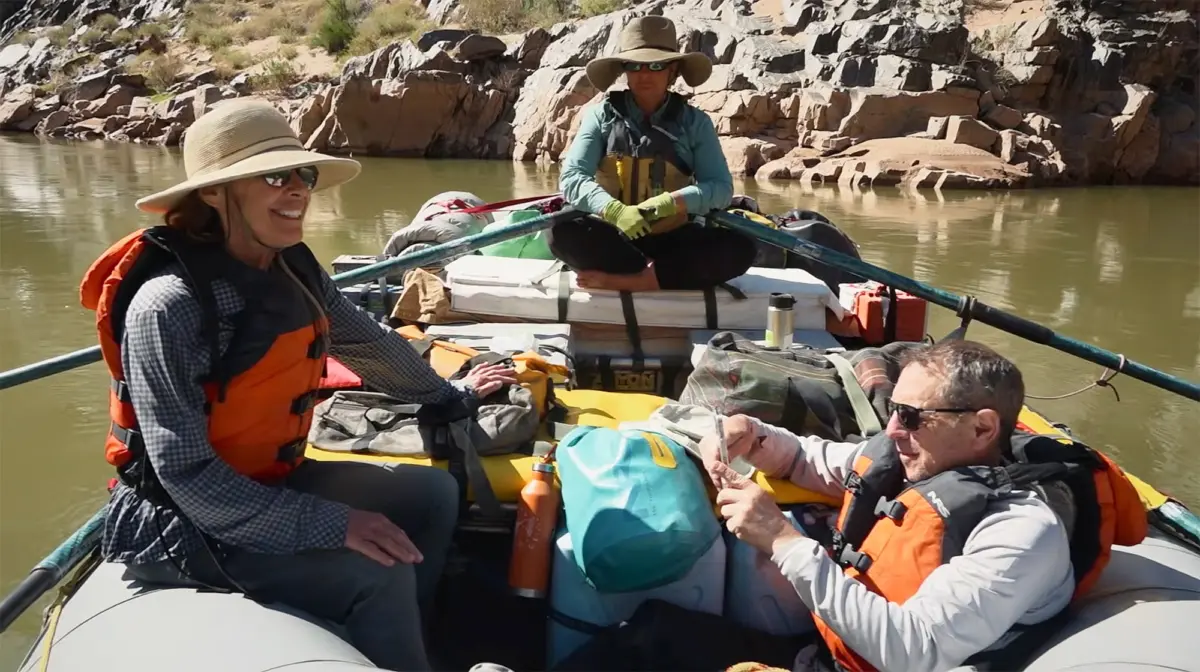
The genesis of The Bend in the River traces back to 1978, a period defined by countercultural ideals and an embrace of alternative lifestyles. During this initial phase, director Robb Moss picked up his camera to record a carefree, clothing-optional rafting expedition through the breathtaking expanses of the Grand Canyon. At the time, the participants were young, unencumbered by traditional societal obligations, and deeply invested in an outdoor-centric way of living. This footage established the baseline of the documentary, capturing the unfiltered energy and youthful optimism of a generation on the cusp of adulthood.
The project resumed twenty-five years later in 2003, when Moss reunited with his subjects to capture their transition into middle age. This chapter of the documentary explored the sobering realities of growing older, as carefree youths confronted mortgages, career trajectories, family responsibilities, and the psychological weight of lost idealism. The contrast between the sun-drenched, carefree rafting trip of 1978 and the domestic, professionally anchored lives of 2003 provided a stark visualization of the passage of time.

In the final phase of filming, completed ahead of its 2025 festival circuit, Moss documented his friends in their seventies. This contemporary segment captures the cohort grappling with retirement, health realities, the loss of peers, and a retrospective evaluation of the choices they made both as individuals and as members of a distinct historical generation. By interweaving moments from the distant past with those of the recent present, the documentary creates a fluid, non-linear narrative that invites viewers to reflect upon their own trajectories through life.
Artistic Approach and Directorial Background
Robb Moss, an acclaimed documentary filmmaker whose previous credits include The Tourist, The Same River Twice, Secrecy, and Containment, approached this project not merely as an observer, but as a participant preserving a lifelong bond. According to production notes and festival statements, continuous filming over the years served primarily as a vital mechanism for connection among the aging group of friends.
Because the subjects are entirely unscripted and real people living authentic lives, the documentary avoids the artificial narrative arcs often found in traditional cinematic storytelling. Instead, The Bend in the River relies on organic evolution, capturing genuine wisdom, regret, reconciliation, and humor. Produced by Robb Moss, Kristin Feeley, and Lisa Remington, the film’s structural pacing shifts seamlessly back and forth through time, emphasizing the universal nature of aging over specific historical milestones.
Festival Circuit Reception and Critical Response
Prior to its widespread availability to streaming audiences, The Bend in the River completed a robust exhibition circuit across major North American documentary festivals. The film made its world premiere at the prestigious Telluride Film Festival, where it drew praise for its emotional resonance and technical achievement in managing decades of archival and contemporary media formats.

Subsequent screenings at the True/False Film Fest, Full Frame Documentary Film Festival, DOC LA, and DOC NYC further cemented the film’s reputation among critics and documentary purists. Reviewers have highlighted the project’s rare intimacy, noting that very few filmmakers possess the patience, access, and longevity required to follow the exact same subjects across a span of forty-plus years. The ability to witness real human beings physically and emotionally transform on screen has been cited as a major achievement in contemporary nonfiction filmmaking.
Broader Impact and Sociological Implications
Longitudinal documentaries hold a unique place in cinematic history, functioning simultaneously as art, sociology, and historical archive. By tracking the same individuals across decades, projects like The Bend in the River offer researchers and audiences alike a rare empirical look at human development across the life span.
Sociologically, the film mirrors the trajectory of the Baby Boomer and Generation X cohorts, capturing the ideological shifts from the late 1970s counterculture movements to the pragmatic realities of the twenty-first century. As the subjects evaluate their collective and individual decisions in their seventies, the film provides broader commentary on generational responsibility, environmental shifts, and the evolving definition of a life well-lived.
Furthermore, the documentary speaks to the fundamental human preoccupation with time and memory. In an era saturated with highly curated, instantaneous digital media, The Bend in the River offers a deliberate, slow-cooked narrative that honors the unhurried accumulation of years.

Streaming Release Details
With the official trailer now public, anticipation has grown for the film’s wider distribution. Netflix has secured the streaming rights for The Bend in the River, positioning the documentary as a major prestige release for the winter season.
The film will officially debut on the platform on December 4, 2026, allowing global audiences to experience the culmination of Robb Moss’s four-decade-long cinematic journey. As viewers prepare to watch the trailer and subsequent feature, the film poses an enduring, universal question about the human condition: how we change, what we leave behind, and how we make peace with the bend in the river where our past meets our future.