Cinematic explorations of Middle Eastern conflicts, particularly those shaped by decades of foreign military intervention and geopolitical maneuvering, have long been a staple of international drama. Historically, these narratives are predominantly filtered through familiar geopolitical lenses—focusing heavily on the experiences of deployed coalition soldiers, embedded journalists, or local citizens enduring the harrowing realities of occupation. However, cinema occasionally introduces alternative perspectives that bypass standard Western or localized tropes to examine crises through unexpected prisms. This narrative foundation underpins Once Upon a Time in the Middle East, a sprawling 141-minute feature film directed and co-written by Wen Muye. Boasting an international cast that features Shen Teng, Jiang Qiming, Omar Sherif, Aarif Lee, Zhi-ting, and Sherif Sabby, the film attempts to merge grand-scale historical tragedy with an intimate tale of culinary redemption and human sanctuary.
Plot Mechanics and the Journey of Xu Fu
The narrative structure opens in media res, landing the protagonist, Xu Fu—played by mainland Chinese box-office heavyweight Shen Teng—in an immigration detention center. Under heavy interrogation by authorities regarding his ambiguous past activities in a turbulent Middle Eastern nation, Xu is forced to unpack the events that led to his current predicament. The ensuing flashback establishes that Xu traveled years prior to a fictionalized, nameless Middle Eastern locale known as Bahata, driven by a singular, utilitarian objective: to work off a crippling financial debt.
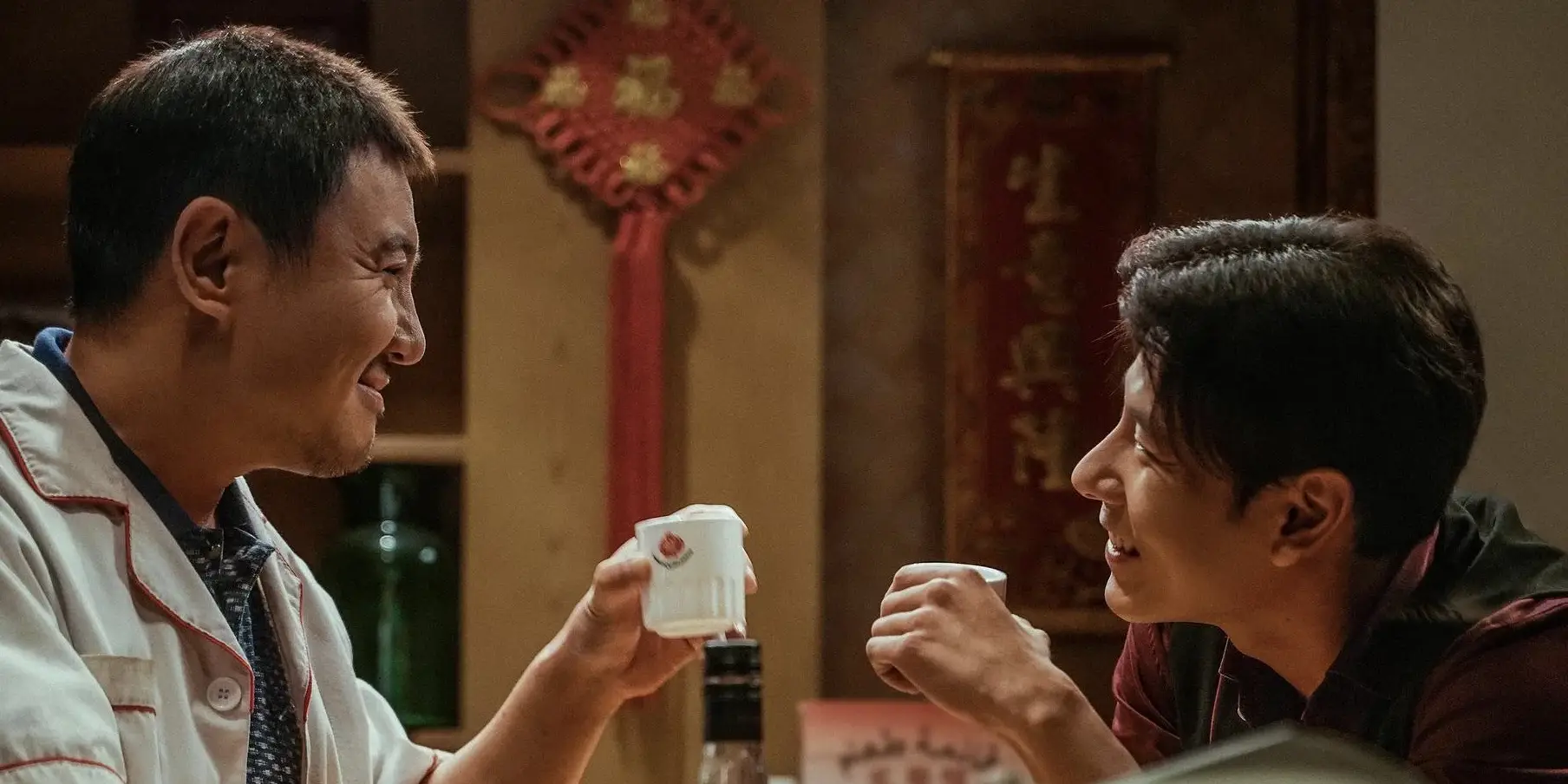
Upon arrival, Xu finds himself at the helm of a failing, financially distressed Chinese restaurant. Rather than a thriving cultural outpost, the establishment is a daily exercise in survival, managed alongside the affable and endlessly optimistic floor manager Ma Junsheng, portrayed by Jiang Qiming. A local cohort of resourceful street children occasionally drifts through, offering sporadic labor and injecting a semblance of chaotic neighborhood life into the restaurant’s daily routine.
This fragile ecosystem of mundane survival is violently upended by the onset of a large-scale American military invasion. As the surrounding region descends into total chaos, infrastructure collapses, and the community fractures, Xu’s restaurant undergoes a profound functional transformation. Abandoning its commercial ambitions, the establishment organically evolves into a literal and figurative sanctuary—a safe haven for displaced civilians and victims of the mounting humanitarian catastrophe. Despite his growing commitment to this makeshift family, Xu’s personal north star remains unchanged: a desperate, driving imperative to survive the conflict, navigate a treacherous odyssey across hostile territories, and secure a safe return home to reunite with his family in China.
Directoral Scope and Technical Execution
Behind the camera, director Wen Muye approaches the monumental canvas of war and displacement with an ambitious sense of scale. The production design and cinematography strive to mirror the exhausting, high-stakes environment inhabited by the characters. The filmmaking relies heavily on stylistic flourishes, alternating between rhythmic, sensory-rich cooking montages that highlight the meticulous craft of food preparation, and chaotic, sweeping battle sequences frequently captured in extended, unbroken one-takes.
Whether illustrating the bustling, high-pressure atmosphere of a crowded kitchen or the sudden, visceral horror of village shelling, Wen’s direction largely succeeds in balancing technical spectacle with character-driven intimacy. Yet, this stylistic ambition occasionally dips into overindulgence. A notable miscalculation occurs during a pivotal sequence depicting a nighttime assault on an army base set against the winter holidays, where the sheer terror of the bombardment is jarringly juxtaposed with a discordant, upbeat rendition of “Jingle Bells.” While the broader musical score generally anchors the dramatic tension effectively, critics have noted distinct stylistic echoes of Christopher Nolan’s soundscape architectures. Nonetheless, the sheer geographical breadth and physical scope of the production remain visually striking, utilizing a vast array of elaborate set pieces and distinct regional locations.
Narrative Ambitions and Structural Strain
Despite its technical merits, Once Upon a Time in the Middle East occasionally buckles under the sheer weight of its own narrative ambitions. The script, co-written by Lang Qunli and Zhong Wei, attempts a sweeping, multi-year perspective that subjects its protagonist to wildly fluctuating socioeconomic and political environments. Within the span of the runtime, Xu transitions from operating a city-center eatery to being detained inside a heavily fortified American military base, subsequently falling into the hands of insurgent and terrorist factions operating within the countryside.
Each narrative reset introduces a dramatic shift not only in physical geography, but in the pacing and tonal rhythm of the film. These transitions frequently usher in a revolving door of antagonistic characters defined by shallow motivations and one-dimensional performances. By the third act, the narrative leans heavily into emotionally manipulative territory, featuring extremist rebel factions deploying child suicide bombers. This broad emotional manipulation is mirrored by the film’s deliberate geographic ambiguity; by refusing to name the specific country or city in which the events unfold, the narrative trades historical specificity for generalized allegory, forcing overt sentimentalism to carry the dramatic weight.
Performances and Character Dynamics
Amidst the structural turbulence of the screenplay, the primary performances anchor the film’s emotional core. Shen Teng delivers a nuanced, restrained portrait of a man whose initial standoffish exterior gradually dissolves as he becomes entangled in the lives of his adopted community. While his gruff persona occasionally flirts with cinematic cliché, Shen excels in moments of quiet vulnerability. A standout telephone sequence—wherein Xu attempts to maintain composure while speaking to his distant family—showcases the actor’s ability to convey profound heartbreak through subtle physical and vocal restraint.
Complementing Shen is Jiang Qiming, whose portrayal of Ma Junsheng frequently anchors the film. Jiang infuses the narrative with an infectious joviality and steadfast loyalty, functioning as the emotional heartbeat of the ensemble. Meanwhile, young actor Omar Sherif delivers a compelling supporting turn as an orphaned street youth who transitions from a resentful apprentice into Xu’s adopted surrogate son. Despite the occasionally heavy-handed writing surrounding his character arc, Sherif’s gradual emotional softening provides a genuine counterweight to the surrounding devastation.
Broader Themes and Critical Reception
Once Upon a Time in the Middle East firmly positions its primary objective as the evocation of profound empathy for marginalized individuals trapped within the gears of international conflict. By reflecting upon a turbulent chapter of modern history defined by foreign military interventions, the film successfully capitalizes on universal audience sympathies for victims of systemic displacement and violence.
However, its ultimate impact is constrained by an expansive 141-minute runtime that struggles to maintain a consistent narrative momentum. While the film delivers moments of genuine visual splendor, committed performances, and affecting interpersonal drama, its broad strokes and uneven pacing prevent it from transcending into a truly definitive cinematic work. Ultimately, Wen Muye’s latest venture stands as an absorbing, albeit flawed, testament to human resilience amid geopolitical turmoil, offering a unique cross-cultural lens on the enduring human cost of modern warfare.