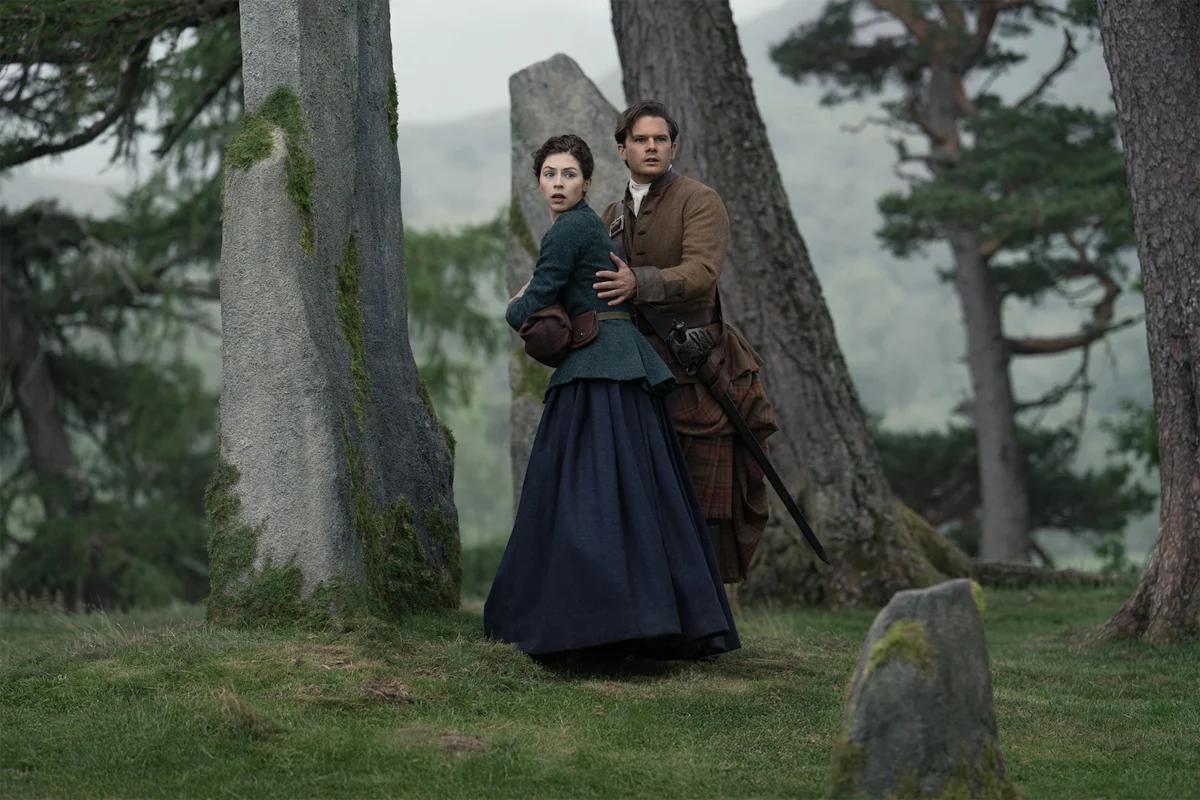
The eagerly awaited second season of the historical fantasy drama series Outlander: Blood of My Blood is fast approaching, promising audiences an intricate continuation of the time-spanning narrative that has captivated millions of viewers worldwide. Recent promotional materials and official trailers released by Starz have confirmed that the core romantic pairings of the prequel series—Ellen Mackenzie, portrayed by Harriet Slater, alongside Brian Fraser, played by Jamie Roy, as well as Julia Beauchamp, brought to life by Hermione Corfield, and Henry Beauchamp, played by Jeremy Irvine—will face profound challenges as they find themselves separated by vast expanses of space and time. This temporal displacement forms the narrative backbone of the upcoming episodes, testing the emotional resilience of characters thrust into eras far removed from their own.
Beyond the immediate distance separating the central couples, promotional teasers have placed a sharp narrative focus on another devastating separation: Julia and Henry Beauchamp’s heart-wrenching detachment from their five-year-old daughter, Claire. For longtime fans of the original Outlander television series, based on the best-selling book franchise by Diana Gabaldon, this storyline carries immense emotional weight. Viewers recognize Claire as the formidable adult protagonist famously portrayed by Caitríona Balfe, who navigates the complexities of 18th-century Scottish history after stumbling through the mystical standing stones of Craigh na Dun. Lore established early in the mothership series indicated that Claire’s parents tragically perished when she was very young, a foundational mystery that Blood of My Blood continues to contextualize and expand upon.
The Emotional Toll of Temporal Displacement
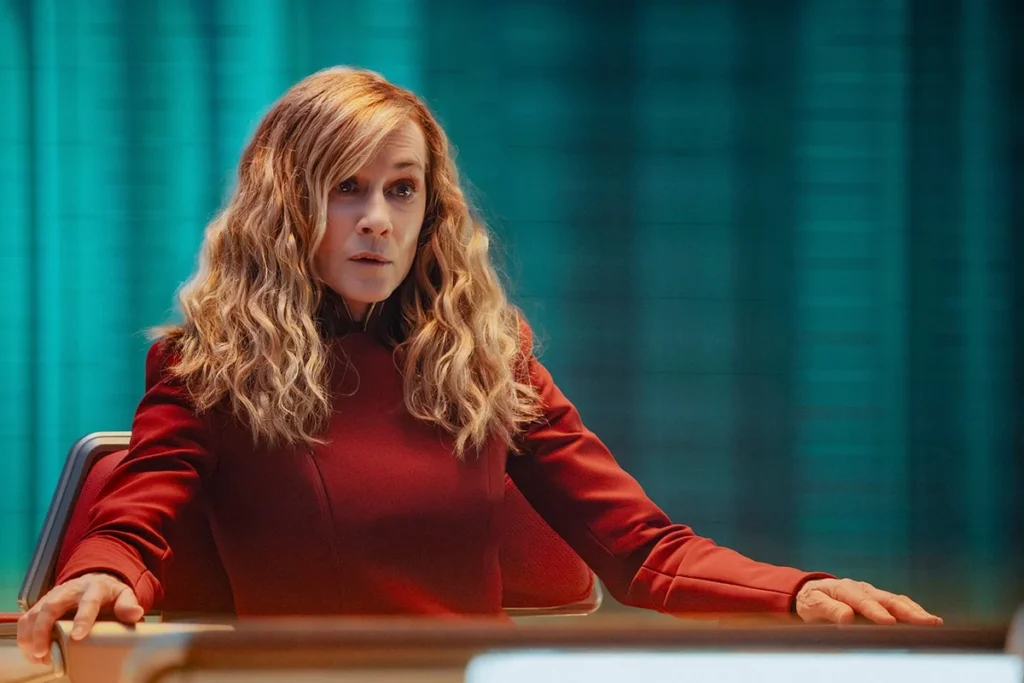
During a recent exclusive roundtable discussion hosted by Reactor, actor Hermione Corfield offered deep insight into how this separation remains a persistent, driving force for Julia and Henry throughout the duration of the second season. According to Corfield, the emotional landscape for her character darkens considerably as initial optimism fades into harsh reality.
In the first season, Julia maintained a steadfast belief that their predicament was a temporary inconvenience, holding onto the genuine hope that they could successfully retrace their steps, locate the standing stones, and return to their familiar timeline with minimal friction. However, as those fragile hopes were systematically dismantled by the conclusion of the inaugural season, a devastating realization set in. Julia must confront the agonizing possibility that she may never see her young daughter again, a psychological blow that fundamentally fractures her maternal spirit.
Despite this profound grief, Corfield emphasized that resignation is not an option for her character. The narrative arc of the second season requires Julia to channel her sorrow into relentless determination. She must navigate the treacherous realities of her new environment, figure out how to regain her footing, and tirelessly scheme to find a pathway back to Claire. Complicating this perilous mission is the imperative need to protect her infant son, William, ensuring that his safety remains paramount amidst the chaos of her displaced existence.
Production Perspectives and Narrative Integration
Executive producer Maril Davis and showrunner Matthew B. Roberts elaborated on the thematic significance of this separation during a separate press roundtable, underscoring its foundational role in the overarching structure of the series. Davis explicitly stated that the fracture between Julia and Henry and their daughter is entirely integral to the fabric of the story, serving as an emotional anchor that prevents the sprawling fantasy elements from overshadowing the human core of the narrative.
Roberts reinforced this sentiment, explaining that the profound sense of loss experienced by Julia and Henry is not a temporary plot device to be resolved and forgotten. Instead, it represents a permanent psychological transformation. The characters will carry the weight of this separation with them indefinitely, shaping every decision they make and every alliance they forge. The creative team has committed to ensuring this lingering grief remains visible to the audience, weaving the heartache of parental separation into the continuous tapestry of the series as it progresses through future arcs.
Background and Production Timeline
Outlander: Blood of My Blood serves as an ambitious prequel to the highly successful Outlander series, which premiered on Starz in August 2014 and established itself as a cornerstone of the network’s original programming lineup. Developed by Matthew B. Roberts, who also serves as showrunner and executive producer alongside Maril Davis and Ronald D. Moore, the prequel was officially greenlit by Starz to expand the rich lore of the Fraser and Mackenzie clans.
The production timeline for the series has moved at a steady pace to meet high viewer demand following the conclusion of the parent show’s later seasons. Filming primarily takes place on location in Scotland, capturing the rugged, atmospheric landscapes that have become synonymous with the franchise’s distinct aesthetic. The first season established the intricate rules of temporal travel and introduced the historical ancestors of key figures from the original series, setting a high benchmark for production design, costume accuracy, and character-driven storytelling.
The formal announcement regarding the premiere date of the second season has generated substantial excitement across entertainment media platforms. Starz has scheduled the debut of Outlander: Blood of My Blood season two for Friday, September 18, 2026. This late-September launch window strategically positions the drama for the peak autumn television viewing season, aligning with historical release patterns that have historically favored the network’s flagship historical properties.
Broader Industry Implications and Fan Engagement
The continued expansion of the Outlander universe through prequels like Blood of My Blood highlights a broader industry trend where networks rely heavily on established intellectual property to sustain subscriber growth and viewer loyalty. By delving into the backstory of Claire’s parents and the ancestral roots of Jamie Fraser’s lineage, Starz successfully bridges generational storytelling gaps, appealing to both veteran devotees of the franchise and newcomers drawn to epic historical romances.
From an analytical perspective, the heavy emphasis on familial separation in season two addresses a critical narrative challenge faced by fantasy and historical dramas dealing with time travel. Without grounded, relatable emotional stakes—such as a mother’s desperate quest to reunite with her child—temporal mechanics can easily reduce characters to passive participants in history. By keeping Julia and Henry’s grief at the forefront, the writers ensure that the narrative remains intensely personal, driving viewer investment through high-stakes emotional conflict rather than relying solely on historical spectacle or sci-fi gimmicks.
As the premiere date approaches, anticipation continues to build across digital fandom spaces. Speculation runs rampant regarding how closely the prequel will intersect with established canon from Diana Gabaldon’s novels and whether unexpected temporal loops might offer a glimmer of hope for the separated family members. What remains certain is that Starz has crafted a deeply emotional sophomore outing that promises to test the limits of love, loyalty, and endurance across the barriers of time.