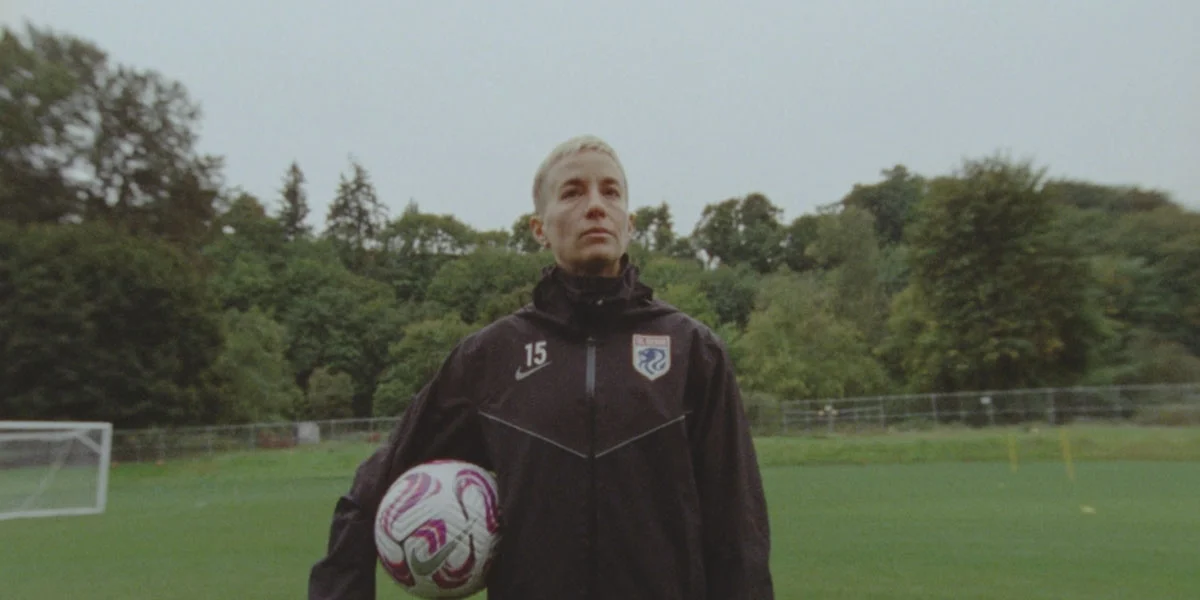
The cinematic landscape of sports documentaries received a compelling new addition with the world premiere of Rapinoe at the Toronto International Film Festival (TIFF). Directed by Rebeca Huntt, acclaimed for her work on the feature Beba, the 92-minute documentary chronicles the extraordinary and often turbulent life of Megan Rapinoe. The film captures the soccer star as she prepares for her final major international tournament at the 2023 FIFA Women’s World Cup, while simultaneously navigating the intense political crosshairs that have come to define her public persona. Featuring contributions from notable figures such as Sue Bird, Jess Fishlock, Colin Kaepernick, Alex Morgan, and Briana Scurry, the film transcends the traditional, sanitized sports biopic to deliver a nuanced exploration of ambition, activism, and vulnerability.
For sports fans and news consumers alike, Megan Rapinoe is a deeply familiar figure. Over a storied career spanning nearly two decades, she cemented her legacy as one of the most decorated players in the history of women’s soccer. Her resume includes two consecutive FIFA Women’s World Cup titles in 2015 and 2019—a feat unmatched by the United States men’s national team—alongside an Olympic gold medal secured at the 2012 London Games. However, her prominence extends far beyond the pitch. As an openly gay woman and an outspoken advocate for social justice, racial equality, and LGBTQ+ rights, Rapinoe has frequently found herself at the center of intense cultural and political debates. Huntt’s documentary examines how an athlete raised in a conservative, working-class environment evolved into a polarizing yet undeniably historic cultural force.
Early Life and the Roots of Resilience
The documentary adopts a chronological structure, opening in the rural and politically conservative enclave of Redding, California, where Rapinoe was born in 1985. Raised in a strict working-class household, her early athletic promise was evident by the age of nine. Lacking the financial resources to support her burgeoning soccer ambitions, her family relied on the generosity of a local community member who recognized her exceptional talent and stepped in to assist.
This early period of stability was soon tested by personal adversity. In her youth, Rapinoe watched her twin brother grapple with a severe drug addiction, a crisis that devastated her family and left an enduring emotional imprint. Archival interviews and modern-day reflections in the film highlight the profound toll of substance abuse within working-class American communities, framing this familial struggle as the foundational test of Rapinoe’s resilience. This early exposure to systemic hardship and personal trauma would profoundly shape her empathetic worldview and her willingness to confront institutional failures later in life.
A Chronology of Athletic Triumph and Physical Toll
As the narrative progresses, the film charts Rapinoe’s steady ascent through the competitive ranks of women’s soccer. By 2011, she had established herself as a vital component of the U.S. national team, competing in both domestic and international professional leagues. The 2011 FIFA Women’s World Cup in Germany served as a crucial turning point; the team’s heartbreaking loss to Japan in the final provided both a crushing blow and a unifying catalyst for the squad.
Throughout her career, Rapinoe endured a series of debilitating injuries, including multiple torn anterior cruciate ligaments (ACLs) that threatened to derail her trajectory. Yet, she persevered through intensive rehabilitations, returning to the pitch to help lead the United States to victory at the 2015 World Cup in Canada. The dramatic triumph on the global stage catapulted her into international prominence, setting the stage for the convergence of her athletic career and her political awakening.
Activism, Controversy, and the Public Spotlight
The narrative intensity of Rapinoe escalates significantly following the 2015 championship. In September 2016, influenced by the peaceful protests initiated by NFL quarterback Colin Kaepernick against police brutality and racial injustice, Rapinoe began kneeling during the rendition of the U.S. national anthem before a match with the Seattle Reign.
This act of defiance drew immediate condemnation from sports pundits, conservative politicians, and traditionalists. In subsequent media interviews, Rapinoe articulated her rationale with characteristic directness, stating, "As a gay American, I know what it means to look at the flag and not have it protect all your liberties." The protest placed her at the vanguard of athlete activism, a role that brought both severe online harassment and widespread admiration.
Director Rebeca Huntt skillfully handles this chapter of Rapinoe’s life, notably choosing never to visually display the face of the prominent political figure who frequently targeted the athlete on social media. Instead, the film focuses on the emotional mechanics of endurance under public scrutiny. Rather than focusing solely on her relationship with WNBA legend Sue Bird—which is presented as a stable and supportive partnership largely free of public drama—the documentary pivots toward Rapinoe’s most impactful campaign: the fight for gender equity.
The Fight for Equal Pay and Systemic Reform
While Rapinoe’s solidarity with racial justice movements remains a defining element of her public identity, the film underscores that her true "north star" has always been gender equality in sports. The documentary details the arduous, multi-year legal and public relations battle waged by members of the U.S. Women’s National Team against the United States Soccer Federation (USSF) over equal pay and working conditions.
The legal battle culminated in a landmark $24 million settlement in 2022, alongside a historic collective bargaining agreement that guaranteed equal pay rates for the men’s and women’s national teams in all competitions, including the World Cup. Fact-based analyses of this milestone highlight its far-reaching implications, establishing a global precedent for female athletes across various disciplines and permanently altering the economic landscape of international soccer. The documentary emphasizes that Rapinoe’s persistence was instrumental in achieving an outcome that many legal experts initially considered improbable.
Psychological Vulnerability Beyond the Persona
Departing from the conventional formula of triumphant sports biographies, Rapinoe relies heavily on intimate, confessional interview segments. Shot in a minimalist setting that evokes a therapeutic environment, these conversations reveal a side of the athlete rarely seen by the public.
Behind the confident exterior and unrepentant public voice lies an athlete plagued by persistent self-doubt, anxiety, and the psychological burden of carrying social movements on her shoulders. Rapinoe candidly discusses her realization that she required professional therapy to process the emotional baggage accumulated throughout her career and her public battles. This raw vulnerability provides a refreshing counterbalance to the narrative of the infallible hero, humanizing an individual often reduced to a political caricature.
The film also captures the unceremonious and emotionally complex end to her professional career, including her final match for OL Reign and her emotional exit from the 2023 World Cup following an injury. These moments reinforce the overarching theme that athletic greatness often demands a heavy personal sacrifice.
Broader Impact and Critical Reception
Rapinoe does not seek to canonize its subject, nor does it present her as an infallible moral arbiter. Instead, Huntt constructs a messy, authentic portrait of a complex individual driven by ambition, anxiety, and an unwavering commitment to systemic change. The documentary illustrates that true leadership often emerges from isolation and that institutional progress is forged through sustained, uncomfortable confrontation.
As sports organizations globally continue to grapple with the intersection of athletics and social advocacy, Rapinoe serves as both a historical document and a psychological study of modern fame. By contextualizing her career within the broader socio-political shifts of the past decade, the film offers audiences a comprehensive understanding of what it cost Megan Rapinoe to win—and why she never stopped pushing forward.