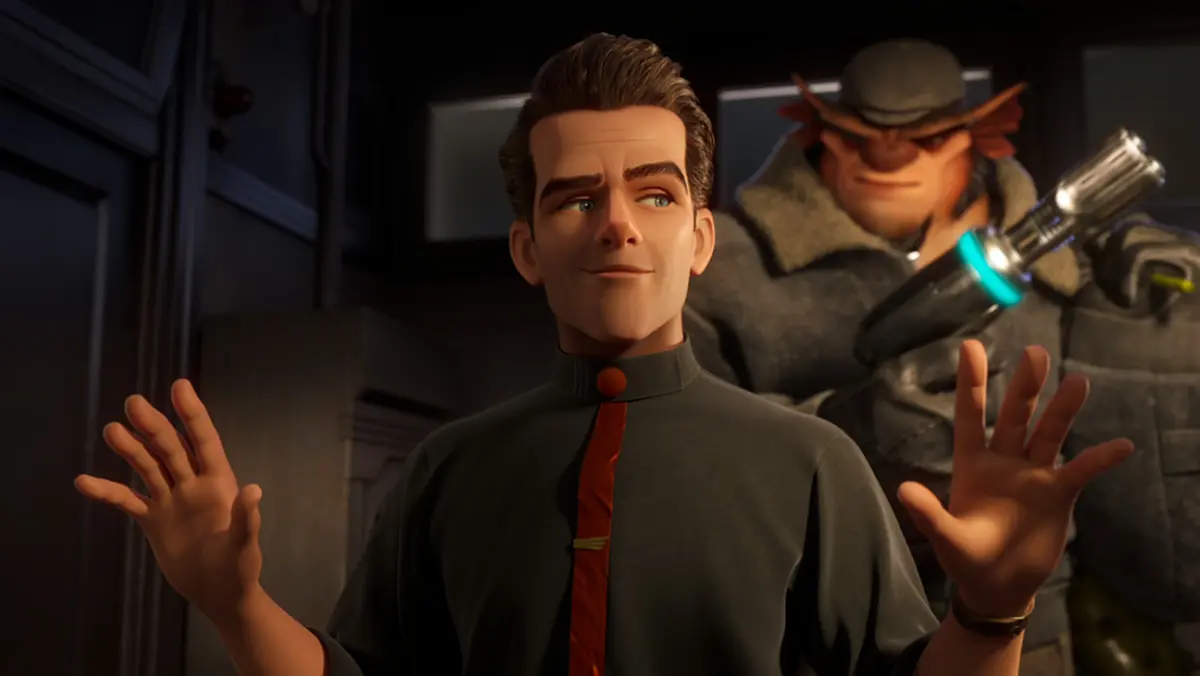
The release of the Skydance Animation feature Ray Gunn, debuting on Netflix on December 18, marks a significant milestone in the long-gestating career of director Brad Bird. While the film represents the realization of a project that has occupied Bird’s creative focus for decades—reportedly predating his breakthrough 1999 classic The Iron Giant—the final product arrives as a point of critical discussion regarding the intersection of high-concept retro-futurism and narrative substance. With a runtime of one hour and 59 minutes, the PG-rated film attempts to synthesize the aesthetic tropes of 1940s noir with a sprawling, alien-populated urban landscape known as Metropia.
The Production History and Development Timeline
The development of Ray Gunn serves as a case study in the protracted timelines often associated with high-budget animation. Bird, a veteran of Pixar Animation Studios whose filmography includes critical and commercial successes such as The Incredibles, Ratatouille, and Mission: Impossible – Ghost Protocol, began conceptualizing the project at the turn of the millennium. Over the intervening twenty-five years, the project underwent several iterations, shifting through various studios and technological shifts in computer-generated imagery (CGI).
By the time the project found a home at Skydance Animation, the landscape of animated features had shifted significantly toward streaming platforms. The collaboration between Bird and screenwriter Matthew Robbins was intended to modernize the neo-noir detective archetype within a genre-bending science fiction framework. Despite the long gestation period, industry observers have noted that the final narrative reflects a structure that feels disconnected from current trends in animated storytelling, leading to questions regarding the evolution of the script relative to its original inception.
Narrative Framework and Character Dynamics
The plot follows the protagonist, Ray Gunn, a private investigator voiced by Sam Rockwell. Positioned as an anomaly in the city of Metropia—a society defined by extreme segregation between human citizens and extraterrestrial "second-class" residents—Gunn is established as an ethical outlier. His primary partner is Eye-Ra, a spindly, one-eyed extraterrestrial voiced by Tom Waits, who provides the film’s central source of pragmatic cynicism.
The central conflict arises when Gunn is contracted by Vogel, the head of the powerful MegaMax studio (voiced by Alan Tudyk), to provide security for Venus Nova, a volatile musical star played by Scarlett Johansson. As Gunn tracks Nova’s husband, Dom (Bobby Cannavale), the narrative transitions into a series of tropes involving blackmail, systemic corruption, and gangland activity. Despite the attempt to weave complex themes—including xenophobia and the influence of corporate conglomerates—into a family-friendly format, the execution remains tethered to a linear, simplistic progression that some analysts argue fails to fully capitalize on the potential of its world-building.
Aesthetic and Technical Execution
Visually, Metropia is presented as a high-fidelity environment reminiscent of classic noir settings, integrated with the hovercraft and neon-lit architecture common in cyberpunk literature. The film utilizes a color palette that emphasizes gleaming surfaces and sterile urban design. However, industry reviews have pointed to a recurring issue of "textureless" visuals, noting that while characters like the alien mob boss Slugsy (voiced by Matt Berry) exhibit significant design detail, the primary protagonists often lack the visual specificity required to ground them within their environment.
Technically, the film’s kinetic sequences, such as aerial chases and urban combat, rely on standard high-energy animation techniques. A notable exception is a sequence involving a malfunctioning blaster that introduces elements of body horror. This moment, which deviates from the otherwise standard action choreography, has been highlighted as a rare instance of technical innovation within an otherwise conventional visual presentation. The musical score, composed by Michael Giacchino, works in tandem with original tracks written and produced by Kimbra to establish the film’s auditory identity, though the integration of these elements has received mixed feedback regarding their narrative cohesion.
Socio-Political Themes and Allegory
Ray Gunn explicitly addresses themes of institutionalized discrimination and corporate overreach. The setting of Metropia serves as a direct mirror for historical segregationist policies, most clearly evidenced in a sequence where the protagonist is denied medical assistance for his extraterrestrial partner at a human-only facility.
However, the film’s approach to these issues is largely categorized as surface-level. The rapid pace of the narrative often bypasses opportunities to explore the implications of these societal fractures, opting instead to prioritize the movement of the plot. Critics have observed that the film’s failure to dwell on the human cost of Metropia’s political climate undermines the gravity of the subjects it chooses to address. This trend—the inclusion of serious motifs without the corresponding narrative weight—has prompted a discussion about the balance between "family-friendly" accessibility and substantive thematic engagement.
Performance Analysis and Casting
The voice acting ensemble features several high-profile performers, including Sam Rockwell, Scarlett Johansson, and Tom Waits. Sam Rockwell’s portrayal of Gunn relies on a stoic, morally upright archetype that offers little in terms of character development beyond his initial status as a "disgraced cop." Scarlett Johansson’s Venus Nova serves as the catalyst for the second act, though the character’s development is frequently hampered by erratic shifts in personality that occur without clear motivation.
Tom Waits, as Eye-Ra, is widely considered the film’s most effective element. His performance provides a layer of weary, grounded humor that balances the otherwise polished, "slick" tone of the film. By serving as the voice of pragmatism, Eye-Ra offers a necessary perspective that challenges the protagonist’s rigid idealism, creating a dynamic that resonates more effectively than the film’s primary mystery.
Broader Implications for Skydance Animation
The release of Ray Gunn is a significant data point for Skydance Animation as it continues to compete with established players like Disney, DreamWorks, and Illumination. The studio has invested heavily in high-concept projects, aiming to carve out a niche that blends mature, classic storytelling with modern animation standards.
The reception of this film may influence the studio’s future development priorities. The "bland pastiche" label often applied to the film’s reception stems from a lack of emotional specificity—a hallmark of Bird’s previous works like The Incredibles. If a director of Bird’s stature, given decades of development time, produces a project that feels "underwhelming" or "first-draft" in quality, it raises broader questions about the constraints placed on creative projects within the current streaming ecosystem.
Furthermore, the predictability of the plot—specifically a "big reveal" that has been noted as being apparent to the audience long before the climax—suggests a failure in script economy. For a film that carries the weight of a legendary director’s long-term passion project, the inability to subvert tropes or provide a compelling narrative arc highlights a potential disconnect between the legacy of the creator and the demands of modern, discerning audiences.
Conclusion and Market Outlook
As Ray Gunn enters the Netflix catalog, its performance will be evaluated through two lenses: the internal metrics of the streamer and the long-term critical legacy of Brad Bird’s filmography. With a running time of two hours, it occupies a significant block of user attention time. Whether the film can overcome its narrative shortcomings through its star-studded cast and high-budget production design remains to be seen. As it stands, the film serves as a reminder that even projects with extensive development histories and experienced creative teams are not immune to the risks of becoming lost in the crowded, high-volume landscape of contemporary digital media.