The intersection of radical politics, avant-garde art, and 1960s counterculture is once again commanding critical attention as Mary Harron’s landmark 1996 biographical drama, I Shot Andy Warhol, returns to theaters in a pristine new 4K restoration. Long before Harron brought Bret Easton Ellis’s chilling corporate satiric creation Patrick Bateman to life in 2000’s American Psycho, she trained her directorial lens on another distinct American pathology: the turbulent, tragic trajectory of Valerie Solanas.
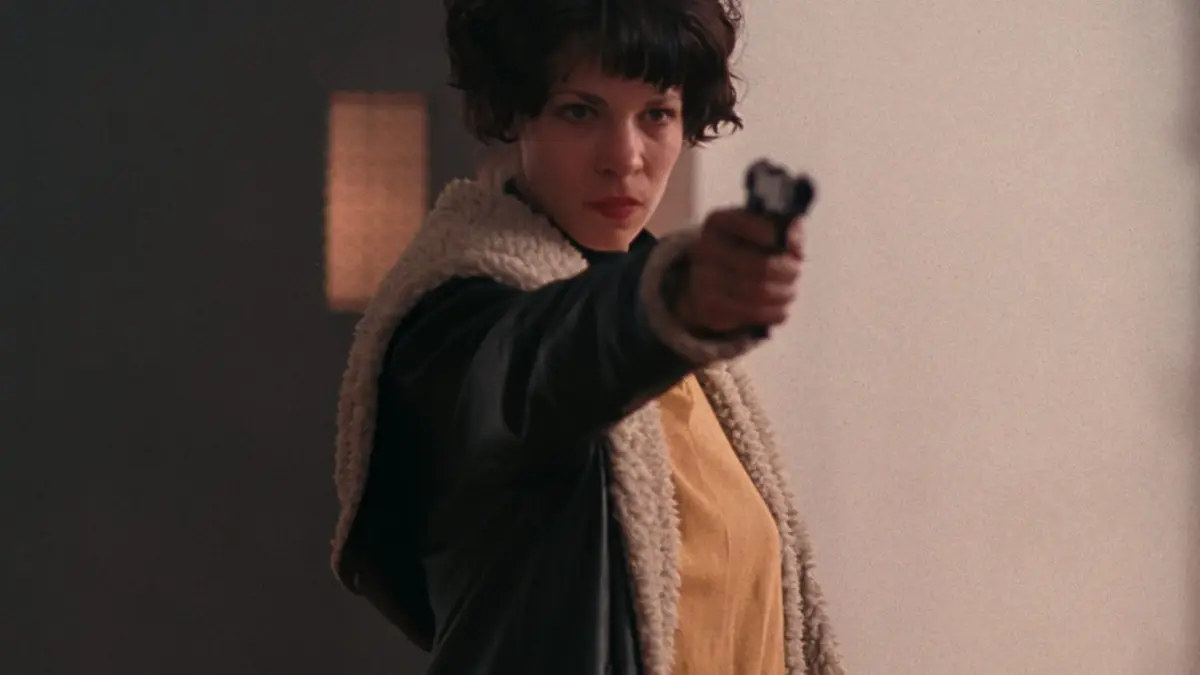
As independent cinema continues to reevaluate the seismic shifts of the 1990s filmmaking landscape, Harron’s debut feature stands out as a living historical document. The film chronicles Solanas—brilliantly brought to life by indie cinema icon Lili Taylor with a mixture of deadpan swagger and palpable vulnerability—as she navigates the fringes of New York’s downtown arts scene.hawking copies of her seminal and inflammatory 1967 SCUM Manifesto, struggling to stage her play Up Your Ass, and ultimately drifting into the complex, transactional orbit of Andy Warhol’s legendary Factory.
The new 4K restoration, supervised by cinematographer Ellen Kuras, offers contemporary audiences a chance to experience the visual texture of a bygone era with unprecedented clarity. Speaking on the meticulous restoration process, Harron notes how the updated presentation highlights Kuras’s sophisticated naturalistic lighting. The Factory is rendered not merely as a flattened dream world, but as a gritty, tangible environment utilizing colored lights and deep shadows that capture both the allure and the decay of the period. This technical revitalization bridges the gap between historical reconstruction and visceral, immediate storytelling, proving that the film’s thematic resonance remains as potent as it was nearly three decades ago.
Chronology and Historical Context of the 1967 Shooting
To fully grasp the cultural weight of Harron’s narrative, one must examine the timeline of the historical events that inspired it. In the mid-1960s, New York City served as the epicenter of a cultural revolution, where Pop Art, underground cinema, and radical political theory collided. Andy Warhol’s Factory, located at 231 East 47th Street, functioned as a magnetic sanctuary for society’s outsiders, including drag queens, transgender icons, poets, and musicians.
Valerie Solanas entered this ecosystem as an articulate, highly educated, yet deeply marginalized figure. Having studied psychology and biology, Solanas formulated a radical essentialist philosophy that culminated in the self-published SCUM (Society for Cutting Up Men) Manifesto. The document argued for the systematic elimination of men and the overthrow of societal structures built on female subjugation.
The tension between Solanas and the male-dominated artistic establishment reached a tragic climax on June 3, 1968. Frustrated by Warhol’s alleged dismissal of her play script and her broader economic and social alienation, Solanas entered the Factory and shot Warhol three times, nearly ending his life. The attack fundamentally altered the security and open-door ethos of the Factory, marking a dark turning point in 1960s counterculture and sealing Solanas’s fate in the annals of criminal and cultural history.
Production History and the Independent Film Boom of the 1990s
The journey of bringing I Shot Andy Warhol to the screen mirrors the gritty tenacity of its protagonist. Developing the project took Harron approximately five years, navigating a landscape where financing films with explicitly feminist, non-conforming themes was notoriously difficult. Operating during a period defined by Susan Faludi’s documented cultural "backlash" against feminism, Harron initially secured backing through a modest grant from a BBC producer intrigued by radical politics.
Upon relocating her efforts to the United States, Harron aligned with the burgeoning New York independent film movement, collaborating with visionary producers Christine Vachon and Tom Kalin. This partnership anchored the production within the aesthetic and logistical framework of 1990s indie cinema. The resulting film rejected traditional, sanitized biopic tropes. Instead, Harron and cinematographer Ellen Kuras drew inspiration from photographic archives—including Diane Arbus’s stark depictions of negative space and Magnum photojournalism—to evoke the poetic realism found in contemporary gritty dramas like Larry Clark’s Kids (1995).
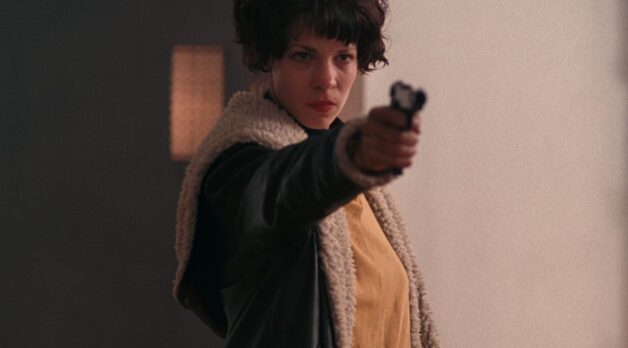
The supporting cast, featuring Martha Plimpton, Michael Imperioli, and Stephen Dorff as Candy Darling, anchored the film in authenticity. When original plans to utilize Velvet Underground recordings fell through due to permissions denials from Lou Reed, composer John Cale stepped in to craft an original score. This creative pivot ensured the film retained an unmistakable sonic identity, marrying the industrial pulse of New York with a melancholic undertone.
Evolving Interpretations of the SCUM Manifesto
In the decades since its initial publication and cinematic adaptation, the cultural standing of the SCUM Manifesto has undergone a remarkable evolution. In the late 1980s and early 1990s, when Harron first encountered the text in a left-wing bookstore while working as a researcher on a Warhol documentary, the manifesto was largely viewed by mainstream society as a bizarre outlier—a piece of dark comedy or the raving of a lone extremist.
However, subsequent generations of scholars, radical feminists, and cultural critics have re-examined the text, analyzing its sophisticated use of irony, its stylistic brilliance, and its critique of patriarchal power structures. Harron herself notes the striking literary quality of Solanas’s prose, comparing its biting irony and formal elegance to the satirical works of Evelyn Waugh and Jonathan Swift.
The text’s legacy remains complex and contested. While Solanas’s biological essentialism—rooted in chromosomal determinism—is fundamentally at odds with modern understandings of gender fluidity and transgender identity, contemporary readers and theorists continue to mine the manifesto for insights into institutional power, systemic oppression, and media control. Harron acknowledges this shift, observing that modern audiences and Gen Z culture possess the digital and ideological frameworks to find their own meanings within historical texts, allowing figures like Solanas to find audiences and voices that were entirely unavailable to them in the 1960s.
Critical Reception and Broader Implications
Upon its initial release in 1996, I Shot Andy Warhol polarized critics who expected a conventional narrative clearly delineating heroes from villains. Harron deliberately avoided moralizing, choosing instead to present a nuanced, complex portrait of a dysfunctional symbiotic relationship between an elusive, passive artist and an intensely desperate outsider. This refusal to assign simple blame drew criticism at the time from viewers seeking a tidy moral framework, but it is precisely this ambiguity that has allowed the film to endure.
Thematically, the film explores the gendered economies of the avant-garde arts scene—paralleling the ruthless mechanisms of traditional Hollywood studios where emerging talents, particularly women and vulnerable individuals, were elevated, exploited, and ultimately discarded once they became inconvenient. Warhol’s complex legacy as both a pioneer of mainstreaming gay culture and a detached observer who presided over a transient coterie of dependents is laid bare without cynicism or hagiography.
Implications for Contemporary Culture
As the 4K restoration hits theaters, the re-release of I Shot Andy Warhol arrives at a moment of intense cultural re-examination regarding feminist rage, political extremism, and the permissible boundaries of radical discourse. In an era marked by rapid ideological shifts and aggressive cultural pushback, the film serves as a mirror to modern anxieties surrounding loneliness, alienation, and the desperate quest for visibility in a media-saturated society.
By refusing to reduce Valerie Solanas to a simple cartoon villain or a sanitized martyr, Harron’s work challenges audiences to confront the uncomfortable realities of artistic exploitation and ideological radicalism. The longevity of I Shot Andy Warhol—underscored by its transition from a niche 1990s indie release to a recognized classic of independent cinema—demonstrates that rigorous, uncompromising storytelling about society’s most difficult outcasts will always retain its vital, unsettling power.