The cinematic landscape of found-footage horror has continually expanded across global settings, ranging from rural backwoods to subterranean European catacombs. While the subgenre remains a staple of low-budget independent filmmaking, the quality of its execution fluctuates significantly. When handled with precision and minimalist restraint, found-footage features—such as the first and third installments of the Paranormal Activity franchise—can yield high levels of sustained psychological dread. Conversely, inferior entries frequently rely on repetitive tropes, low-cost scare tactics, and contrived narrative frameworks.
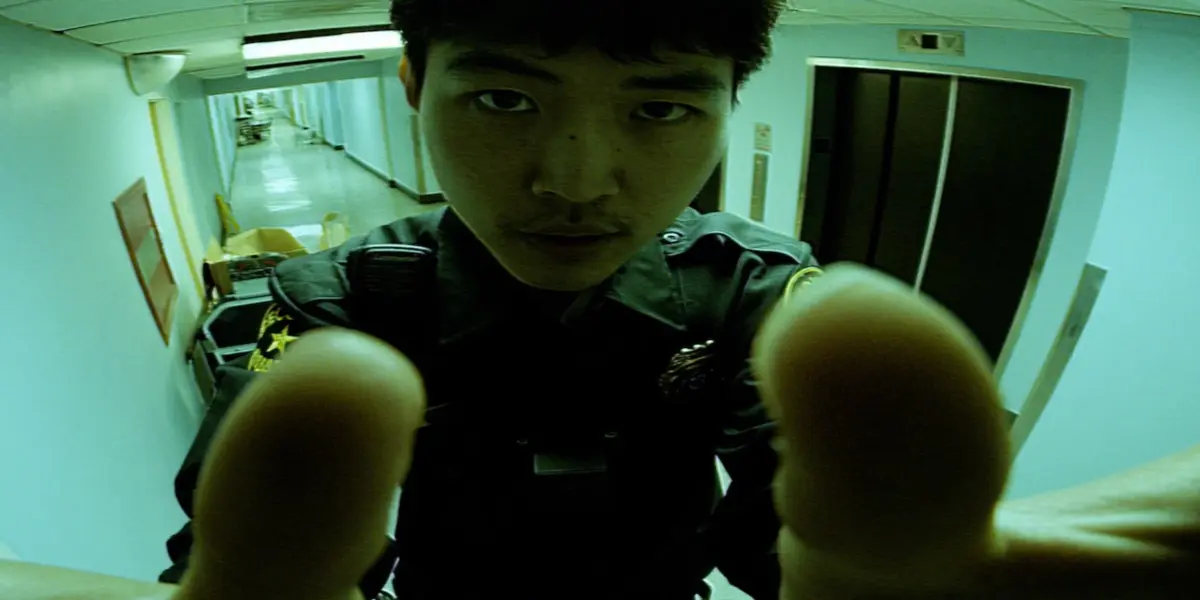
Director Nicholas Pineda and screenwriter Katy Krauland enter this cinematic space with their 87-minute feature debut, Infirmary. Centered on the mysterious disappearance of a security guard during his inaugural night shift at a condemned Los Angeles psychiatric hospital in 2023, the film utilizes a composite framework of high-definition security camera feeds and tactical body-worn video. While the production successfully establishes an unsettling atmosphere through its spatial design and lingering cinematography, it ultimately struggles with conventional Hollywood sound design choices that undermine its faux-documentary aspirations.
Main Facts and Narrative Premise
Infirmary unfolds within a sprawling, soon-to-be-demolished medical facility in Los Angeles. The narrative follows a minimalist staffing structure consisting of only three primary characters: Ms. Downey (played by Danielle Kennedy), the administrative supervisor; Lester (played by Mark Anthony Williams), a cynical veteran security guard; and Edward (played by Paul Syre), a newly hired watchman recently discharged from military service due to a physical injury.
The film commences at sunset as Edward arrives for his initial evening shift. Following a brief and unusual administrative review of incomplete onboarding paperwork with Ms. Downey, Edward is paired with Lester for a facility orientation. Lester exhibits overt hostility toward his new colleague, guiding him through desolate corridors, abandoned patient wings, the building chapel, and the hospital morgue while deliberately avoiding designated areas he claims possess negative energy.
Chronology of Production and Framing Device
The structural framing of Infirmary adopts an investigative evidentiary format. Opening title cards display a stylized Federal Bureau of Investigation notice, framing the ensuing visual material as authentic, uncensored evidence recovered from an ongoing death investigation following the discovery of two deceased individuals on the hospital grounds.
The narrative chronology spans a single evening shift that quickly deteriorates into a series of unexplainable anomalies. The chronology of the footage relies on two distinct capture mechanisms:
- Static Security Infrastructure: High-resolution closed-circuit television (CCTV) cameras positioned throughout the facility, capturing full-color video alongside synchronized audio feeds.
- Body-Worn Cameras: Chest-mounted recording units worn by both Lester and Edward, providing a mobile, first-person perspective of their traversal through the darkened wards.
As the hours progress, both guards encounter anomalies that challenge rational explanation, culminating in the eventual vanishing of Edward and the preservation of the digital files currently under review by investigators.
Supporting Data and Production Analysis
The technical execution of Infirmary presents a distinct dichotomy between visual realism and auditory artificiality. From a cinematic standpoint, Pineda and Krauland leverage the inherent claustrophobia of architectural decay. The production design utilizes a pervasive, sickly yellow-green color grading that evokes contemporary aesthetic movements in digital horror, reminiscent of internet-origin spatial explorations such as the Backrooms. Furthermore, the introduction of static medical mannequins—initially illuminated by the amber and crimson hues of the chapel’s stained-glass windows—serves as a recurring visual motif, unsettling viewers as the inanimate objects persistently reappear in restricted zones.
However, the film encounters significant friction regarding its adherence to the found-footage medium. Despite framing the narrative as raw, unedited investigative evidence, the soundscape heavily incorporates non-diegetic droning compositions and conventional Hollywood auditory stings during jump scares. This editorial decision directly contradicts the foundational premise of documentary authenticity. Industry analysts note that relying on artificial musical scores often signals a lack of confidence in the inherent visual dread established by the set pieces, diverging from minimalist precedents like The Blair Witch Project, which derived tension strictly from environmental sound design.
Character Dynamics and Performances
The interpersonal friction between the security personnel serves as the primary driver of dramatic tension during the film’s first and second acts. Mark Anthony Williams delivers a committed portrayal of Lester, a hardened employee whose abrasive communication style and deep-seated cynicism create an intensely hostile working environment. Williams anchors the narrative’s grounding realism through his unyielding antagonism toward Edward.
Conversely, Paul Syre’s performance as Edward occupies a more passive narrative space. While Syre successfully integrates subtle physical attributes reflecting his character’s military background, critics have observed that his portrayal lacks the visceral panic and heightened psychological intensity required to fully elevate the film’s climax. Danielle Kennedy makes limited yet pivotal appearances as Ms. Downey, whose administrative oversight and obscure administrative protocols cast an overarching shadow of institutional negligence over Edward’s employment.
Broader Impact and Industry Implications
The release of Infirmary contributes to an ongoing discourse surrounding the evolution of the found-footage subgenre within modern independent cinema. As digital cameras and body-worn recording devices become ubiquitous in both public safety and everyday life, filmmakers increasingly adopt these perspectives to lend modern realism to supernatural narratives.
Nevertheless, the critical reception of Infirmary highlights a recurring artistic hurdle: the tension between commercial audience expectations and strict adherence to realism. While mainstream distributors often mandate atmospheric musical scores and polished sound mixing to maintain broad audience engagement, these additions frequently alienate purists of the mockumentary format.
Infirmary ultimately stands as a technically competent yet structurally divided entry in contemporary horror. By balancing atmospheric spatial dread and effective set design against conventional Hollywood audio tropes, the film mirrors the complexities and inconsistencies often found in independent genre filmmaking. Its legacy within the broader cinematic landscape will likely rest on its distinct visual contributions to architectural horror and the ongoing debate regarding authenticity in found-footage storytelling.