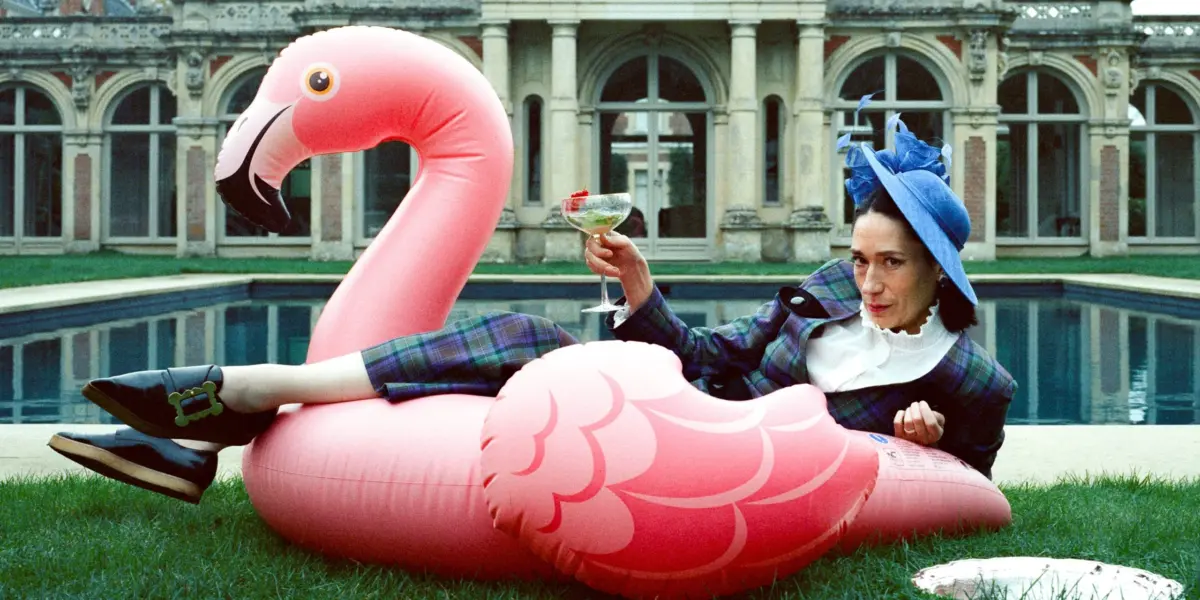
The contemporary cinematic landscape frequently tests the boundaries of mockumentary storytelling, yet few recent independent features tackle the intersection of existential dread, digital-era validation, and aristocratic isolation with the surreal precision of Lady. Directed and written by Samuel Abrahams alongside co-writer Miranda Campbell Bowling, the 95-minute feature explores the fragile mechanics of self-presentation through the lens of a desperate British aristocrat. Anchored by a commanding lead performance from Siân Clifford—best known for her critically acclaimed work in Fleabag—the film balances biting satire with genuine pathos, ultimately delivering a poignant statement on loneliness in the twenty-first century.
Principal photography for the indie production took place at Ravenhyde Hall, a sprawling country estate that serves as both a primary setting and an active character within the narrative. The production schedule spanned several weeks, utilizing the location’s historic architecture to reinforce the thematic claustrophobia experienced by the protagonist. Backed by a compact yet formidable ensemble cast featuring Laurie Kynaston, Juliet Cowan, and Olisa Odele, the production blends improvisational energy with sharp, tightly scripted comedic timing. The film officially enters the festival and distribution circuits following extensive post-production refinement, positioning itself as a notable entry in the modern British comedy-drama market.
Narrative Framework and Character Dynamics
The film opens with a striking visual sequence: Lady Isabella, portrayed by Clifford, sprawled face-down on a grand staircase, clad in a vibrant hot-pink ensemble offset by lime-green gloves and socks. The imagery immediately establishes the eccentric tone of the narrative. Isabella has engaged a struggling, opportunistic BAFTA-nominated documentary director named Sam, played by Laurie Kynaston, to chronicle her daily existence. Confident that major streaming platforms like Netflix are actively pursuing her life story, Isabella orchestrates her days as a continuous performance, styling herself as an activist, philanthropist, and icon of high society.
However, the documentary crew quickly discovers significant discrepancies between Isabella’s grand assertions and reality. When her long-suffering maid, Becky—portrayed by Juliet Cowan—accidentally wanders into a frame, Isabella reprimands her for disrupting the curated aesthetic. The central conflict intensifies when Sam’s agent confirms that streaming executives have no knowledge of the project, exposing the enterprise as a complete fabrication. Refusing to accept reality, Isabella pleads with the crew to continue filming, uttering a line that underscores her fundamental dependency on external validation: "If you leave, who’s going to film me?"
Chronology of Production and Escalation
The progression of the narrative follows a strict timeline of escalating surrealism and psychological unravelling over the course of the fictional documentary shoot:
- Arrival and Setup: The documentary crew arrives at Ravenhyde Hall, greeted by an ominous raven at the gates—a visual motif that signals the gothic undertones of the estate. Isabella initiates her guided tour, immediately establishing her self-aggrandizing persona.
- The Rehearsal of Stately Stars: Isabella commits her creative energies to preparing for "Stately Stars," an annual talent show for underprivileged children held on the grounds, which she insists on entering as a competitor.
- The Revelation: Sam receives a phone call from his agent revealing the non-existence of the Netflix deal, prompting a crisis regarding journalistic integrity and project continuation.
- The Metamorphosis: As production threatens to halt entirely, Isabella undergoes a literal physical transformation, beginning to fade and lose opacity as her hands vanish from view.
- Resolution and Catharsis: Through the shared trauma of the documentary process and moments of genuine vulnerability under the influence, Sam and Isabella forge an unconventional bond, culminating in a complete emotional arc for the protagonist.
Technical Craft and Stylistic Choices
Director Samuel Abrahams employs a volatile handheld camera style to reflect the erratic psychological state of the protagonist, darting through the opulent rooms of Ravenhyde Hall at a breathless pace. The production design functions as an extension of Isabella’s psyche, utilizing grandiose furnishings and historic artifacts as a form of visual camouflage. By piling on excessive aesthetic choices, the character avoids the necessity of genuine introspection.
Furthermore, the editing incorporates vintage film stocks to delineate chapter breaks, lending the mockumentary a distinct cinematic texture. These archival-style transitions elevate the material beyond standard television comedy formats, aligning the project with the visual traditions of art-house cinema. The inclusion of silhouette framing, particularly a memorable shot of Isabella frozen ghost-like against a windowpane, emphasizes the pervasive themes of isolation and spectral invisibility.
Cast and Crew Contributions
In addition to Clifford’s layered performance—which captures both the manic energy of a woman on the verge of a breakdown and the profound sorrow of a five-year reclusive existence—the supporting cast delivers robust grounding. Laurie Kynaston provides an essential anchor as Sam, utilizing direct-to-camera glances to articulate audience skepticism while revealing his own personal anxieties. The dynamic between Sam and Isabella evolves from professional exasperation to a complex, emotionally fraught symbiosis.
Juliet Cowan brings grounded realism to the role of Becky, countering the aristocratic absurdity with working-class pragmatism. Olisa Odele rounds out the ensemble, contributing to the satirical commentary on modern media consumption and the commodification of personal identity.
Broader Impact and Industry Implications
Lady arrives at a time when the boundaries between authentic documentary filmmaking and constructed reality television have grown increasingly porous. By examining the psychological toll of continuous self-surveillance, the film offers timely commentary on social media culture and the modern compulsion to curate an idealized public persona at the expense of internal well-being.
While the film’s eccentric tone and occasional tonal shifts may present challenges for mainstream audiences seeking conventional narrative structures, its distinct voice marks a significant achievement in independent British cinema. By fusing absurdist humor with genuine tenderness, Abrahams and Campbell Bowling deliver a feature that resonates long after the final cut, establishing Siân Clifford’s continued versatility in complex, character-driven roles.