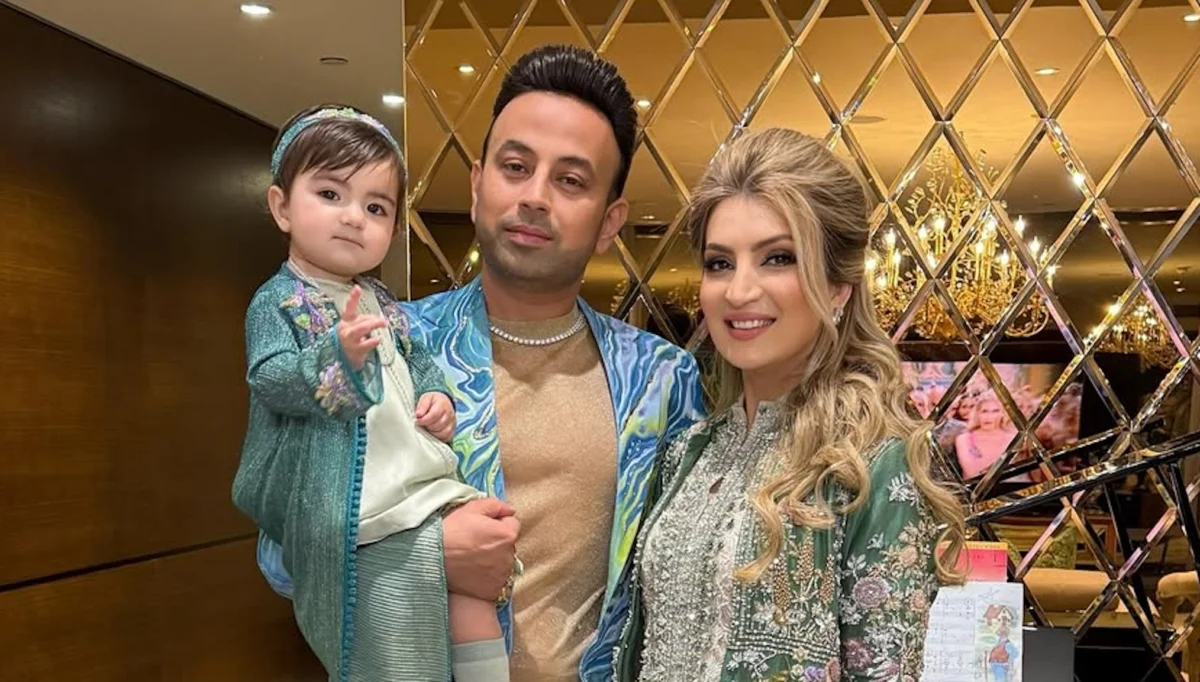
The debut of the Netflix reality series Desi Bling has cast a global spotlight on the extravagant lifestyles of Dubai’s South Asian elite, centering much of its narrative on the personal and professional lives of billionaire Satish Sanpal and his wife, Tabinda. As the streaming giant continues to expand its portfolio of "wealth-porn" reality television—following the success of franchises like Bling Empire and The Fabulous Lives of Bollywood Wives—this latest iteration explores the intersection of traditional cultural values and the hyper-modern luxury of the United Arab Emirates. Sanpal, the chairman of ANAX Holding, represents a specific demographic of ultra-high-net-worth individuals (UHNWIs) who have leveraged Dubai’s business-friendly environment to build vast conglomerates while maintaining distinct cultural practices that fascinate and occasionally polarize international audiences.
The Sanpal Profile: Business Foundations and Domestic Traditions
Satish Sanpal’s presence on Desi Bling is characterized by a blend of corporate stoicism and domestic opulence. As the founder and chairman of ANAX Holding, Sanpal oversees a diversified portfolio that includes real estate development, hospitality, and technology investments. His business philosophy, often cited in regional trade publications, emphasizes the "gold standard" of service—a metaphor that takes a literal form in his personal life.
The series highlights a recurring annual tradition: Sanpal gifts his wife, Tabinda, three kilograms of gold. At current market rates, this gesture represents an investment of approximately $230,000 to $250,000 USD per year, depending on the spot price of the precious metal. While such a gift may appear purely ostentatious to Western viewers, it taps into a deep-seated South Asian cultural affinity for gold as a symbol of security, prosperity, and "Stree Dhan"—wealth traditionally owned by a woman within a marriage.
In the opening segments of the series, the couple is depicted in their residence within the Burj Khalifa, the world’s tallest building. The setting serves as a powerful visual shorthand for their status. A specific scene involving Tabinda massaging Satish’s feet has generated significant social media discourse. Tabinda explains the practice through a lens of both humor and religious tradition, noting that as a Hindu, Satish believes the ritual invites the blessing of Lakshmi, the goddess of wealth, into the household. This juxtaposition of a billionaire lifestyle with ancient domestic rituals provides the primary thematic tension of their storyline.
Chronology of Wealth: From Investment Strategy to Reality Stardom
The trajectory of Satish Sanpal’s public profile has moved from the boardroom to the living room over the last decade. Understanding his role in Desi Bling requires a look at the timeline of his business evolution and the broader economic context of Dubai.
- Early 2010s: Market Entry: Sanpal established his footprint in the UAE’s competitive investment landscape. His initial focus was on the hospitality and nightlife sectors, capitalizing on Dubai’s emergence as a global tourism hub.
- 2018–2021: Diversification and ANAX Holding: The formalization of ANAX Holding allowed Sanpal to consolidate various business interests. During this period, the firm expanded into ANAX Developments, focusing on luxury residential projects that catered to the influx of foreign investors seeking "Golden Visas" in the UAE.
- 2022–2023: Global Recognition: Sanpal received various accolades, including recognition at the Burj CEO Awards and other regional business summits. His reputation as a "disruptor" in the luxury real estate market set the stage for media interest.
- 2024: The Premiere of Desi Bling: Netflix announced the series as part of its strategy to capture the "Desi" (South Asian) diaspora market. The Sanpals were positioned as the "anchor couple" of the show, representing the pinnacle of the "Dubai Dream."
Supporting Data: The Economics of the Dubai Elite
The lifestyle portrayed by the Sanpals is supported by a robust economic framework within the UAE. According to the 2023 Henley Private Wealth Migration Report, the UAE remains the world’s leading wealth magnet, with an expected net inflow of 4,500 millionaires in a single year. This environment provides the infrastructure for the "Bling" lifestyle depicted on screen.
- Real Estate Value: Living in the Burj Khalifa carries a prestige that translates to significant capital. Residential units in the tower can range from $1.5 million for a modest apartment to over $20 million for bespoke penthouses.
- The Gold Market: Dubai is known as the "City of Gold." The UAE accounts for approximately 25% of the global gold trade. Sanpal’s annual gift of 3kg of gold is not merely a purchase but a participation in a local economy where gold is a primary commodity and a standard of value.
- The South Asian Influence: Indians make up the largest expatriate group in the UAE, comprising roughly 35% of the population. The Sanpals represent the "1% of the 1%" within this demographic, showcasing how Indian entrepreneurial success has become a cornerstone of Dubai’s private sector.
Official Responses and Public Reception
While the Sanpals have largely embraced their roles as public figures, the portrayal of their domestic life has elicited a range of responses from cultural commentators and viewers.
Representatives for ANAX Holding have maintained that Satish Sanpal’s participation in the show is an extension of his "transparent and bold leadership style." In various press releases, the company has emphasized that while the show focuses on lifestyle, the underlying message is one of aspiration and the rewards of hard work within the UAE’s meritocratic system.
Tabinda Sanpal has addressed the "foot massage" controversy directly in follow-up interviews, asserting her agency within the relationship. She has characterized the ritual as a "love language" and a respect for her husband’s cultural beliefs rather than an act of subservience. Critics, however, have argued that such scenes may reinforce patriarchal stereotypes, even if presented under the guise of religious tradition.
Sociologists studying reality television have noted that Desi Bling functions as a form of "soft power" for both the individuals involved and the city of Dubai. By showcasing high-achieving South Asians, the show counters older Western media tropes of the region, replacing them with images of extreme modern success.
Broader Implications: The "Bling" Effect on Global Media
The success of Satish Sanpal on Desi Bling signals a shift in how global streaming platforms approach regional content. Netflix’s investment in the series highlights three major trends in the media landscape:
1. The Globalization of Aspiration
Viewers in New York, London, and Mumbai are increasingly consuming the same "luxury" narratives. The Sanpals’ lifestyle serves as a universal benchmark for success that transcends borders, even if the specific cultural markers (like the gold or the foot massage) are localized.
2. The Commercialization of Tradition
Desi Bling demonstrates how ancient traditions are repackaged for a digital-first audience. The ritualization of wealth—treating it as a spiritual blessing—adds a layer of "depth" to what might otherwise be seen as simple materialism. This creates a unique brand of "spiritual capitalism" that is particularly prevalent in modern South Asian wealth circles.
3. Dubai as a Media Set
The UAE government has actively encouraged film and television production through the Dubai Film and TV Commission. Shows like Desi Bling act as extended advertisements for the city’s infrastructure, safety, and luxury offerings. For a businessman like Satish Sanpal, whose real estate ventures depend on the "brand" of Dubai, the show provides an unparalleled marketing platform.
Conclusion: Reality vs. Corporate Reality
While Desi Bling focuses on the three kilograms of gold and the views from the Burj Khalifa, the reality of Satish Sanpal’s influence lies in his corporate footprint. ANAX Holding continues to announce new developments, including high-tech residential towers and hospitality ventures that aim to redefine the Dubai skyline.
The Sanpals have successfully navigated the transition from private wealth to public celebrity, using Netflix as a medium to showcase a lifestyle that is simultaneously ultra-modern and deeply traditional. Whether the audience views their lifestyle with envy or skepticism, the data suggests that the "Bling" phenomenon is more than just entertainment—it is a reflection of a significant shift in global wealth distribution and the rising cultural capital of the South Asian diaspora in the Middle East. As the series continues its run, the Sanpals remain the definitive faces of this new era of "Desi" excellence, where the weight of one’s gold is matched only by the height of one’s ambitions.