Narrative Overview and Thematic Core
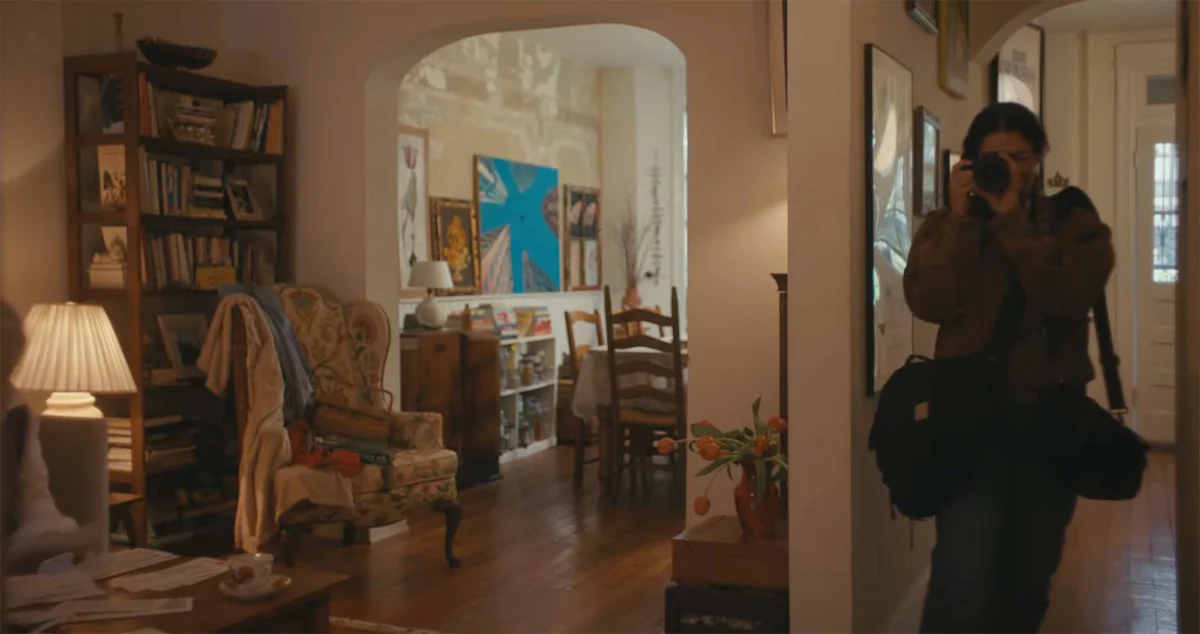
The Scout centers on Sofia’s daily routine, which involves traversing the diverse neighborhoods of New York City to photograph apartments, storefronts, and alleyways that might serve as backdrops for a fictional narrative. This premise allows González-Nasser to explore the "voyeuristic" nature of location scouting—a profession that requires an individual to step into the intimate, domestic spheres of strangers, often under the duress of strict deadlines and the whims of demanding producers.
Sofia’s journey is framed not just as a professional obligation but as a search for identity. As she documents the "cozy apartments and eclectic shops" of others, she is forced to confront her own lack of permanence and the disconnect between her personal aspirations and her professional reality. The film’s official synopsis highlights a specific day where these routine encounters shift from professional curiosity to personal vulnerability, eventually leading to a transformative moment that challenges Sofia’s perspective on her career and her city.
Production Background and Directorial Vision
Paula González-Nasser brings a unique level of verisimilitude to the project, drawing directly from her own professional history as a location scout and manager in the New York film industry. Before moving into the director’s chair, González-Nasser built a career identifying the visual textures of the city for other filmmakers. This "below-the-line" perspective is rare in feature cinema, which often focuses on the glamorized roles of actors or directors rather than the logistical laborers who make production possible.

The film was produced by Ryan Martin Brown and Matthew Romanski alongside González-Nasser. The production team aimed to capture New York City not as a postcard, but as a living, breathing entity composed of private interiors that the general public rarely sees. By utilizing actual locations that reflect the grit and charm of the city’s various boroughs, the film functions as both a narrative piece and a visual archive of New York’s contemporary architectural and social landscape.
Chronology of Development and Release
The trajectory of The Scout from concept to its 2026 theatrical release reflects the typical but rigorous path of high-quality independent cinema.
- 2024: Principal photography took place across various New York City locations, utilizing a lean crew to maintain the "indie" aesthetic and flexibility required for shooting in high-traffic urban areas.
- June 2025: The film had its world premiere at the Tribeca Film Festival. Tribeca, known for its focus on New York-centric storytelling, provided an ideal platform for a film so deeply rooted in the city’s industry.
- Late 2025 – Mid-2026: Following its debut, the film toured several regional and international film festivals, garnering interest from boutique distributors.
- July 2026: Greenwich Entertainment acquired the distribution rights and released the first official trailer and poster, signaling the start of the marketing campaign.
- September 25, 2026: The film is scheduled to open at the Film Forum in New York City. The choice of Film Forum is significant, as the venue is a staple for independent and arthouse cinema in Manhattan.
- October 2, 2026: The film expands to the West Coast, opening at the Alamo Drafthouse in Downtown Los Angeles (DTLA), targeting the industry-heavy audience of Southern California.
The Cast and Supporting Performances
Mimi Davila leads the cast as Sofia. Davila’s performance has been noted for its restraint, capturing the quiet observation necessary for a character whose job is to look rather than be seen. Joining her is a diverse ensemble that reflects the eclectic nature of New York City.
Notably, the film features Rutanya Alda, a veteran actress with a career spanning decades, including roles in The Deer Hunter and Mommie Dearest. Her inclusion provides a bridge between the "New Hollywood" era of the 1970s and the modern indie scene. The supporting cast also includes Max Rosen, Ikechukwu Ufomadu, Sarah Herrman, Alex Goldberg, Peter Mills Weiss, and Jackson Devereux. Many of these actors are fixtures in the New York theater and independent film communities, lending the project an air of localized authenticity.

The Economic and Cultural Context of Location Scouting in NYC
To understand the stakes of The Scout, one must consider the massive scale of the film and television industry in New York City. According to data from the Mayor’s Office of Media and Entertainment (MOME), the film and television industry in NYC supports approximately 185,000 jobs and generates over $82 billion in total economic output.
Location scouts are the "front line" of this industry. They are responsible for negotiating with property owners, navigating the complex permitting processes of the city, and ensuring that the creative vision of the director aligns with the physical realities of the site. The Scout highlights the friction inherent in this role: the scout must be a diplomat, a photographer, and a psychologist all at once. The film arrives at a time when the "gig economy" and the struggles of the "creative class" are at the forefront of social discourse, making Sofia’s struggle to find her own "place" particularly resonant.
Official Responses and Industry Reception
Early reactions from the festival circuit have praised González-Nasser’s "contemplative" approach. Critics have noted that while the film deals with the film industry, it avoids the "inside baseball" tropes that often alienate general audiences. Instead, it focuses on the universal feeling of being an outsider looking in.
Greenwich Entertainment, the distributor, has a history of championing character-driven narratives and documentaries. Their decision to pick up The Scout suggests a confidence in the film’s ability to find an audience among urban dwellers and those interested in the "process" behind the art. In a statement regarding the acquisition, the distribution team emphasized the film’s "authentic voice" and its "poetic portrayal of the costs of being a young creative in an increasingly expensive and disconnected world."

Broader Implications for Independent Cinema
The release of The Scout in 2026 serves as a bellwether for the state of independent film distribution. In an era dominated by streaming platforms, a dedicated theatrical run at venues like Film Forum and Alamo Drafthouse indicates a commitment to the "cinema-going experience" for smaller, intimate stories.
Furthermore, the film highlights a growing trend of "industry-adjacent" storytelling. As the barriers to entry for filmmaking lower, more professionals from the technical side of the industry—editors, scouts, and assistant directors—are finding the means to tell their own stories. This shift brings a grounded, procedural realism to the screen that differs significantly from the more stylized interpretations of the industry often produced by major studios.
Analytical Conclusion: The Poetry of the Mundane
The Scout is positioned as more than just a "movie about movies." It is a study of the spaces we inhabit and the invisible labor that goes into the media we consume. By focusing on a location scout, González-Nasser forces the audience to look at the background of the frame—the wallpaper, the lighting of a grocery store, the specific curve of a brownstone stoop—and recognize the human effort required to select those details.
As the film prepares for its September debut, it stands as a testament to the endurance of the New York indie spirit. It explores the paradox of a city where millions of people live in close proximity, yet individuals like Sofia can spend their entire day entering the homes of others while remaining profoundly alone. For audiences, The Scout offers a chance to see the city through the eyes of someone whose job it is to see everything, providing a rare glimpse into the private worlds that exist behind the closed doors of the Five Boroughs.