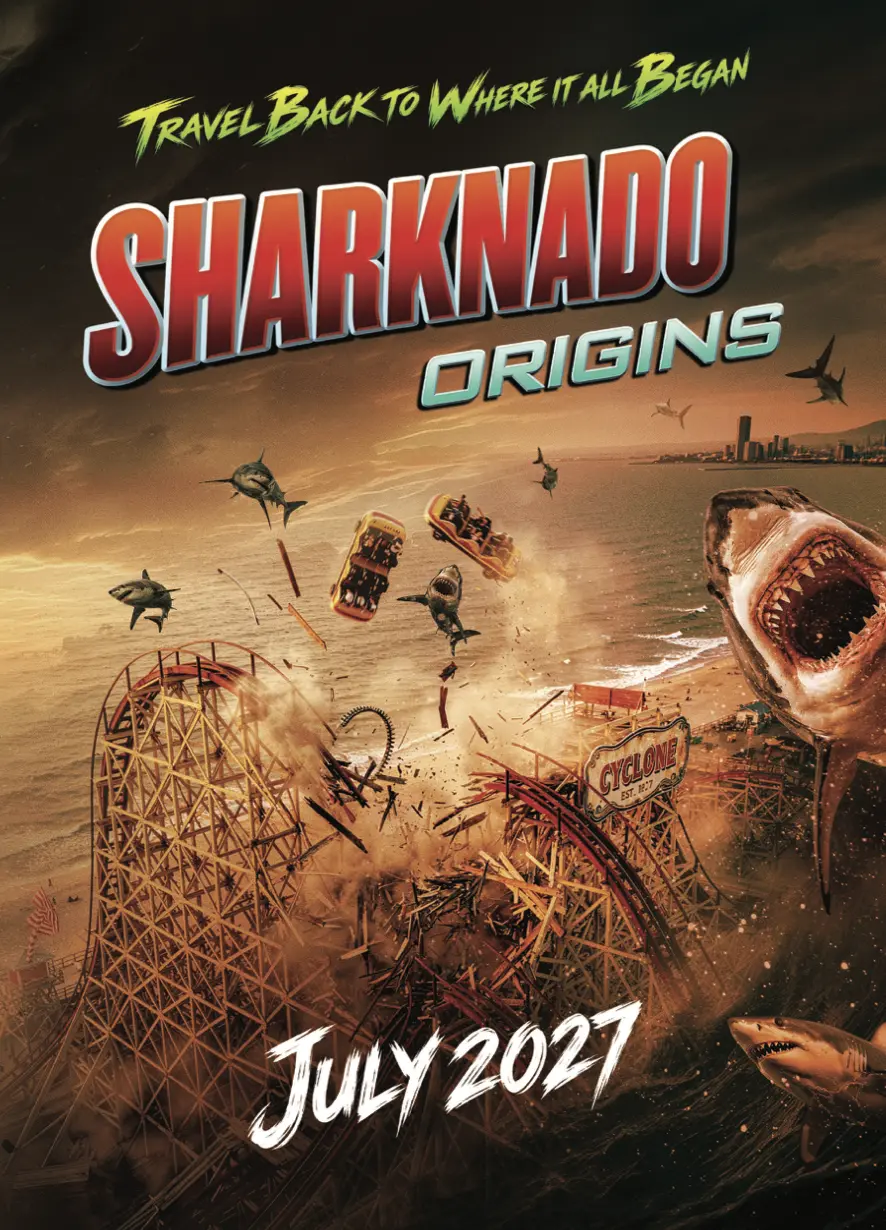
The Asylum, the production house synonymous with high-concept, low-budget genre cinema, has officially unveiled the promotional materials for its latest entry in the long-running disaster-comedy franchise, Sharknado Origins. Revealed at the American Film Market (AFM), the new teaser artwork depicts a chaotic scene in which man-eating sharks demolish the iconic wooden roller coaster at Coney Island, hurling amusement park vehicles toward the beach. This latest installment, which serves as a narrative prequel to the original 2013 film, is scheduled for a wide release in July 2027.
A Return to the Franchise Roots
The project, which was first announced in late 2025, sees the return of director Anthony C. Ferrante, the creative force who helmed the entire original six-film saga. While the franchise has historically leaned into absurdist spectacle, this prequel aims to provide a definitive backstory for the series’ primary protagonists, Fin and April, originally portrayed by Ian Ziering and Tara Reid.
According to preliminary plot details provided by the production, the story is set during the 1980s, framing the onset of the meteorological anomaly as a formative event in the lives of the teenage versions of these characters. The narrative anchor of the film involves a moment of high tension: Fin is preparing to offer April a promise ring when the first recorded sharknado makes landfall. This creative decision to pivot toward an origin story suggests a strategic effort by The Asylum to capitalize on the nostalgia surrounding the 1980s while simultaneously reinvigorating a franchise that concluded its initial run in 2018.
Chronology and Evolution of the Sharknado Phenomenon
The Sharknado franchise occupies a unique space in modern television and film history. The original film, which premiered on the Syfy channel in July 2013, became an unexpected cultural touchstone. Initially drawing a modest audience of 1.4 million viewers, the film’s profile was elevated significantly by viral discourse on social media platforms, particularly Twitter. This phenomenon—where audiences engaged in real-time critique and shared amusement—transformed the film from a standard B-movie into a global talking point.

The subsequent success of the franchise was rapid and commercially driven. By the time Sharknado 2: The Second One aired in 2014, the audience had surged to 3.9 million viewers. Over the next four years, The Asylum maintained a consistent production schedule, releasing a new film every summer. The series concluded its initial arc with The Last Sharknado: It’s About Time in 2018, bringing a formal end to the storyline that had seen sharks terrorize landmarks ranging from Los Angeles to the White House and, eventually, historical time periods.
Market Dynamics and The Asylum’s Strategy
The decision to revive the franchise nearly a decade after its initial peak highlights the enduring marketability of established intellectual property. Within the landscape of independent film production, The Asylum has mastered the art of the "mockbuster" and the cult-hit genre film. By returning to the Sharknado well, the studio is betting on the recognizable nature of the brand to drive international distribution deals and streaming acquisitions.
At the American Film Market, the display of posters featuring the Statue of Liberty and the Coney Island Cyclone serves as a clear signal to distributors that the film will retain the large-scale, metropolitan destruction that defined the previous installments. The inclusion of the tagline, "Just when you thought it was safe to go back to the ’80s," functions as a dual-purpose nod to the prequel status of the film and a tongue-in-cheek reference to the history of the shark-themed horror genre.
Implications for the Disaster-Comedy Genre
The enduring popularity of the Sharknado series raises questions regarding the sustainability of the "so-bad-it’s-good" genre. While critics and casual viewers often debate whether the films are intentionally campy or merely lacking in technical polish, the commercial viability is indisputable. By leaning into its own reputation, The Asylum has created a self-sustaining ecosystem where the audience is as much a part of the product as the actors on screen.
Industry analysts note that Sharknado Origins serves as a barometer for how legacy cult films can be transitioned into "expanded universes." If the 2027 prequel achieves the anticipated viewership metrics, it could pave the way for further spin-offs or reboots, potentially exploring other time periods or locations that were left untouched by the original six films.

Production and Creative Leadership
Director Anthony C. Ferrante’s involvement remains the cornerstone of the project’s legitimacy within the fandom. Having steered the franchise through its most erratic and beloved iterations, his return suggests that the studio is committed to maintaining the specific tone that allowed the series to survive for half a decade.
The casting of younger actors to portray teenage versions of Fin and April presents a departure from the reliance on the original stars who headlined the franchise for years. This shift indicates that the studio is attempting to bridge the gap between long-term fans and a potential new generation of viewers who may not have been exposed to the 2013 premiere.
Analysis of Fan and Critical Reception
Throughout its run, the franchise has received polarized reactions. While mainstream critical outlets often dismissed the films for their lack of narrative coherence and low-budget visual effects, the series maintained a high degree of "stickiness" in terms of audience retention. The practice of "hate-watching" or "communal-viewing" was a primary driver of the series’ success.
As the industry moves toward the 2027 release, the challenge for the production team will be to capture that same lightning-in-a-bottle momentum that defined the mid-2010s. The digital landscape has changed significantly since 2018, with the fragmentation of social media and the rise of short-form video content changing how audiences interact with "meme-worthy" films. Whether Sharknado Origins can force its way back into the public consciousness remains to be seen.
Anticipation for July 2027
The release window of July 2027 is strategically chosen to coincide with the traditional summer blockbuster season. Historically, The Asylum has utilized summer months to dominate cable television airwaves, and a return to this timing suggests they are attempting to replicate the "event television" atmosphere that turned the original Sharknado into a surprise hit.

With the promotional campaign now in its early stages, the coming months will likely see the release of a formal trailer and further details regarding the distribution partners. As the production enters its final stages, the focus remains on whether this prequel can offer something new to the franchise or if it will simply serve as a nostalgic exercise for an audience that has long since moved on from the initial wave of shark-based disaster cinema.
Ultimately, the announcement of Sharknado Origins confirms that the appetite for high-concept, low-stakes entertainment has not diminished. Whether viewed as an ironic critique of modern cinema or a genuine attempt to provide escapist entertainment, the franchise continues to demonstrate a remarkable ability to weather the storms—literal or otherwise—of the entertainment industry. The release of the teaser art has successfully reignited interest in a series that many assumed was permanently relegated to the archives, proving that in the world of independent film, no property is ever truly dead.