Sony Pictures Entertainment (SPE) has announced a significant $100 million strategic investment in Cosm, a leading immersive technology and media company specializing in "Shared Reality" experiences. This investment grants Sony a minority stake in the company and positions Ravi Ahuja, the Chairman and CEO of Sony Pictures Entertainment, on Cosm’s board of directors. The move represents a major expansion of Sony’s footprint in the experiential entertainment sector, following its recent acquisition of the Alamo Drafthouse cinema chain. By joining an elite group of investors—including Fox, Kroenke Sports & Entertainment, Marc Lasry, and Bolt Ventures—Sony is signaling its commitment to a future where traditional cinematic storytelling and live event broadcasting converge through high-end immersive technology.
The Strategic Architecture of the Deal
The $100 million capital infusion is designed to accelerate Cosm’s expansion of its physical venue network and further refine its proprietary technology stack. For Sony, the investment is less about passive financial gain and more about vertical integration. As a conglomerate with deep assets in motion pictures, television production, gaming, music, and anime, Sony possesses a vast library of intellectual property (IP) that is uniquely suited for the "Shared Reality" format.
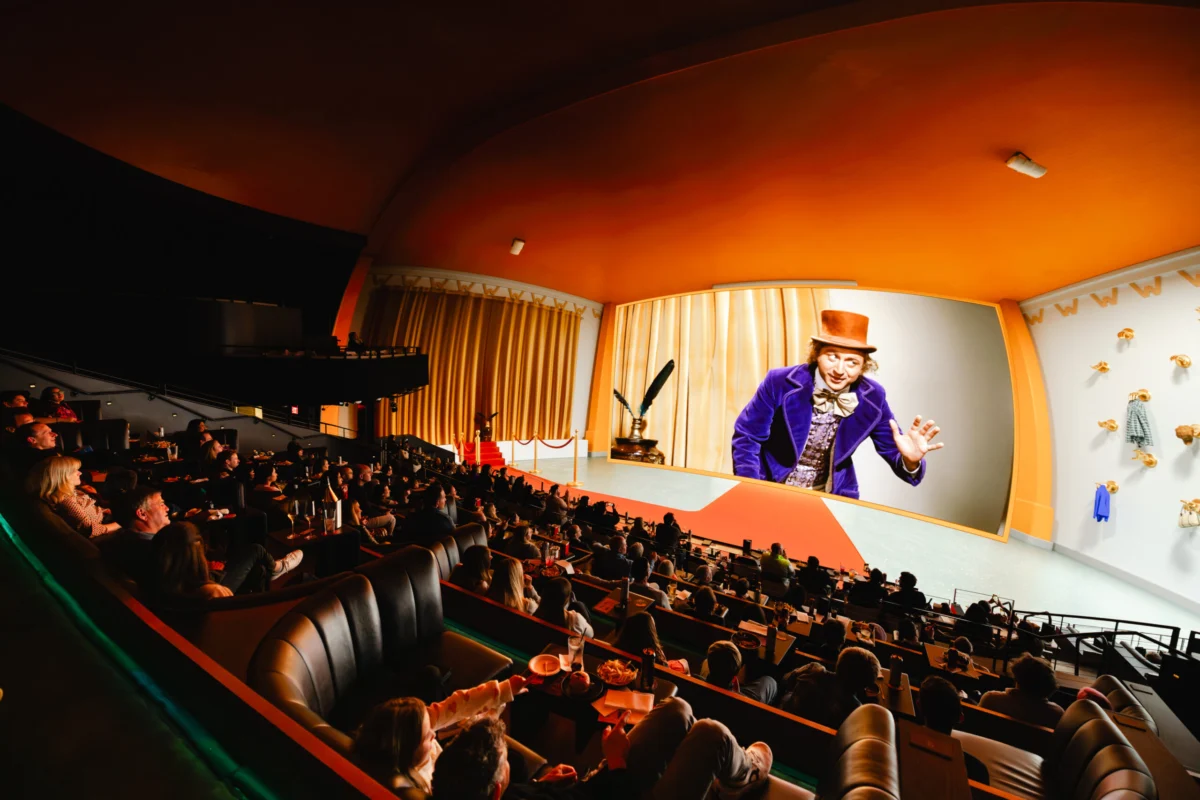
Cosm’s venues utilize massive LED domes that provide an 8K, high-frame-rate environment, creating a sense of presence without the need for individual headsets or augmented reality glasses. By securing a board seat and a minority stake, Sony ensures it has a direct influence on how its premium content is adapted for these venues. The partnership suggests a future where Sony’s tentpole franchises, such as the Spider-Man universe, the Uncharted series, or popular anime titles from its Crunchyroll subsidiary, could be transformed into location-based immersive events.
Understanding Shared Reality Technology and Venue Operations
Cosm’s primary innovation lies in its ability to bridge the gap between the physical and the virtual through what it calls "Shared Reality." Unlike Virtual Reality (VR), which isolates the user in a headset, Shared Reality is a social experience. Attendees sit in a specialized theater—often featuring a 12-meter or 26-meter diameter LED dome—where the visual field is entirely filled by the screen.
The technology relies on sophisticated "stitching" software that takes feeds from custom-built camera rigs. In a sports context, these cameras are placed at courtside or ringside, providing a perspective that mimics the best seats in the house. The audio is equally immersive, utilizing spatial sound systems that track with the visual action, allowing a viewer to hear the squeak of sneakers on a basketball court or the impact of a strike in a UFC octagon as if they were physically present.
Currently, Cosm operates flagship locations in high-traffic areas, most notably at Hollywood Park in Los Angeles, adjacent to SoFi Stadium. A second location in Dallas, Texas, at Grandscape, is part of a broader plan to scale the concept globally. These venues are designed as multi-purpose entertainment hubs, featuring upscale food and beverage services, lounge areas, and retail components, mirroring the trend toward "premiumization" in the out-of-home entertainment industry.
Sony’s Expanding Footprint in Theatrical Exhibition
The investment in Cosm is the second major move Sony has made in the exhibition space within the last year. In June 2024, Sony Pictures Entertainment acquired Alamo Drafthouse Cinema, the seventh-largest theater chain in North America. This acquisition was historic, marking the first time in decades that a major Hollywood studio owned a significant theater circuit, a practice that was largely restricted following the 1948 Paramount Decrees (which were lifted in 2020).
While Alamo Drafthouse focuses on the "cinephile" experience—emphasizing curated screenings, strict theater etiquette, and high-quality dining—Cosm represents the technological frontier of exhibition. Together, these investments suggest that Sony is building a diversified portfolio of physical venues to insulate itself against the volatility of the traditional box office. By controlling both the content and the venues in which that content is shown, Sony can maximize the lifecycle of its IP and create "eventized" theatrical windows that cannot be replicated by home streaming services.
A Chronology of Cosm’s Growth and Development
The trajectory of Cosm is rooted in decades of specialized visual technology, though the company in its current form is relatively young.
- 2020: Cosm was formed by Mirasol Capital through the merger of several legacy companies in the planetarium and immersive theater space, including Evans & Sutherland, Spitz, Inc., and LiveLikeVR. This provided the technical foundation for large-scale dome projections.
- 2022: The company began securing high-profile partnerships with major sports leagues. Deals with the NBA and UFC established Cosm as a premier destination for live sports broadcasting.
- 2023: Cosm announced the development of its "CX System," the end-to-end technology suite that powers its venues. During this period, the company also began testing "immersive cinema" by adapting existing Hollywood blockbusters for the dome format.
- 2024 (Early): The opening of the Los Angeles venue at Hollywood Park served as a proof-of-concept, drawing sold-out crowds for the NBA Finals and major UFC events.
- 2024 (Mid): Sony Pictures Entertainment enters the fray with a $100 million investment, marking the largest single strategic investment from a traditional film studio to date.
Content Strategy: Balancing Sports and Cinematic IP
To date, Cosm’s primary draw has been live sports. The company has successfully broadcast the FIFA World Cup, the NBA Finals, and UFC 300, among other events. The value proposition for sports fans is clear: the ability to experience a "front-row" atmosphere at a fraction of the cost of a physical ticket to the stadium.
However, the partnership with Sony highlights a pivot toward a more balanced content strategy that includes scripted entertainment. Cosm has already experimented with "Shared Reality" versions of iconic films such as The Matrix, Willy Wonka and the Chocolate Factory, and Harry Potter and the Sorcerer’s Stone. These are not merely stretched versions of the original films; they are re-mastered to take advantage of the 360-degree field of view.

With Sony’s involvement, the pipeline for such content is expected to expand. Sony’s deep library of PlayStation Productions—which includes The Last of Us, Gran Turismo, and God of War—offers a natural fit for immersive domes. The "gamified" nature of these properties lends itself to a format where the audience feels embedded within the world of the story.
Industry Analysis: The Shift Toward Experiential Media
The $100 million investment comes at a time when the global media landscape is undergoing a fundamental shift. Traditional cinema attendance has struggled to return to pre-pandemic levels, leading studios to seek "premium" formats that justify higher ticket prices and encourage audiences to leave their homes.
The success of the Sphere in Las Vegas has proven that there is a massive appetite for large-scale, technologically advanced immersive experiences. However, while the Sphere is a singular, multi-billion-dollar landmark, Cosm’s model is designed for scalability. Its venues are smaller and more cost-effective to build, allowing the company to create a national or even international network of domes.
Financial analysts note that the "experience economy" is one of the few growth sectors in the broader media industry. By investing in Cosm, Sony is positioning itself to lead in "spatial entertainment," a field that combines elements of cinema, theme parks, and live broadcasting. This strategy also provides a hedge against the commoditization of content on streaming platforms, where individual titles often get lost in a sea of algorithmic recommendations.
Official Responses and Executive Vision
The leadership of both companies has expressed a shared vision for the future of fan engagement. Ravi Ahuja, in his first major move since being named the successor to Tony Vinciquerra at SPE, emphasized the quality of the Cosm experience.
"Cosm sits at the intersection of several trends shaping the future of entertainment," Ahuja stated. "We’ve followed Cosm since before launch and have been impressed with the quality of the experience and the enthusiasm it’s generating with audiences. We’re excited to support Cosm’s next phase of growth and help bring these experiences to more fans around the world."
Jeb Terry, President and CEO of Cosm and a former NFL player, highlighted the importance of Sony’s technological and creative pedigree. "Sony Pictures shares our passion for innovation and the future of the fan experience, and this investment represents that," Terry said. "We will use this capital to fuel Cosm’s growth as we expand our venue network and advance our technology initiatives across both Sports and Entertainment. Sony is one of the most storied technology and entertainment companies in the world with IP spanning across films, TV, music and games."
Terry further noted that the goal is to "super serve" fans by bringing the world’s most iconic IP to life in a way that feels tangible and shared.
Financial Advisory and Future Outlook
The transaction was facilitated by top-tier financial advisors, with Goldman Sachs & Co. LLC and Allen & Company LLC serving as advisors to Cosm. This level of institutional involvement underscores the perceived stability and potential of the immersive venue market.
Looking ahead, the industry will be watching closely to see which Sony titles are the first to receive the "Shared Reality" treatment. There is also speculation regarding whether Sony’s gaming division will develop bespoke software for Cosm venues, potentially allowing for interactive, multi-user experiences that blur the line between a movie and a video game.
As Cosm prepares to open more locations and Sony begins to integrate its vast content library into this new medium, the $100 million investment may be remembered as a turning point in the evolution of the theatrical experience—a move from the flat screen to the immersive dome, and from passive viewing to active presence.