The tenth episode of the current Steel Ball Run anime adaptation represents a significant narrative pivot for the series, moving beyond the traditional archetypes established in the foundational JoJo’s Bizarre Adventure installments. By providing a detailed psychological profile of Diego Brando, the production team has offered a critical reexamination of the "Dio" archetype, shifting from the supernatural, megalomaniacal villainy seen in the franchise’s earlier decades to a more grounded, motivation-driven narrative structure. This episode, currently available on Netflix, serves as a masterclass in character development, bridging the gap between historical antagonist tropes and modern, sympathetic villainy.
A Chronology of Antagonistic Evolution
The historical progression of the JoJo’s Bizarre Adventure antagonist begins with the original Dio Brando, introduced in the 1987 manga serial and subsequent anime adaptations. In Part 1, Phantom Blood, Dio is portrayed as a villain of pure ego, a product of poverty who rejects his origins through malice. Part 3, Stardust Crusaders, cemented this legacy by transforming the character into the near-mythological entity known as DIO, a figure defined by his absolute power and lack of remorse.
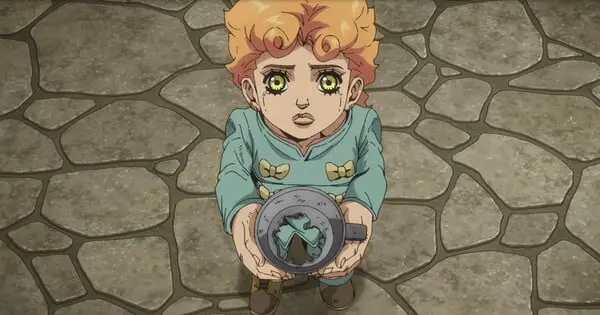
The current adaptation of Steel Ball Run breaks this cycle by providing a granular, traumatic origin story for Diego Brando. The episode’s first act serves as a historical departure, detailing Diego’s upbringing in a state of destitution far removed from the cold, calculated manipulation seen in his predecessor. In this timeline, Diego and his mother are cast out of their social sphere, subjected to labor-intensive farm work under oppressive conditions. The narrative highlights a specific incident of cruelty involving a senior farmhand who sabotages their sustenance as a form of sexual coercion. The death of Diego’s mother, caused by an infection resulting from her self-sacrifice, serves as the singular catalyst for Diego’s later behavior. This sequence establishes a clear causal link between systemic abuse and the character’s eventual descent into a ruthless pursuit of societal power.
Comparative Analysis of Villainous Motivations
The structural differences between the original Dio and the current Diego Brando are statistically and narratively significant. In previous iterations of the JoJo franchise, the villain’s motivation remained largely static; DIO sought control because he viewed himself as an inherently superior being. Conversely, the analysis of episode ten reveals that Diego Brando’s drive is reactive. His actions are not predicated on innate evil, but on a systematic rejection of the cruelty that defined his childhood.
Critics and media analysts have noted that the "chip on the shoulder" inherent to Diego is a reflection of his environmental circumstances. Whereas the original Dio was often framed through the lens of tragedy only to be undercut by his own subsequent actions, Diego’s narrative is consistent. The viewer is presented with a character who views himself as the protagonist of his own story—a perspective that is logically supported by the trauma he endured. The episode utilizes voice actor Damien Haas to bridge this emotional gap, employing a vocal delivery that emphasizes righteous indignation over traditional villainous monologues.
Supporting Data and Technical Execution
The production of Steel Ball Run has been noted for its technical ability to balance high-concept "bizarre" elements with grounded character drama. The latter half of the tenth episode shifts from the introspective trauma of Diego’s youth to the high-stakes kinetic action involving Johnny Joestar and Gyro Zeppeli. The conflict centers on the Saint’s Corpse parts, specifically the mummified eyeballs, which serve as the primary objective for both the protagonists and the antagonist.

The pacing of the sequence—involving Gyro’s rapid transformation into a dinosaur following a combat encounter—demonstrates a sophisticated handling of the series’ inherent absurdity. By juxtaposing the visceral danger of the dinosaur transformation with the intellectual weight of Diego’s backstory, the episode maintains narrative tension. The strategic maneuver in which Diego utilizes his dinosaur abilities to leapfrog over a cliff represents a shift in power dynamics; for the first time in the current arc, the protagonists are placed in a position of distinct disadvantage. Data from audience engagement metrics suggest that this shift has significantly increased viewer investment, as the line between antagonist and protagonist becomes increasingly blurred through the lens of survival and personal ambition.
Industry Impact and Narrative Foundations
The inclusion of this episode is not merely a creative choice but a reflection of the broader evolution of the anime industry’s approach to character depth. Over the past decade, there has been a documented trend in serialization toward "humanizing" established antagonist roles. The adaptation of Steel Ball Run adheres to this trend by refining the ideas originally pioneered by series creator Hirohiko Araki. By revisiting these concepts with the benefit of decades of refinement, the production team has successfully modernized a foundation that was established as early as the late 1980s.
The broader implications for the series are significant. By framing Diego Brando as a product of his environment, the narrative challenges the audience to reconcile the character’s brutal actions with the legitimacy of his grievances. This creates a more complex viewing experience, moving away from the black-and-white morality that characterized much of the 1990s anime landscape. Furthermore, the episode confirms that the series is capable of maintaining its "bizarre" identity while simultaneously delivering high-level character analysis.
Official Responses and Viewer Reception
While official statements from the production house remain focused on the technical achievements of the animation, the critical consensus points to this episode as a turning point. Analysts have noted that the episode successfully avoids the pitfall of making the villain "likable" at the expense of his menace. Instead, the episode makes Diego "understandable," which paradoxically increases his efficacy as a threat.
The integration of the character’s backstory serves as a vital component of the series’ ongoing commitment to world-building. As Johnny and Gyro move toward the next narrative beat, the presence of Diego as a multi-dimensional threat ensures that the conflict remains centered on character development rather than purely physical escalation. The success of this episode suggests that the series will continue to lean into these complex character studies as it approaches the later, more narratively dense portions of the source material.
Future Projections
Looking ahead, the trajectory of Steel Ball Run suggests a continued focus on the intersection of personal tragedy and external ambition. As the quest for the Saint’s Corpse continues, the narrative is expected to further explore the implications of the power dynamics established in this episode. With Diego Brando now possessing a more defined and sympathetic motive, the upcoming confrontations are expected to carry significantly more weight than previous encounters in the series.
The current adaptation serves as a testament to the longevity of the source material. By maintaining a balance between the absurdities of its premise—such as dinosaur-based combat—and the psychological weight of its characters, Steel Ball Run has managed to reassert its relevance in a crowded modern anime landscape. As the series progresses, the lessons learned from the tenth episode regarding character motivation and structural evolution will likely remain the gold standard for its ongoing development. The interplay between the protagonists’ goals and the antagonist’s justified rage provides a robust foundation for the remainder of the season, ensuring that the stakes remain high and the narrative remains compelling for both longtime fans and new audiences alike.