The year 2026 marks a definitive turning point for Studio Ciudad de la Luz, the expansive audiovisual production facility located in Alicante, Spain. What was once considered an ambitious, up-and-coming destination has successfully pivoted into a premier tier-one hub for major international productions. This shift represents the realization of a long-term strategic vision that began nearly two decades ago, aiming to reindustrialize the Spanish audiovisual landscape and position the Mediterranean coast as a formidable rival to established production centers in London, Prague, and Los Angeles.
The Visionary Origins and Early Development
The genesis of Ciudad de la Luz is rooted in the ambition of the late Spanish filmmaker and screenwriter Luis García Berlanga. In 2005, Berlanga envisioned a facility that would serve as the backbone for the Spanish film industry, blending technical prowess with the unique aesthetic advantages of the Valencian region. The initial seven-year developmental phase was a period of rapid experimentation and high-profile validation. Between 2005 and 2012, the studio facilitated 63 distinct projects, most notably J.A. Bayona’s disaster epic The Impossible and Francis Ford Coppola’s Tetro. These early successes proved that the facility could handle the complex logistics of international cinema, but it was the studio’s strategic reopening in 2023 that truly unlocked its modern potential.
Technical Infrastructure and Competitive Edge
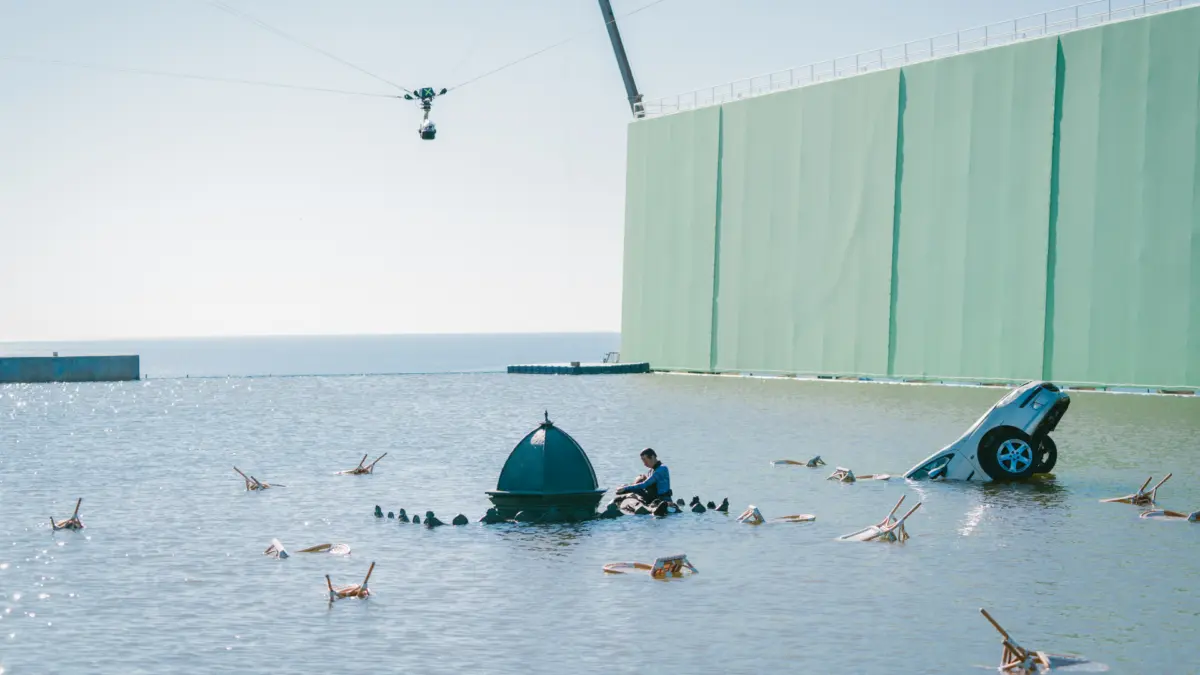
The modern iteration of Ciudad de la Luz is characterized by a suite of state-of-the-art facilities designed to meet the rigorous demands of contemporary blockbusters. The campus features six climate-controlled stages—uniquely interconnected in pairs—and two indoor, floodable pits exceeding three meters in depth. However, the studio’s most significant asset is its outdoor water tank. Spanning 100-by-80 meters, this facility is equipped with advanced wave-generation systems, high-pressure water cannons, specialized slide mechanisms, and a high-capacity seawater pumping system.
Beyond its aquatic capabilities, the studio offers a 14.8-hectare backlot with a natural horizon, integrated power and telecommunications infrastructure, and over 4,000 square meters of dedicated workshop space. Supplementing these are 7,000 square meters of storage and three specialized production support buildings that house administrative offices, dressing rooms, and hair and makeup suites. This comprehensive ecosystem allows for a seamless transition between interior and exterior filming, a versatility that few European facilities can currently match.
A Three-Year Surge: 2023–2025
Following its 2023 relaunch, the studio maintained a discreet profile while building its reputation through a series of high-impact projects. During this period, the facility hosted production for Venom: The Last Dance, starring Tom Hardy, which resulted in a 35-million-euro economic injection into the local economy and the creation of 570 direct production contracts. Simultaneously, the studio became a preferred location for television production, most notably for The Walking Dead: Daryl Dixon, which utilized the outdoor water tank to achieve high-production-value aquatic sequences. The period also saw the filming of Netflix’s Nero and Under Paris, alongside Spanish-led projects such as Alberto Rodríguez’s Los Tigres and Alejandro Amenábar’s El Cautivo, the latter generating an estimated eight million euros in local expenditure.

Consolidation through Strategic Partnerships
The year 2026 has served as the consolidation phase for the studio, solidified by two landmark developments: the production of Disney’s live-action Tangled and the establishment of The Good Film Studios Spain as a permanent tenant. The latter, a joint venture between producer Miriam Segal’s Good Films Collective, the Spanish government, and the Canadian-U.S. firm Orogen Media, represents a long-term commitment to the region. With a 19.8-million-euro investment from the Spanish Society for Technological Transformation (SETT), the studio has secured a pipeline of at least 20 international feature films over the next decade.
Case Study: The Production of Tangled
Michael Gracey’s live-action adaptation of Tangled, produced by Kristin Burr, serves as the definitive case study for the facility’s current capacity. Filmed over a 10-month period from February to October 2026, the project utilized the full scope of the studio’s assets, including its soundstages, workshops, and extensive regional exterior locations. The project mobilized over 1,000 professionals and generated 2,500 local contracts, contributing to a record-breaking 90 percent occupancy rate for the studio in 2026. With a direct economic impact exceeding 40 million euros, Tangled has set a benchmark for the scale of projects the facility can now support.
The Human Element: Talent and Training
The success of Ciudad de la Luz is inextricably linked to the local talent pool. Through the Film Trades School initiative—a collaboration with the Escola Superior de Cinema i Audiovisuals de Catalunya (ESCAC)—the region has created a pipeline of skilled labor. Thousands of students have been trained across 30 specialisms, including VFX, set construction, and green filming protocols. This ensures that international productions do not need to rely solely on fly-in crews, significantly reducing logistics costs and fostering a sustainable, locally-rooted industry.
Fiscal Incentives and Regional Policy
Spain’s legislative approach to the audiovisual sector remains a cornerstone of its competitive strategy. The region of Valencia offers a 25 percent non-repayable grant on production and post-production expenditures, capped at 1.5 million euros per project. At the national level, foreign productions can access a 30 percent tax rebate on the first million euros spent, and 25 percent on subsequent expenditures, up to a 20-million-euro cap. These fiscal measures, combined with the region’s 300 days of annual sunshine and proximity to the Alicante international airport, make the studio a highly attractive alternative to traditional, high-cost hubs.
Future Outlook and Economic Implications
The broader implications of Ciudad de la Luz’s success are significant for both the Valencian region and the wider European film market. By positioning itself as a "production eden," the facility is successfully attracting global attention ahead of major industry gatherings like the American Film Market. Marián Cano, the regional minister for industry, tourism, innovation, and trade, suggests that this momentum is only the beginning. The strategy moving forward focuses on further enhancing the studio’s technical capabilities and deepening the partnership with international production houses to ensure that Alicante remains a permanent feature on the global film production map.
As the industry looks toward 2027 and beyond, the success of projects like People of the Book—the first production from The Good Films Studios Spain—will be critical. Directed by Michael Haussman and based on Geraldine Brooks’ Pulitzer Prize-winning novel, the film exemplifies the studio’s shift toward more ambitious, prestige-focused content. With its unique combination of aquatic infrastructure, tax efficiency, and a burgeoning base of highly trained local talent, Studio Ciudad de la Luz has effectively transitioned from a regional experiment into a pillar of the European audiovisual sector, well-prepared to host the next generation of global cinematic achievements.