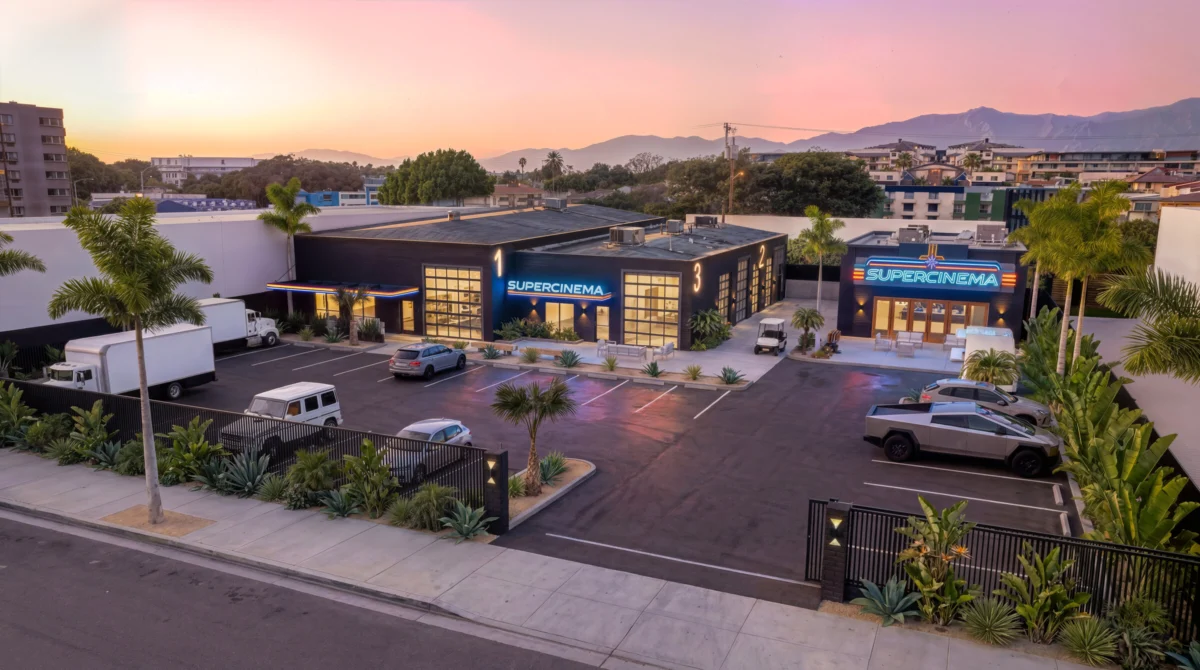
Amidst a period of pronounced volatility within the Los Angeles entertainment industry, a new venture is signaling confidence in the long-term viability of the regional production ecosystem. A team led by Michael Burke, Rachel Williams, Justin Younesi, and Michael Younesi has announced plans to launch SuperCinema, a new independent production banner anchored by a ground-up studio campus currently under development in Burbank. Located at 625-633 Glenwood Ave, the 30,000-square-foot facility represents a strategic, albeit contrarian, investment in physical production infrastructure at a time when many established studio operators are reassessing their footprints and vacancy rates across the county remain elevated.
A Strategic Pivot in the Media District
The site of the proposed campus is situated within Burbank’s “Audio Alley,” a sub-district historically defined by its high density of professional audio recording facilities and post-production houses. The property, which had previously been earmarked for a music studio project that failed to materialize, is being transformed into a modern production hub designed by NG+P Architects. The facility will feature three dedicated soundstages alongside integrated post-production suites.
The project is financed through a combination of private equity and backing from City National Bank. Construction is currently underway, with the developers projecting a completion date in early 2027. The campus is intended to serve as a dual-purpose headquarters, housing both the founders’ existing “cinematic content studio,” Concrete, and the newly formed SuperCinema banner. While Concrete focuses on branded social advertising—servicing major media conglomerates including Netflix, Disney, Paramount, and NBCUniversal—SuperCinema is designed to function as a traditional film production entity.
Navigating the Volatile Production Landscape
The decision to break ground on a brick-and-mortar studio during a contractionary period for the industry is a significant gamble. According to data from FilmLA, the official film office for the region, production levels in the Los Angeles area have fluctuated significantly since the conclusion of the 2023 labor strikes. Many studio operators, facing a glut of inventory and changing distribution models, have moved to consolidate their assets.
However, for founders Michael Burke and Michael Younesi, the current climate is reminiscent of the early 2010s. They point to the shift in traditional advertising agencies, which were forced to pivot or dissolve in the face of the emerging digital creator economy. By leveraging their experience with Concrete—a firm built to navigate the rapid-fire demands of social-first advertising—the team argues that they possess the agility required to succeed where larger, more bureaucratic operations might falter.
“It takes some risk and some creativity to operate outside that system to a degree,” Younesi stated in an interview with The Hollywood Reporter. The strategy relies on the premise that independent production houses can thrive in the shadow of major studios by offering a more streamlined, cost-effective alternative for mid-to-low-budget projects that are currently underserved by massive, high-overhead studio lots.
Building the Development Pipeline
SuperCinema is not entering the market without a slate of projects. The company is launching with a portfolio that includes Loose Ends, a project from producers LB Entertainment and Lee Broda, alongside Zero Gravity Management. Additionally, they are developing The Backlot, a supernatural thriller produced by Range Media and Artists for Artists. The thematic choice of The Backlot—a story centered on an abandoned movie studio—serves as a meta-commentary on the current state of industry infrastructure.
The development of the campus is intended to create a "closed-loop" production environment where brand content and feature-length narratives can be developed simultaneously. By keeping these two distinct arms under one roof, the founders aim to capitalize on the cross-pollination of talent and resources, a model they believe is essential for modern independent studios.
Municipal Support and Economic Development
The project has received active cooperation from the City of Burbank, which views the investment as a catalyst for local economic revitalization. In an era where production work frequently migrates to tax-incentive-heavy states like Georgia or international hubs like London and Vancouver, Burbank’s municipal government is keen to retain its status as a global media capital.
Burbank Mayor Tamala Takahashi issued a formal statement in support of the project, emphasizing the importance of infrastructure investment. “Their investment in a new studio campus brings new energy and opportunity to our community while reinforcing Burbank’s continued role as a place where filmmakers and entertainment companies can grow,” Takahashi noted.
The city’s willingness to expedite the regulatory and permitting process suggests a broader effort to reduce the “red tape” often cited by developers as a deterrent to building in the Southern California region. For a city like Burbank, maintaining a robust studio inventory is not merely about prestige; it is a vital component of the local tax base and a support system for thousands of ancillary jobs, from carpenters and lighting technicians to catering and logistics providers.
Market Analysis: The Future of Soundstages
The broader outlook for the Los Angeles soundstage market remains complex. In recent years, a wave of institutional capital flooded the sector, leading to a surge in new stage construction. However, the post-pandemic correction, combined with the industry’s ongoing transition to streaming and the integration of artificial intelligence in post-production, has shifted demand.
Analysts suggest that while demand for massive, multi-acre lots may be softening, there is still a persistent need for mid-sized, technically advanced facilities that cater to the independent sector. SuperCinema’s 30,000-square-foot footprint places it firmly in this mid-tier category—large enough to host significant film projects, yet small enough to maintain lower overhead costs compared to the sprawling, legacy studio lots owned by major conglomerates.
Furthermore, the integration of post-production space directly on-site is a growing trend. As production budgets tighten, producers are increasingly looking to eliminate the logistical friction of moving assets between separate filming and editing facilities. By bundling these services, SuperCinema is positioning itself as a one-stop shop for modern independent producers who are under pressure to deliver high-quality content with increasingly constrained budgets.
Chronology of Development
- Early 2010s: Founders Michael Burke and Michael Younesi gain industry experience through the growth of the creator economy and the evolution of digital ad agencies.
- 2020–2023: The production sector experiences intense volatility due to the COVID-19 pandemic and subsequent labor negotiations in Hollywood, leading to a shift in studio demand.
- 2024: The development group secures the site at 625-633 Glenwood Ave in Burbank. Plans for the dual-company campus (Concrete and SuperCinema) are finalized.
- Mid-2024: Construction begins on the 30,000-sq-ft facility, featuring architectural designs by NG+P Architects.
- 2025–2026: Continued development and site build-out; the company begins pre-production on its inaugural slate, including Loose Ends and The Backlot.
- Early 2027 (Projected): Completion of the SuperCinema campus and commencement of full-scale operations.
Broader Implications for the Industry
The success of the SuperCinema model will likely be scrutinized by industry analysts as a bellwether for the “indie” production sector in California. If the studio can successfully deliver on its promise to combine branded content revenue with feature film development, it may provide a template for other boutique production companies to follow.
The reliance on City National Bank and private investors, rather than traditional studio venture capital, highlights a shift toward more specialized, private equity-driven infrastructure investments. As the industry moves toward 2027, the success of this project will depend on its ability to navigate the shifting sands of global media consumption, the rise of AI-driven production tools, and the continued competitive pressure from production hubs outside of Los Angeles.
Ultimately, the SuperCinema project represents a calculated bet on the endurance of physical production. Despite the digital transformation of entertainment, the need for high-quality, dedicated spaces for creative collaboration remains a pillar of the Los Angeles economy. Whether this bet pays off will be determined by the company’s ability to remain lean, efficient, and relevant in a rapidly evolving marketplace. For now, the development stands as a testament to the persistent ambition of independent creators to build their own systems rather than wait for the legacy ones to adapt.