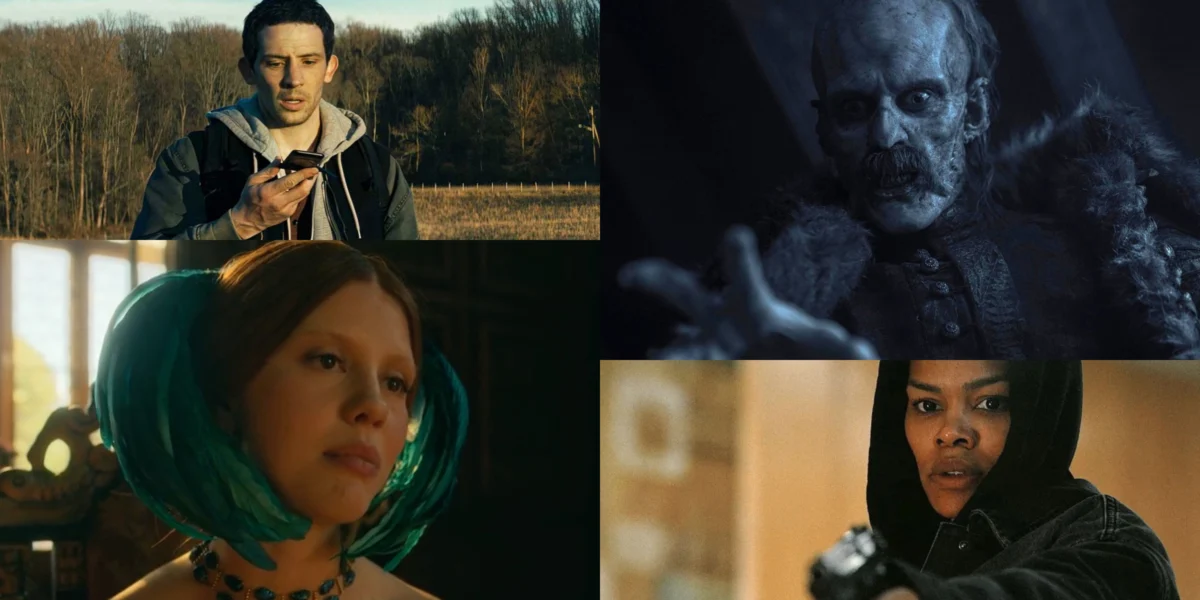
In a joint statement, Academy CEO Bill Kramer and Academy President Lynette Howell Taylor expressed their enthusiasm for the incoming class. “We are delighted to invite this remarkable group of film artists and professionals from around the world to join the Academy,” the executives stated. “Through their commitment to filmmaking, this year’s exceptionally talented class has made significant contributions to our global movie industry.”
Strategic Expansion and Demographic Evolution
The 2026 class of invitees reflects the Academy’s continued commitment to the "A2020" initiative’s spirit, which sought to double the number of women and underrepresented communities within the organization. While those specific goals were met several years ago, the Academy has maintained its momentum in diversifying the voting body that determines the Oscars.
According to the latest data provided by the organization, the 2026 invitee list is composed of 42% women. Furthermore, 56% of the invitees belong to underrepresented ethnic and racial communities, a statistic that highlights the Academy’s push to move beyond its historically Western-centric roots. Perhaps most notable is the international scope of this year’s invitations: 53% of the new class hails from 60 countries and territories outside the United States. This internationalization is expected to have a profound impact on future Oscar nominations, particularly in categories such as Best Picture and Best International Feature Film, as the voting block becomes increasingly globalized.
Highlights of the 2026 Acting Branch Invitees
The Actors branch remains one of the most visible and influential segments of the Academy. This year’s list of 29 actors features a blend of established international icons, character actors, and rising stars who have dominated recent headlines. Notable names include:
- Jon Bernthal: Recognized for his powerful performances in "King Richard" and "Ford v Ferrari," Bernthal has become a staple of American dramatic cinema.
- Jacob Elordi and Mia Goth: Both actors have been invited following their work on "Frankenstein." Elordi’s inclusion also highlights his breakout turn in "Saltburn," while Goth is recognized for her genre-defining work in "Pearl."
- Jenna Ortega: The "Beetlejuice Beetlejuice" and "Death of a Unicorn" star represents a younger generation of talent currently reshaping the industry.
- Josh O’Connor: Following his acclaimed performance in "Challengers," O’Connor joins the Academy as he prepares for the upcoming "Wake Up Dead Man: A Knives Out Mystery."
- Simu Liu: Known for "Barbie" and "Shang-Chi and the Legend of the Ten Rings," Liu’s invitation underscores the Academy’s embrace of major blockbuster talent.
Other distinguished invitees in the acting branch include Mathieu Amalric, Julia Garner, Jemaine Clement, Stephen Fry, and Teyana Taylor. The inclusion of international talent like Raúl Briones (Mexico) and Inga Ibsdotter Lilleaas (Norway) further cements the Academy’s global mission.
Directorial and Writing Talents
The Directors and Writers branches have invited a group of filmmakers known for pushing the boundaries of narrative structure and visual storytelling. A standout inclusion is the duo of Benny and Josh Safdie, recognized for their frenetic and highly acclaimed work on "Uncut Gems." The Safdies are among nine individuals this year invited by multiple branches; they must select one branch upon accepting their membership.
Other invited directors include Zach Cregger, whose horror hit "Barbarian" became a cultural phenomenon, and Daniel Goldhaber, recognized for "How to Blow Up a Pipeline." The Academy also invited international auteurs such as Guan Hu ("Black Dog"), Kim Jee-woon ("Cobweb"), and Fernanda Valadez ("Sujo"), ensuring that the directorial perspective within the organization remains diverse and eclectic.
The Vital Role of Craft and Technical Branches
The 2026 class also places a heavy emphasis on the "below-the-line" talent that serves as the backbone of film production. The Animation branch invited 43 professionals, including those behind recent hits like "Spider-Man: Across the Spider-Verse," "Inside Out 2," and "The Wild Robot."
In the Cinematographers branch, 22 new artists were invited, including Malik Hassan Sayeed ("After the Hunt") and Markus Förderer ("September 5"). The Costume Designers branch saw 25 invitations, recognizing the aesthetic contributions of artists like Miyako Bellizzi ("Uncut Gems") and PC Williams ("Polite Society").
The Production Design and Visual Effects branches also saw significant growth. Visual effects artists who worked on massive franchises such as "Dune," "Guardians of the Galaxy," and "Transformers" were among the invitees, reflecting the technical complexity of modern cinema.
Chronology of the Academy’s Membership Process
The Academy’s membership process is a rigorous, year-long cycle governed by the organization’s 19 branches. Unlike many professional organizations, one cannot simply apply for membership. Instead, the process follows a specific chronology:
- Sponsorship: Candidates must be sponsored by two existing members of the branch for which they are being considered.
- Automatic Consideration: Individuals who receive an Academy Award nomination are automatically considered for membership in that year, bypassing the need for sponsors.
- Branch Review: Executive committees within each branch review the list of candidates based on professional qualifications and contributions to the field.
- Membership Committee Review: The recommendations are then passed to the broader Membership Committee to ensure they align with the Academy’s standards of excellence and inclusion.
- Board of Governors Approval: The final list is presented to the Board of Governors for official approval.
- Invitation and Acceptance: Invitations are typically sent in the summer. Those who accept become the only new additions to the membership for that calendar year.
Broader Impact and Industry Implications
The expansion of the Academy’s membership is more than a ceremonial gesture; it is a structural shift that fundamentally alters the landscape of the film industry’s most prestigious awards. By diversifying the voting pool, the Academy is directly addressing historical criticisms regarding the lack of representation in Oscar winners.
Analytical trends suggest that a more international and diverse voting body leads to a broader range of films receiving top honors. The success of films like "Parasite," "Everything Everywhere All at Once," and "Anatomy of a Fall" is often cited by industry analysts as a direct result of the Academy’s evolving membership. With 53% of the 2026 class coming from outside the U.S., it is highly probable that the Oscars will continue to move toward a "Global Film Awards" model rather than an exclusively Hollywood-centric one.
Furthermore, the inclusion of 25 Artist Representatives (agents and managers) and 26 Executives ensures that the business side of the industry is adequately represented in the organization’s governance and decision-making processes. This balance between creative artists and industry leaders is vital for the Academy’s long-term sustainability and its ability to navigate the shifting economic realities of streaming and theatrical distribution.
Multi-Branch Invitees
As noted by the Academy, nine individuals have been invited to join the organization by more than one branch. These professionals have distinguished themselves in multiple disciplines, such as writing and directing or animation and short films. These individuals include:
- Chris Lavis (Animation, Short Films)
- Florence Miailhe (Animation, Short Films)
- Maciek Szczerbowski (Animation, Short Films)
- Oliver Laxe (Directors, Writers)
- Benny Safdie (Directors, Writers)
- Josh Safdie (Directors, Film Editors, Writers)
- Conall Jones (Documentary, Short Films)
- Craig Renaud (Documentary, Short Films)
- Ronald Bronstein (Film Editors, Writers)
Upon acceptance, these individuals must choose a single branch to represent. This requirement ensures that no single individual holds undue influence across multiple voting categories while still acknowledging their multifaceted talents.
As the 529 invitees consider their offers, the film world looks toward the 2027 awards season, which will be the first to feel the full impact of this new, diverse, and globally-minded cohort. The Academy continues to prove that while it remains an institution rooted in history, it is not afraid to evolve to meet the demands of a changing world.