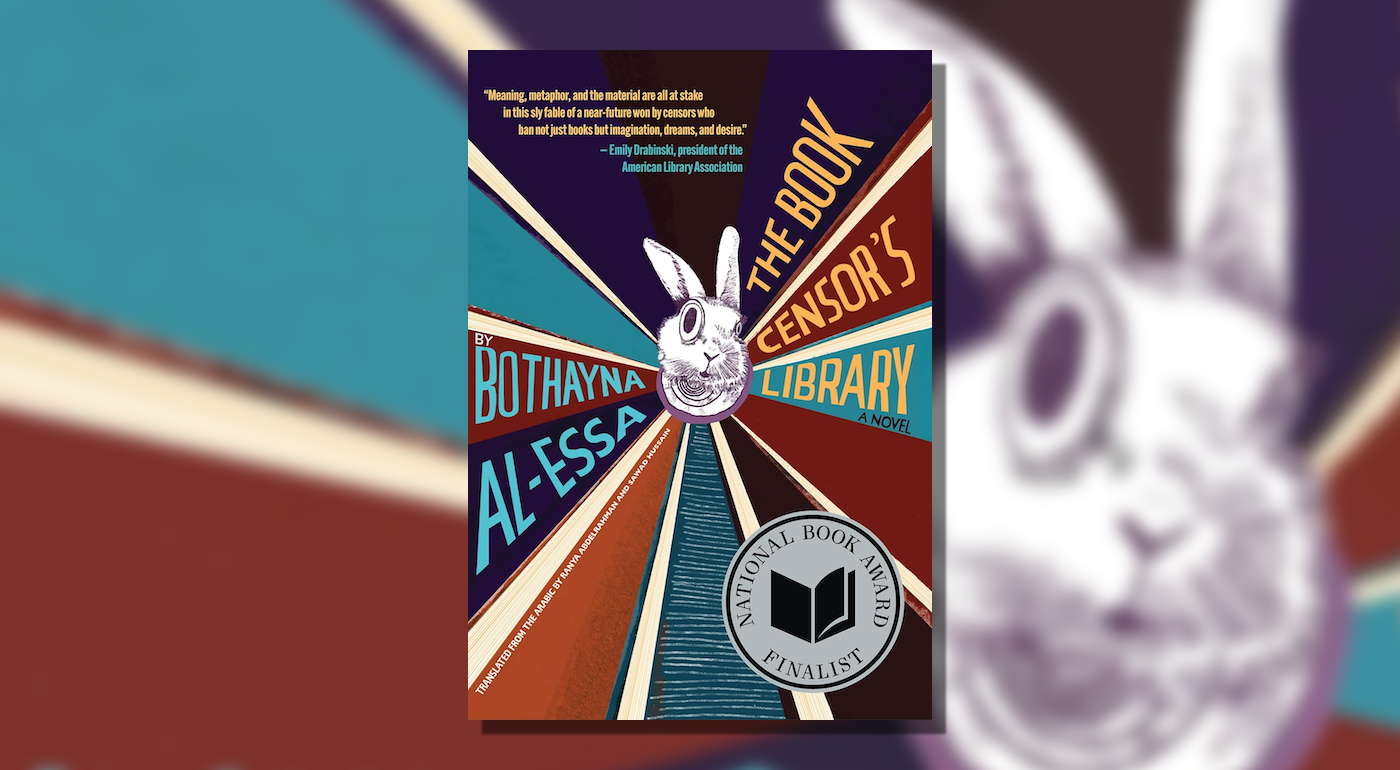
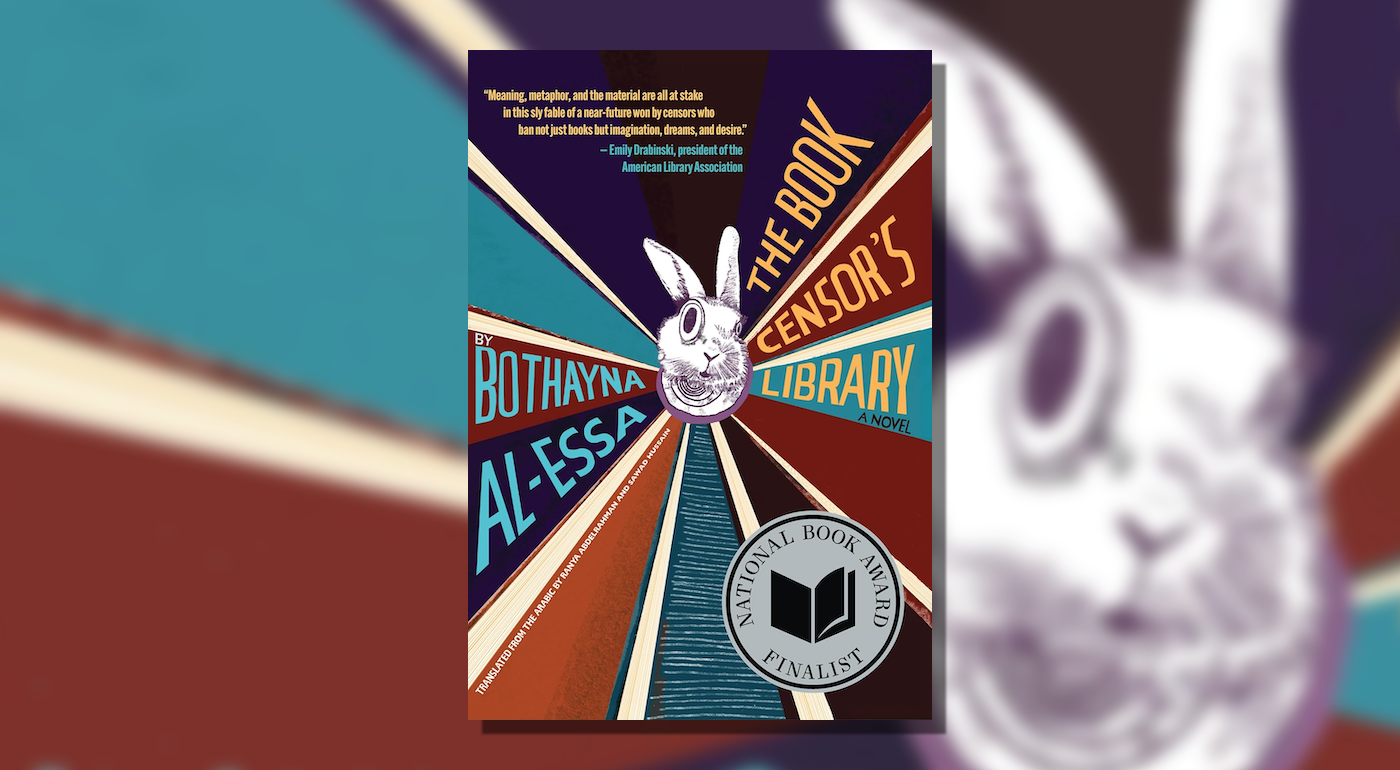
In a world where imagination is a sickness and words are stripped of their power to evoke, Bothayna Al-Essa’s novel, The Book Censor’s Library, translated into English by Ranya Abdelrahman and Sawad Hussain, emerges as a stark and timely warning against the insidious nature of censorship. This review, part of the “Found in Translation” series that explores speculative fiction translated into English, delves into a narrative that, while rooted in the fantastical, resonates with chilling accuracy in our contemporary landscape. The novel, originally published in Arabic in 2019, offers a potent allegory for the dangers of intellectual and creative suppression, urging readers to confront the fragility of freedom of thought and expression.
The premise of The Book Censor’s Library is immediately disquieting. Set in a future, nondescript locale that mirrors every other place, the story unfolds within a claustrophobic dictatorship where the Censorship Authority reigns supreme. This governing body meticulously dictates what constitutes permissible reading through a rigid manual. The rules are designed to sterilize literature, forbidding interpretation and mandating an examination of words in isolation, with a particular focus on identifying references to divinity, sexuality, and the state. Books that deviate from these narrow parameters are not merely banned; they are mocked, banished, and ultimately destroyed, their very existence an affront to the established order.
The protagonist, a new book censor, initially embodies the system’s unwavering belief. His ambition to join the "literary police," a more forceful arm of the censors with the power to raid bookstores and confiscate contraband, highlights the ingrained desire for control within this society. However, his own narrative arc mirrors Franz Kafka’s The Metamorphosis as he awakens one day to find his world irrevocably altered by a single forbidden book: Nikos Kazantzakis’s Zorba the Greek. This act of reading, a simple yet profound rebellion, cracks open the censor’s carefully constructed reality. What begins as a contemplation of the absurd hypocrisy inherent in the censorship manual – the very authorities who forbid interpretation frequently engage in it to selectively ban books – rapidly devolves into a meta-literary journey. As the censor’s thirst for reading grows, so does his entanglement with the very essence of literature he was sworn to suppress.
Al-Essa masterfully depicts imagination not as a gift, but as a pathology. It is a “vestigial tailbone,” a primitive remnant of a forgotten past characterized by democracy and unfettered information. In this society, the display of imagination is akin to a dangerous growth, one that requires surgical removal. Children exhibiting such symptoms are subjected to rehabilitation centers, from which they rarely return. Their parents, in turn, face charges of neglect, a grim testament to the state’s pervasive control over the very fabric of family and personal development. Ironically, the regime permits a single day of sanctioned fantasy: Purification Day. On this occasion, the populace is allowed to engage in a superficial “play pretend,” parading in costumes in a makeshift carnival, only for the festivities to culminate in the symbolic purging of books and effigies representing historical dissent. This ritual underscores the regime’s strategy of appeasing the masses with controlled outlets for expression while simultaneously reinforcing its absolute power.
The Book Censor’s Library operates more as a piercing satire than a conventional dystopian narrative. Readers seeking intricate world-building or a detailed explanation of the socio-political mechanisms underpinning this oppressive society may find its surface-level depiction of control sufficient. However, the novel’s true strength lies in its embrace as a parable, a profound love letter to literature, and a defiant stand against censorship. It transforms into a vibrant literary conversation, weaving together references and resonances from a multitude of classic and contemporary works. The presence of rabbits, often symbolizing innocence and vulnerability, roaming the sterile corridors of the Censorship Authority, serves as a potent metaphor. They invite both the protagonist and the reader down a metaphorical rabbit hole, representing irreverence within an edifice of control and the nascent possibility of freedom.
The shadow of George Orwell’s 1984 looms large over the novel, its themes of totalitarian control and thought manipulation echoing throughout Al-Essa’s narrative. Yet, the story takes a particularly dark and poignant turn with the introduction of the censor’s five-year-old daughter. This child, brimming with an unexplainable imagination and a seemingly innate memory of past fairy tales, becomes an inevitable target for the regime’s rehabilitation centers. These institutions are depicted as nightmarish factories of punishment and reeducation, disturbingly reminiscent of the Ludovico Technique from Anthony Burgess’s A Clockwork Orange, further emphasizing the brutal suppression of individuality.
The introduction of a subversive bookseller adds another layer of meta-narrative to the story, drawing a direct parallel to Al-Essa’s own experiences. In 2016, she faced significant challenges when opening a bookstore in Kuwait, a passion project that quickly became a protracted battle with the Ministry of Information. Books that had been approved, sometimes multiple times, would be banned and re-approved with bewildering frequency, with Zorba the Greek being a notable example. Within the novel, the bookseller is a clandestine figure, a splash of vibrant color in an otherwise monochromatic world. She represents the potential for an imaginative child to have a future and the transformation of a reader into a writer. However, her presence also carries a somber warning: while her individual resistance is significant, the narrative implicitly suggests that without collective organization and a broader societal awakening, the entrenched system of oppression remains virtually unassailable.
While The Book Censor’s Library can, at times, feel heavy-handed in its thematic delivery, its unwavering commitment to its core message makes it an accessible and powerful introduction to the multifaceted nature of oppression. Each critical observation, rather than alienating the reader, serves to draw them deeper into an irreversible rabbit hole of interpretation. The novel’s strength lies in its ability to provoke thought and discussion, encouraging readers to examine the subtle and overt ways in which intellectual freedom is threatened in our own societies.
Background and Context: The Global Landscape of Censorship
The publication of The Book Censor’s Library arrives at a critical juncture in global discourse surrounding freedom of expression. Reports from organizations like Reporters Without Borders consistently highlight the alarming prevalence of censorship and suppression of information worldwide. For instance, the 2023 World Press Freedom Index noted that 31 countries are considered to be in a "very bad" situation regarding press freedom, with journalists facing increasing surveillance, detention, and violence. This contextualizes Al-Essa’s allegorical narrative within a tangible reality of state control over information and artistic output.
The historical precedent for book burning and censorship is vast, dating back to ancient Rome with the destruction of books deemed heretical or politically dangerous, through to the Nazi regime’s infamous book burnings in the 1930s, and continuing with modern instances of banned literature in schools and public libraries in various nations. These historical events serve as grim reminders of the cyclical nature of attempts to control thought and narrative. Al-Essa’s novel taps into this historical consciousness, reminding readers that the fight for intellectual freedom is an ongoing one.
Chronology of Suppression: A Meta-Narrative of Control
The novel’s structure itself can be viewed as a meta-chronology of censorship. The opening lines, mirroring Kafka, signal a personal transformation triggered by forbidden knowledge. The censor’s journey from enforcer to reader is a timeline of awakening. The existence of Purification Day, a yearly ritual, marks a temporal point of state-sanctioned release and subsequent reinforcement of control. The introduction of the subversive bookseller, a figure operating outside the official channels, adds another temporal dimension, representing ongoing, albeit clandestine, resistance.
The book’s journey from its Arabic publication in 2019 to its English translation in 2024 also represents a timeline of literary dissemination and the bridging of cultural divides. This time lag is not uncommon for translated works, often due to the intricate process of finding suitable translators, securing publishing deals, and ensuring the nuances of the original text are faithfully rendered for a new audience. The specific choice of 2024 for the English release places the novel in direct dialogue with contemporary global events and concerns surrounding information access and artistic freedom.
Supporting Data: The Economic and Social Impact of Censorship
The economic implications of censorship are often understated but significant. When creative works are suppressed, the cultural industries suffer. Authors, publishers, artists, and booksellers face economic hardship. Furthermore, societies that stifle intellectual curiosity and innovation risk falling behind in technological advancement and economic competitiveness. A 2022 report by the International Publishers Association highlighted how censorship can lead to significant economic losses in the book industry, impacting job creation and revenue generation.
Socially, censorship erodes trust and fosters an environment of fear and conformity. It limits the ability of individuals to engage in critical discourse, to question authority, and to develop a nuanced understanding of the world. This can lead to social fragmentation, political instability, and a decline in civic engagement. The narrative in The Book Censor’s Library vividly illustrates this, showing how the suppression of imagination leads to a sterile, fearful society.
Official Responses and Literary Reactions: A Call to Arms
While the novel itself is a work of fiction, the themes it explores often elicit strong reactions from literary communities and organizations dedicated to freedom of expression. Following the publication of translated works that critically engage with societal issues, there is often a surge of discussion and analysis from literary critics, academics, and advocacy groups. The Translators Association, for instance, consistently advocates for the importance of translated literature in broadening cultural understanding and promoting intellectual exchange.
The act of translation itself can be seen as a form of resistance against censorship. By bringing marginalized voices and perspectives to a wider audience, translators play a crucial role in challenging dominant narratives and fostering empathy across borders. Ranya Abdelrahman and Sawad Hussain, in translating The Book Censor’s Library, have undertaken a significant task that contributes to this broader movement.
Broader Impact and Implications: The Enduring Power of the Written Word
The Book Censor’s Library serves as a powerful reminder that the control of information is a fundamental tool of authoritarian regimes. By targeting literature, these regimes aim to control thought, limit imagination, and prevent the free exchange of ideas that can challenge their power. The novel’s allegorical approach allows it to transcend specific political contexts and speak to universal anxieties about the erosion of intellectual freedom.
The lasting implication of Al-Essa’s work is its emphatic defense of the written word and the human capacity for imagination. In a world increasingly saturated with curated information and algorithmic gatekeeping, the novel urges us to actively seek out diverse perspectives, to question what we read, and to fiercely protect the spaces where imagination can flourish. The book’s ultimate message is one of hope, not in the eradication of oppressive systems, but in the enduring resilience of the human spirit and its innate drive for knowledge and creative expression, even in the face of overwhelming adversity. The journey of the book censor, from an agent of suppression to a seeker of forbidden truths, underscores the transformative power of literature and the vital importance of keeping its channels open and its spirit untamed.
Buy the Book:
The Book Censor’s Library by Bothayna Al-Essa
Translated by Ranya Abdelrahman & Sawad Hussain
Published by Restless Books (2024)
[Image of the book cover for "The Book Censor’s Library"]