The landscape of modern comedy owes an immeasurable debt to a modest, fiercely independent Canadian sketch show that aired from 1976 to 1984, yet remained a cultural secret to much of the mainstream American public. Second City Television, universally known as SCTV, is the subject of a comprehensive and poignant new feature-length documentary directed by acclaimed filmmaker Jason Hehir. Titled SCTV: The Greatest Show You’ve Never Heard Of, the project arrives at a poignant cultural moment for the entertainment industry, arriving on the heels of another intimate retrospective released earlier this year, Marty, Life Is Short, which focused on the foundational career of alumnus Martin Short.
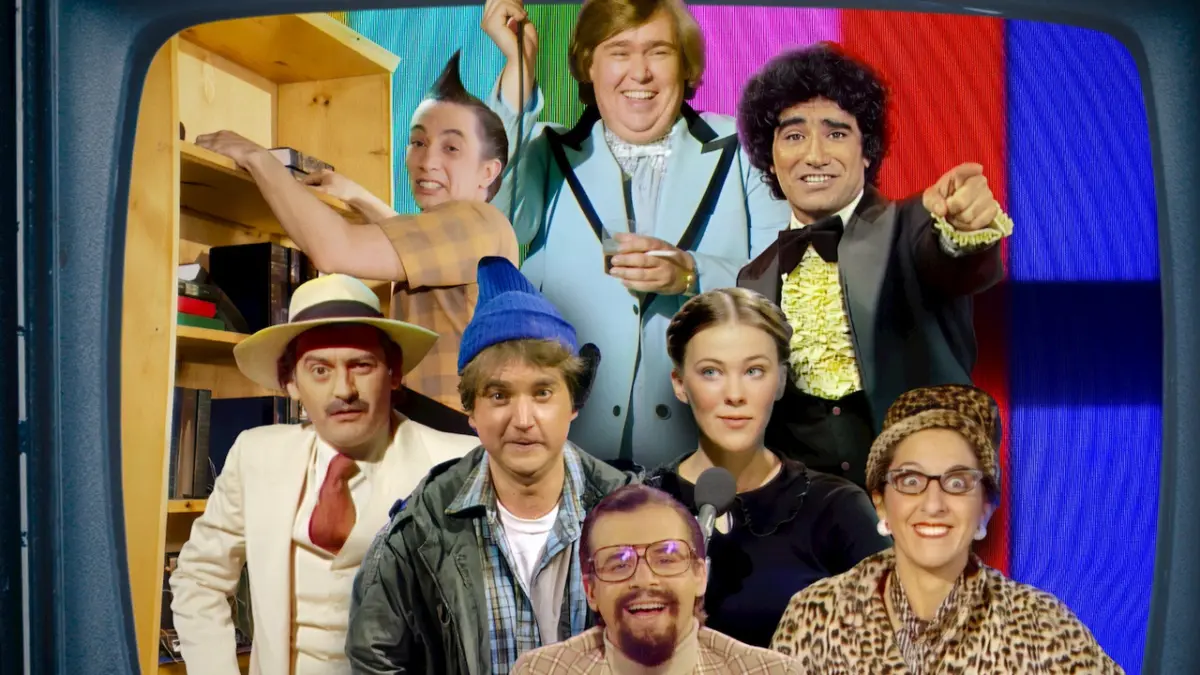
Hehir’s documentary serves as both an archival treasure trove and an emotional autopsy of a groundbreaking series. Featuring rare behind-the-scenes footage, classic sketches, and newly conducted interviews, the film captures the surviving members of the legendary ensemble—Short, Eugene Levy, Dave Thomas, Andrea Martin, and the late Catherine O’Hara—gathering together on a couch in July 2025. Tragically, these sessions took place just six months prior to the passing of O’Hara, casting a bittersweet shadow over the project. Additional retrospective interviews feature Rick Moranis and the late Joe Flaherty, who passed away in 2024, offering contemporary perspectives on an era that fundamentally reshaped North American humor.
The Chronology and Evolution of a Comedy Titan
To understand the cultural magnitude of SCTV, television historians must trace its trajectory from a regional alternative to a rebellious pioneer of television satire. Premiering in 1976 on Global Television in Canada, SCTV was conceived as a television offshoot of Toronto’s famed Second City theatrical troupe. At a time when Saturday Night Live dominated the American consciousness, SCTV emerged as a sharp, surreal counter-narrative. The series specialized in relentless, multi-layered satires of late-1970s and early-1980s media, targeting everything from bloated network commercials and low-budget genre programming to pretentious cinema, foreign art-house tropes, and the hollow superficiality of late-night talk show hosts.
The show’s production history was defined by financial volatility and creative resilience. Initially operating as an independent entity, the production faced severe funding deficits that threatened to shut its doors permanently. The series was rescued by Canadian billionaire Dr. Charles Allard, who constructed a dedicated production facility for the troupe in Edmonton, Alberta. This geographic isolation paradoxically fostered an environment of unbridled creative freedom, allowing the ensemble to refine complex, recurring characters and elaborate fictional universes.
Throughout its eight-season lifespan, the show underwent several structural transformations. After initial Canadian syndication success, the series briefly competed directly with American networks before catching the eye of NBC executives. In 1981, the program made the jump to New York City and American network television, expanding its runtime from 30 minutes to 90 minutes. However, this transition proved friction-laden. The increased studio oversight and network demands for family-friendly content clashed directly with the subversive, sharp-edged sensibility that the performers and writers had cultivated in Canada. By 1984, creative fatigue and executive interference culminated in the mass departure of the cast, bringing an end to the primary era of the series.
The Launchpad for Generational Talent
The statistical and cultural footprint of SCTV’s alumni is virtually unmatched in the annals of television history. The series functioned as an incubator for a generation of performers who would subsequently anchor major cinematic franchises, critically acclaimed television series, and foundational works of modern comedy.
Before John Candy became a beloved fixture of 1980s and 1990s cinema in films like Planes, Trains and Automobiles and Uncle Buck, and before Rick Moranis and Dave Thomas achieved international superstardom through their fictional cabal of beer-drinking Canadian brothers, Bob and Doug McKenzie, and the feature film Strange Brew, they were cutting their teeth on the soundstages of Edmonton and Toronto. The ensemble roster reads like a Hollywood Walk of Fame: Eugene Levy, whose career later experienced a massive resurgence with Schitt’s Creek; Catherine O’Hara, whose iconic performances in Home Alone, Beetlejuice, and Schitt’s Creek cemented her cinematic legacy; Martin Short; Andrea Martin; and Joe Flaherty.
Hehir’s documentary meticulously explores the dual nature of this sudden ascension. Through candid reflections, the surviving cast members address the intoxicating, and occasionally destructive, nature of youth and unexpected fame. In one of the documentary’s most striking sequences, Moranis reflects candidly on the interpersonal friction caused by early success, recalling how he and Thomas alienated certain cast members by purchasing expensive vehicles—a regret he openly acknowledges decades later.
Critical Reception and Industry Reactions
The release of SCTV: The Greatest Show You’ve Never Heard Of has triggered a wave of retrospection among contemporary comedy luminaries, many of whom regard the series as a sacred text of the medium. Prominent modern comedians and writers have used the documentary’s release to vocalize their lifelong admiration for the program’s fearless absurdity.
Comedian and writer Bill Hader, known for his encyclopedic knowledge of film and television history, expresses deep reverence in the film for the show’s dark, boundary-pushing sketches. Hader highlights a particularly notorious segment featuring John Candy’s recurring character, Johnny LaRue, playing a convict in a sketch titled "Yellowbelly," which pushed the boundaries of network taste by depicting violence played entirely for laughs. Similarly, co-creator of Better Call Saul and master of sketch comedy Bob Odenkirk praises the series as an artistic masterclass, noting that the satirical precision of characters like Flaherty’s upbeat, disingenuous talk show host Sammy Maudlin continues to inform contemporary approaches to media satire and press-tour culture.
The Broader Implications for the State of Sketch Television
Beyond serving as a nostalgic celebration of a bygone era, the documentary arrives at a precarious time for the sketch comedy format on television. Industry analysts and media critics have noted a steady contraction in the availability of traditional, broadcast-quality sketch comedy series. While the medium once boasted a hydra-headed presence across network television, cable, and early streaming platforms—spawning distinct iterations for adults, young adults, and families—the contemporary landscape has narrowed significantly.
With recent high-profile sketch programs such as I Think You Should Leave and A Black Lady Sketch Show concluding their respective runs, the mainstream television landscape is largely anchored by a solitary monolith in Saturday Night Live, alongside its international iterations. Although alternative digital platforms and improvisational troupes operating on platforms like YouTube and specialized subscription services have democratized the creation of short-form comedy, traditional, well-funded avenues for global writers and performers to experiment with cinematic sketch television have severely dwindled.
The structural evolution of comedy production indicates a shift toward low-overhead, direct-to-consumer digital distribution. However, cultural commentators argue that the absence of dedicated, multi-season institutional incubators akin to SCTV or HBO’s Mr. Show limits the capacity for artists to develop complex, long-form character satire. The documentary subtly underscores an industry-wide question: whether modern platform economics can ever again sustain the kind of artistic sandbox that produced the SCTV ensemble.
A Timely Prelude for a New Audience
Clocking in with a brisk, efficient runtime, SCTV: The Greatest Show You’ve Never Heard Of avoids the exhaustive, overly reverent pacing typical of modern pop-culture biographies, opting instead for a brisk, heartfelt tribute to an unsung pillar of television history. Given that the original series is currently accessible to stream on Netflix, Hehir’s documentary functions as an ideal gateway for younger generations unfamiliar with the origins of modern cinematic comedy.
By balancing archival levity with sobering retrospection on the ephemeral nature of ensemble collaboration and the inevitable passage of time—underscored by the profound loss of Catherine O’Hara and Joe Flaherty—the film elevates itself from a standard television retrospective to an essential historical document. It reminds viewers of a time when sketch comedy was not merely a viral digital clip, but a fiercely collaborative, daily laboratory of comedic invention.